Ayodotun Stephen Ibidunni - Böcker
Visar alla böcker från författaren Ayodotun Stephen Ibidunni. Handla med fri frakt och snabb leverans.
4 produkter
4 produkter
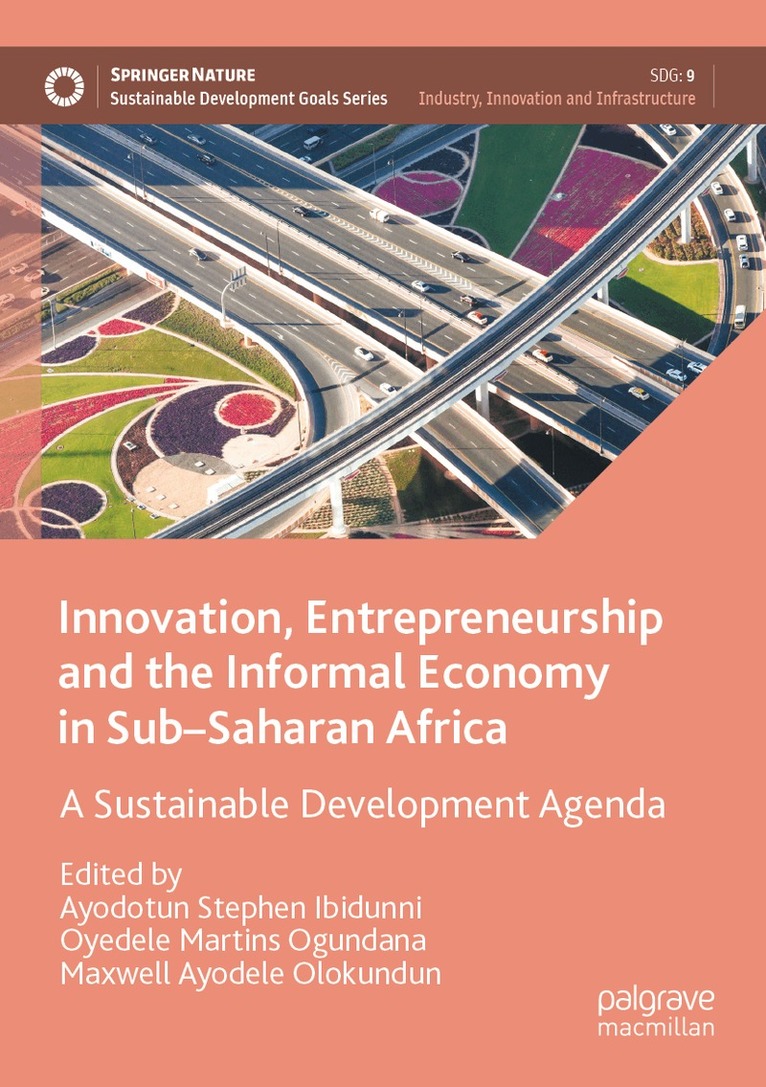
Innovation, Entrepreneurship and the Informal Economy in Sub–Saharan Africa
A Sustainable Development Agenda
Inbunden, Engelska, 2024
1 849 kr
Skickas inom 7-10 vardagar
Set against the backdrop of a rising population in Africa and the lowering opportunities for white collar jobs, as well as the continent’s limited access to resources, this edited collection demystifies the interconnectedness between the factors and actors involved with innovation and entrepreneurship development in sub-Saharan Africa’s (SSA) informal economy for more effective, result-oriented outcomes.Exposing the underlying motivations that define uniqueness in Africa’s innovation and entrepreneurship ecosystem, particularly in the informal sector, the editors argue that there is a significant knowledge gap that this book seeks to fill, concerning institutionalization, motivational factors and the harnessing of the innovative potentials of Africa’s informal sector entrepreneurs and their supporting role in achieving a more sustainable African regionBy identifying patterns of domesticating entrepreneurship theories and showcasing the latest research, the book covers awide array of topics that discuss a multidisciplinary and multicultural perspective to entrepreneurship theory and practices in Africa. In this way the book contributes to the goals of SDG 9 ('Build resilient infrastructure, promote inclusive and sustainable industrialization and foster innovation') in Africa.
Innovation, Entrepreneurship and the Informal Economy in Sub–Saharan Africa
A Sustainable Development Agenda
Häftad, Engelska, 2025
1 849 kr
Skickas inom 10-15 vardagar
Set against the backdrop of a rising population in Africa and the lowering opportunities for white collar jobs, as well as the continent’s limited access to resources, this edited collection demystifies the interconnectedness between the factors and actors involved with innovation and entrepreneurship development in sub-Saharan Africa’s (SSA) informal economy for more effective, result-oriented outcomes.Exposing the underlying motivations that define uniqueness in Africa’s innovation and entrepreneurship ecosystem, particularly in the informal sector, the editors argue that there is a significant knowledge gap that this book seeks to fill, concerning institutionalization, motivational factors and the harnessing of the innovative potentials of Africa’s informal sector entrepreneurs and their supporting role in achieving a more sustainable African regionBy identifying patterns of domesticating entrepreneurship theories and showcasing the latest research, the book covers awide array of topics that discuss a multidisciplinary and multicultural perspective to entrepreneurship theory and practices in Africa. In this way the book contributes to the goals of SDG 9 ('Build resilient infrastructure, promote inclusive and sustainable industrialization and foster innovation') in Africa.
Economic Transformation in Sub-Saharan Africa, Volume II
Institutions and Informal Sector Productivity
Inbunden, Engelska, 2026
2 793 kr
Kommande
Despite the growing population and significant natural resources of Sub-Saharan Africa (SSA), economies in that region currently represent only 2% of global GDP. Finished goods are imported to Africa from the US, Europe, China and Japan, while commodities remain the primary export. Addressing this balance must be the primary focus of initiatives to foster economic growth and development across the region in the coming years. However, there is currently a lack of intellectual discourse that incorporates diverse firm-level and institutional-level theories, as well as the stakeholder perspective, to explain the transformation of Sub-Saharan Africa into a production economy. This two-volume edited work brings together scholars of business in Africa and economic transformation to discuss topics including the knowledge economy, inter-regional relations, supply chains, the informal economy, the service sector and more, creating a broad and probing analysis of Africa’s potential for transformation and strategies to achieve it.This second volume explores the relationship between institutions and sectoral productivity in SSA, emphasising the need for policies that integrate informal economy players into the formal structure to enhance socio-economic development. The volume suggest that strong governance, aligned policies, and the inclusion of informal sector innovations are crucial for improving productivity and achieving sustainable economic transformation in SSA. It will be of interest to scholars of business in Africa, international business, developing economies, business strategy and innovation.
Economic Transformation in Sub-Saharan Africa, Volume I
Cross-Regional Relations and Supply Chain Capabilities
Inbunden, Engelska, 2026
2 793 kr
Kommande
Despite the growing population and significant natural resources of Sub-Saharan Africa (SSA), economies in that region currently represent only 2% of global GDP. Finished goods are imported to Africa from the US, Europe, China and Japan, while commodities remain the primary export. Addressing this balance must be the primary focus of initiatives to foster economic growth and development across the region in the coming years. However, there is currently a lack of intellectual discourse that incorporates diverse firm-level and institutional-level theories, as well as the stakeholder perspective, to explain the transformation of Sub-Saharan Africa into a production economy. This two-volume edited work brings together scholars of business in Africa and economic transformation to discuss topics including the knowledge economy, inter-regional relations, supply chains, the informal economy, the service sector and more, creating a broad and probing analysis of Africa’s potential for transformation and strategies to achieve it.This first volume explores a multidisciplinary perspective on the transformation of SSA’s economies to production and export orientation, which entail: facilitating SSA’s economic transformation through regional relations; the role of SSA’s informal sector on regional relations and economic transformation; and the recommendations for economic transforming in SSA. It will be of interest to scholars of business in Africa, international business, developing economies, business strategy and innovation.