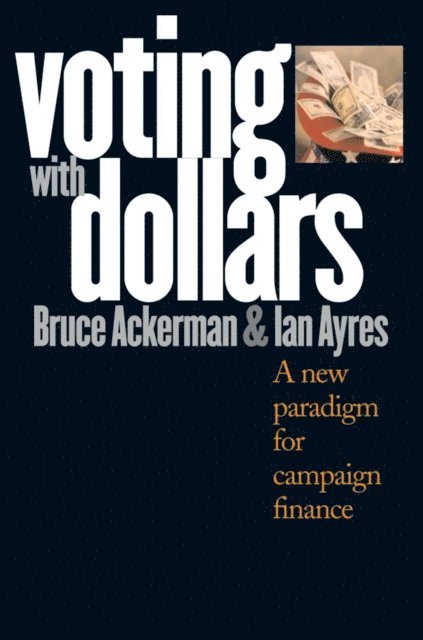
In this provocative book, two leading law professors challenge the existing campaign reform agenda and present a new initiative that avoids the mistakes of the past.Bruce Ackerman and Ian Ayres build on the example of the secret ballot and propose a system of “secret donation booths” for campaign contributions. They unveil a plan in which the government provides each voter with a special credit card account containing fifty “Patriot dollars” for presidential elections. To use this money, citizens go to their local ATM machine and anonymously send their Patriot dollars to their favorite candidates or political organizations. Americans are free to make additional contributions, but they must also give these gifts anonymously. Because candidates cannot identify who provided the funds, it will be much harder for big contributors to buy political influence. And the need for politicians to compete for the Patriot dollars will give much more power to the people.Ackerman and Ayres work out the operating details of their plan, anticipate problems, design safeguards, suggest overseers, and show how their proposals satisfy the most stringent constitutional requirements. They conclude with a model statute that could serve as the basis of a serious congressional effort to restore Americans’ faith in democratic politics.
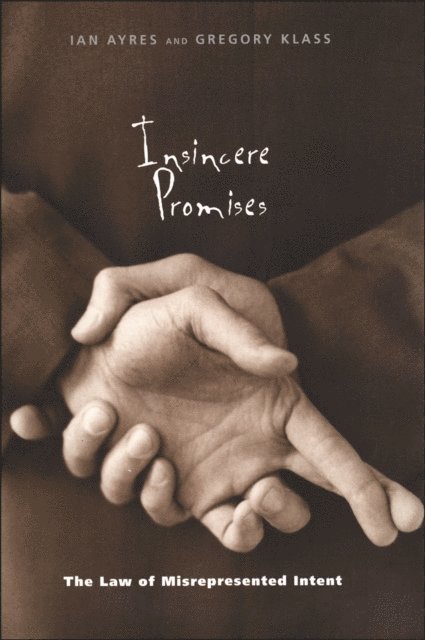
How can a promise be a lie? Answer: when the promisor never intended to perform the promise. Such incidences of promissory fraud are frequently litigated because they can result in punitive damages awards. And an insincere promisor can even be held criminally liable. Yet courts have provided little guidance about what the scope of liability should be or what proof should be required. This book—the first ever devoted to the analysis of promissory fraud—answers these questions. Filled with examples of insincere promising from the case law as well as from literature and popular culture, the book is an indispensable guide for those who practice or teach contract law.The authors explore what promises say from the perspectives of philosophy, economics, and the law. They identify four chief mistakes that courts make in promissory fraud cases. And they offer a theory for how courts and practitioners should handle promissory fraud cases.
In this provocative book, two leading law professors challenge the existing campaign reform agenda and present a new initiative that avoids the mistakes of the past.Bruce Ackerman and Ian Ayres build on the example of the secret ballot and propose a system of “secret donation booths” for campaign contributions. They unveil a plan in which the government provides each voter with a special credit card account containing fifty “Patriot dollars” for presidential elections. To use this money, citizens go to their local ATM machine and anonymously send their Patriot dollars to their favorite candidates or political organizations. Americans are free to make additional contributions, but they must also give these gifts anonymously. Because candidates cannot identify who provided the funds, it will be much harder for big contributors to buy political influence. And the need for politicians to compete for the Patriot dollars will give much more power to the people.Ackerman and Ayres work out the operating details of their plan, anticipate problems, design safeguards, suggest overseers, and show how their proposals satisfy the most stringent constitutional requirements. They conclude with a model statute that could serve as the basis of a serious congressional effort to restore Americans’ faith in democratic politics.
How can a promise be a lie? Answer: when the promisor never intended to perform the promise. Such incidences of promissory fraud are frequently litigated because they can result in punitive damages awards. And an insincere promisor can even be held criminally liable. Yet courts have provided little guidance about what the scope of liability should be or what proof should be required. This book—the first ever devoted to the analysis of promissory fraud—answers these questions. Filled with examples of insincere promising from the case law as well as from literature and popular culture, the book is an indispensable guide for those who practice or teach contract law.The authors explore what promises say from the perspectives of philosophy, economics, and the law. They identify four chief mistakes that courts make in promissory fraud cases. And they offer a theory for how courts and practitioners should handle promissory fraud cases.