
Ayse Kaya – författare
Visar alla böcker från författaren . Handla med fri frakt och snabb leverans.
5 produkter
5 produkter
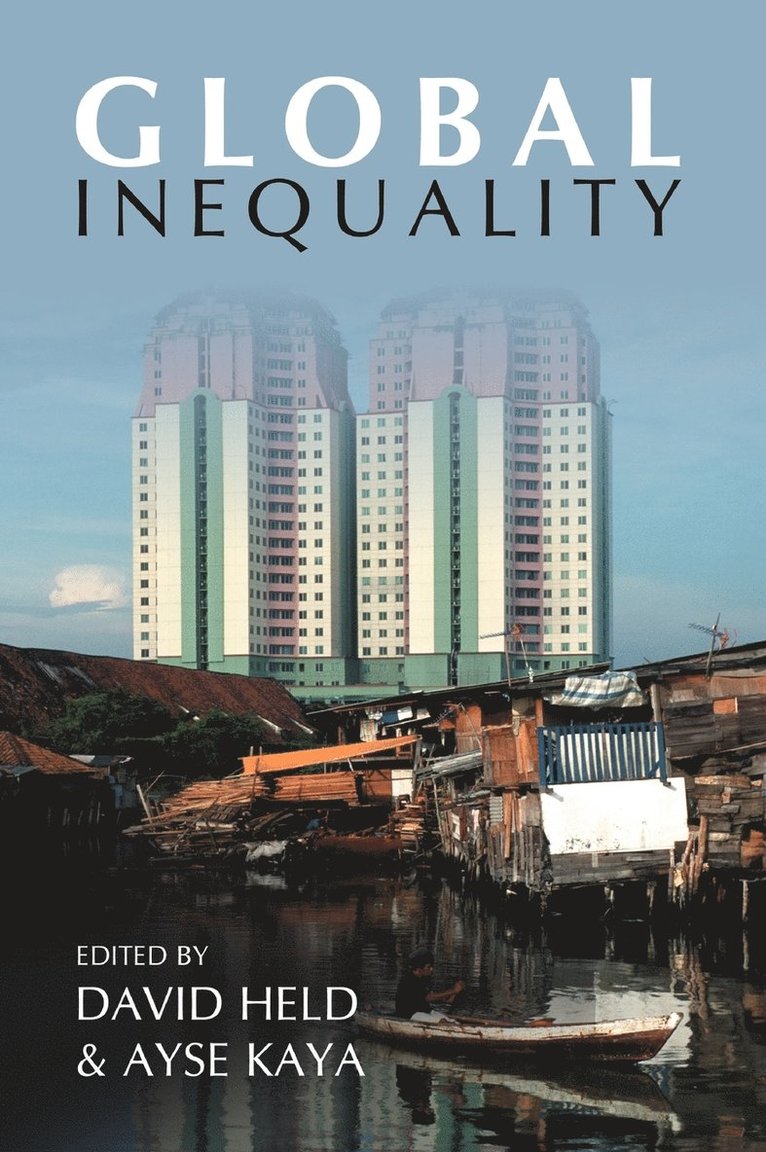
Inbunden, Engelska, 2006
846 kr
Skickas inom 5-8 vardagar
What is global inequality? How can it be measured? What are the major trends and patterns? What are the implications of global inequality for the world economy and multilateral governance? What role does and should inequality play in national and international policy-making? In this comprehensive overview, the authors address these key questions. They examine the major issues that need to be confronted in conceptualizing, measuring and analysing contemporary patterns of global inequality. In addition, they explore the implications of these patterns for politics and public policy. In explaining the complex global patterns of social stratification, they highlight an intensive debate about whether and to what extent inequality matters. The book also addresses this debate, and seeks to set out the major alternative positions. The book’s authors include many of the most distinguished figures in the field, including David Dollar, Gøsta Esping-Andersen, Nancy Fraser, James K. Galbraith, Ravi Kanbur, Branko Milanovic, Thomas W. Pogge, Bob Sutcliffe, Grahame F. Thompson, Anthony J. Venables, and Robert H. Wade. This book will be of great interest to students in politics, sociology and international relations as well as to all those interested in this key topic.
Häftad, Engelska, 2006
504 kr
Skickas inom 5-8 vardagar
What is global inequality? How can it be measured? What are the major trends and patterns? What are the implications of global inequality for the world economy and multilateral governance? What role does and should inequality play in national and international policy-making? In this comprehensive overview, the authors address these key questions. They examine the major issues that need to be confronted in conceptualizing, measuring and analysing contemporary patterns of global inequality. In addition, they explore the implications of these patterns for politics and public policy. In explaining the complex global patterns of social stratification, they highlight an intensive debate about whether and to what extent inequality matters. The book also addresses this debate, and seeks to set out the major alternative positions. The book’s authors include many of the most distinguished figures in the field, including David Dollar, Gøsta Esping-Andersen, Nancy Fraser, James K. Galbraith, Ravi Kanbur, Branko Milanovic, Thomas W. Pogge, Bob Sutcliffe, Grahame F. Thompson, Anthony J. Venables, and Robert H. Wade. This book will be of great interest to students in politics, sociology and international relations as well as to all those interested in this key topic.
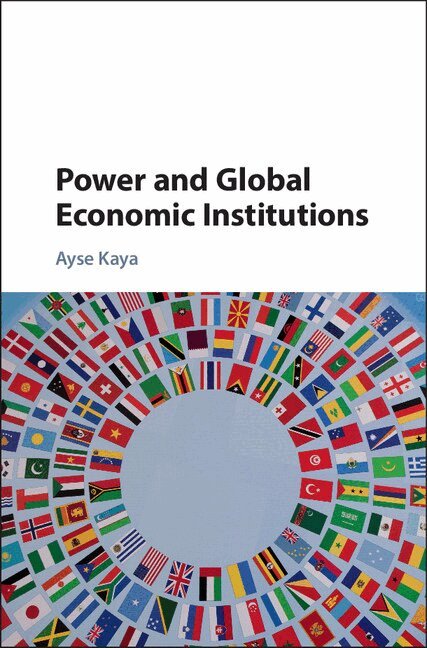
Inbunden, Engelska, 2015
1 338 kr
Skickas inom 7-10 vardagar
What is the relationship between states' economic power and their formal political power in multilateral economic institutions? Why do we see variation in states' formal political power across economic institutions of the same era? In this book, Ayse Kaya examines these crucial under-explored questions, drawing on multiple theoretical traditions within international relations to advance a new approach of 'adjusted power'. She explains how the economic shifts of our time, marked by the rise of Brazil, Russia, India, China and other emerging economies, have affected and will impact key multilateral economic institutions. Through detailed contemporary and historical analyses of the International Monetary Fund, the World Bank, the G20, and the International Trade Organization, Kaya shows that the institutional setting mediates the significance of the underlying distribution of economic power across states. The book presents both case studies and key statistics.
Häftad, Engelska, 2017
464 kr
Skickas inom 7-10 vardagar
What is the relationship between states' economic power and their formal political power in multilateral economic institutions? Why do we see variation in states' formal political power across economic institutions of the same era? In this book, Ayse Kaya examines these crucial under-explored questions, drawing on multiple theoretical traditions within international relations to advance a new approach of 'adjusted power'. She explains how the economic shifts of our time, marked by the rise of Brazil, Russia, India, China and other emerging economies, have affected and will impact key multilateral economic institutions. Through detailed contemporary and historical analyses of the International Monetary Fund, the World Bank, the G20, and the International Trade Organization, Kaya shows that the institutional setting mediates the significance of the underlying distribution of economic power across states. The book presents both case studies and key statistics.
Inbunden, Engelska, 2014
5 199 kr
Tillfälligt slut
International Relations has long been a core discipline within Political Science, one of vast importance for understanding social, cultural, economic and political exchanges across national boundaries. Every dimension of human experience falls within the scope of the field, making it applicable to psychologists, historians, anthropologists, and others across a wide swath of academia. The two-volume Oxford Companion to International Relations would be one of the first reference works to make this field clear and comprehensible to both specialists and non-specialists. Entries are mostly thematic in content, rather than site-specific, permitting the work to have value and currency for years to come. The numerous theories and applications of IR are comprehensively covered, as would controversies related to the field, prominent figures, and ways IR has shaped political history. There are revised & updated entries derived from the Oxford Companion to Politics of the World, while the rest would be newly commissioned and authored by the foremost IR scholars around the world. New entries cover institutional developments (for instance, the creation and operation of the International Criminal Court, the governance of the Internet, and the various changes in the international monetary architecture since the beginning of the economic crisis); significant events that were not covered in the older volume (the wars in Afghanistan and Iraq, the challenges facing new democratic regimes in Eastern Europe and Africa); and advances in IR scholarship, especially in the fields of terrorism and international security. Fifteen interpretive essays are interspersed throughout the A-Z text, encouraging further scholarship and dialogue between readers.