B. Andersson - Böcker
Visar alla böcker från författaren B. Andersson. Handla med fri frakt och snabb leverans.
2 produkter
2 produkter
1 101 kr
Skickas inom 10-15 vardagar
This series of concise essays on Enteroceptors is designed to interest the gradu ate student and to stimulate research. Even before the advent of electrophysiological studies, classical physiological techniques had shown the essence of the role of many of the enteroceptors. Thus the monitoring influence of the cardiovascular mechanoreceptors on the heart and on the systemic vascular resistance, the role of the arterial chemoreceptors in hypoxia and the influence of the so-called Hering Breuer stretch receptors on breathing had all been documented. The pioneering work of ADRIAN, BRONK, ZOTTERMAN and others using electroneurographic methods gave a remarkable impetus to the study of the enteroceptors themselves. Nowhere is this better exemplificd than in the case of the afferent end organs of the heart, the respiratory tract and the abdominal and pelvic viscera. The remarkable development of our knowledge of the multiplicity of types of nerve endings from the thoracic and abdominal viscera acquired from electrophysiological studies has refocussed our attention on the histological details of the sites of such receptors. Once more research on the structural side has been accelerated by the question raised by evidence obtained from functional studies. This is well illustrated in the case of the carotid body, where the long cherished belief that the innervated epithelioid cells constitute the chemoreceptor complex is now under attack. The detailed consideration of the functional characteristics of each entero ceptor considered has not occupied our whole attention.
3 162 kr
Skickas inom 10-15 vardagar
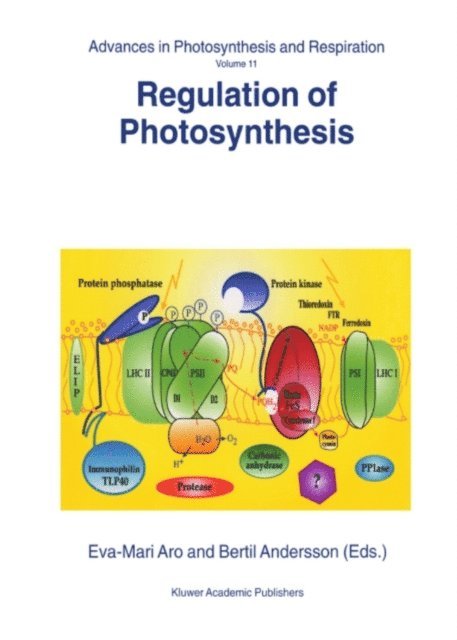
The progress in photosynthesis research has been transduction and expression of photosynthetic genes quite dramatic during the last two decades. The which occur both in the nuclear/cytosol compartment Nobel prizes awarded to Peter Mitchel (1978), to and in the chloroplast. Several chapters are devoted Johannes Deisenhofer, Hartmut Michel and Robert to the transcription machinery and the two plastid Huber (1988), to Rudolf Marcus (1992) and to Paul RNA-polymerase complexes, to the regulation of Boyer and John Walker (1997) have recognized— photosynthesis genes by redox signaling both in directly or indirectly—the structural or mechanistic chloroplasts and in the prokaryotic systems, as well discoveries related to the photosynthetic energy as to the sugar sensing mechanisms. Chapters also conversion. Actually, photosynthesis may be the first cover important regulatory aspects imposed by po- biological process described, not only in molecular transcriptional modifications and degradation of terms, but even in atomic terms. mRNA molecules, and the translational regulation Much of the excitement around photosynthesis is mechanisms operating in chloroplasts. based upon the connection between light and life. Part III—Biogenesis, turnover and senescence— is closely connected to the question of regulation. Light is an elusive ‘substrate’ that cannot be handled The chapters included emphasize how the c- in the same way as conventional chemical substrates plicated membrane structures, composed of both in biological metabolic reactions.