B. Chandrasekaran – författare
Visar alla böcker från författaren B. Chandrasekaran. Handla med fri frakt och snabb leverans.
3 produkter
3 produkter
E-bok
PDF, Engelska, 2014344 kr
Läs direkt efter köp
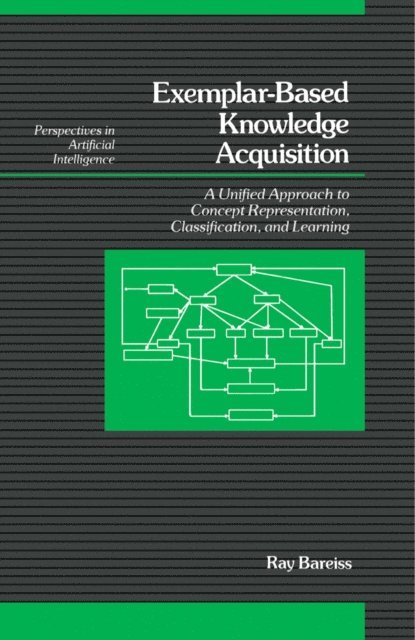
Exemplar-Based Knowledge Acquisition: A Unified Approach to Concept Representation, Classification, and Learning covers the fundamental issues in cognitive science and the technology for solving real problems. This text contains six chapters and begins with a description of the rationale for the design of Protos Approach, its construction and performance. The succeeding chapters discuss how the Protos approach meets the requirements of representing concepts, using them for classification, and acquiring them from available training. These chapters also deal with the design and implementation of Protos. These topics are followed by a presentation of examples of the application of Protos to audiology and evaluate its performance. The final chapters survey related work in the areas of case-based reasoning and automated knowledge acquisition and the contributions of Protos approach. This book will be of great value to psychologists, psychiatrists, and researchers in the field of artificial intelligence.
E-bok
PDF, Engelska, 2014756 kr
Läs direkt efter köp
Design Problem Solving: Knowledge Structures and Control Strategies describes the application of the generic task methodology to the problem of routine design. This book discusses the generic task methodology and what constitutes the essence of the Al approach to problem solving, including the analysis of design as an information processing activity. The basic design problem solving framework, DSPL language, and AIR-CYL Air cylinder design system are also elaborated. Other topics include the high level languages based on generic tasks, structure of a Class 3 design problem solver, and failure handling in routine design. The conceptual structure for the air cylinder and improvements to DSPL system support are likewise covered in this text. This publication is beneficial to students and specialists concerned with solving design problems.
E-bok
PDF, Engelska, 2013756 kr
Läs direkt efter köp
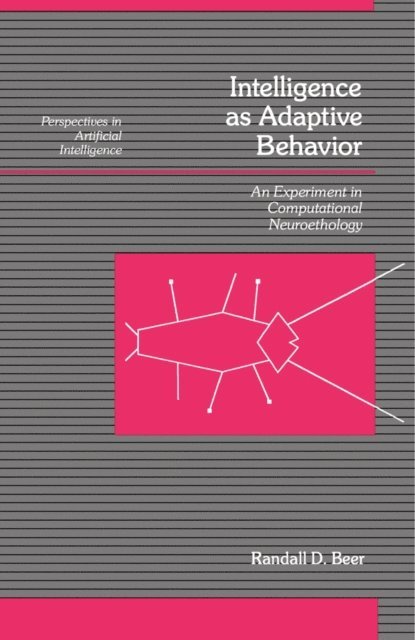
The "intelligence" of traditional artificial intelligence systems is notoriously narrow and inflexible--incapable of adapting to the constantly changing circumstances of the real world. Although traditional artificial intelligence systems can be successful in narrowly prescribed domains, they are inappropriate for dynamic, complex domains, such as autonomous robot navigation.**This book proposes an alternative methodology for designing intelligent systems based on a model of intelligence as adaptive behavior. The author describes an experiment in computational neuroethology--the computer modeling of neuronal control of behavior--in which the nervous system for an artificial insect is modeled. The experiment demonstrates that simple, complete intelligent agents are able to cope with complex, dynamic environments--suggesting that adaptive models of intelligence, based on biological bases of adaptive behavior, may prove to be very useful in the design of intelligent, autonomous systems.- Provides a lucid critique of traditional artificial intelligence research programs- Presents new methodology for the construction autonomous agents, which has implications for mobile robotics- Of interest to researchers in a variety of fields: artificial intelligence, neural networks, robotics, cognitive science, and neuroscience