B. Pennington - Böcker
Visar alla böcker från författaren B. Pennington. Handla med fri frakt och snabb leverans.
2 produkter
2 produkter
1 632 kr
Skickas inom 10-15 vardagar
This book brings together in one place an account of recent advances in our understanding of the biology of dyslexia. It grew out of a Rodin Remediation Foundation international conference held on this topic in Boulder, Colorado in 1990, which included most of the world's experts on the genetics and neurology of dyslexia. Building on recent advances in the understanding of the cognitive phenotype of dyslexia, the authors present new data on both the aetiology and brain mechanisms underlying that phenotype. Reading disability or dyslexia has a high familial recurrence rate, and is partly heritable. Genetic linkage studies are beginning to identify the possible locations of genes influencing this phenotype. On the neurological side, several independent studies have found neuroanatomical differences in the dyslexic brain, which are due to early changes in brain development. Thus, contrary to the views held by some educators that dyslexia is a myth, the results presented in this book establish dyslexia as a real, biological condition. This book should be relevant to researchers and practitioners concerned with both normal and abnormal reading development.
Del 4 - Neuropsychology and Cognition
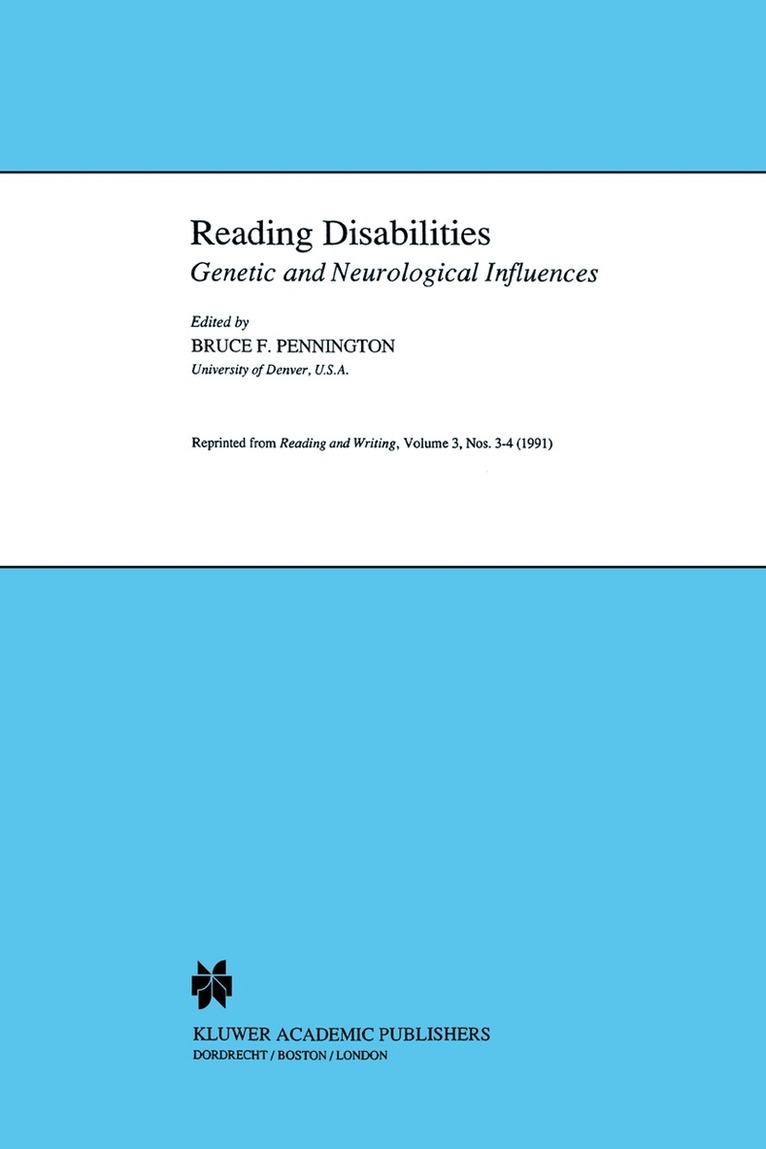
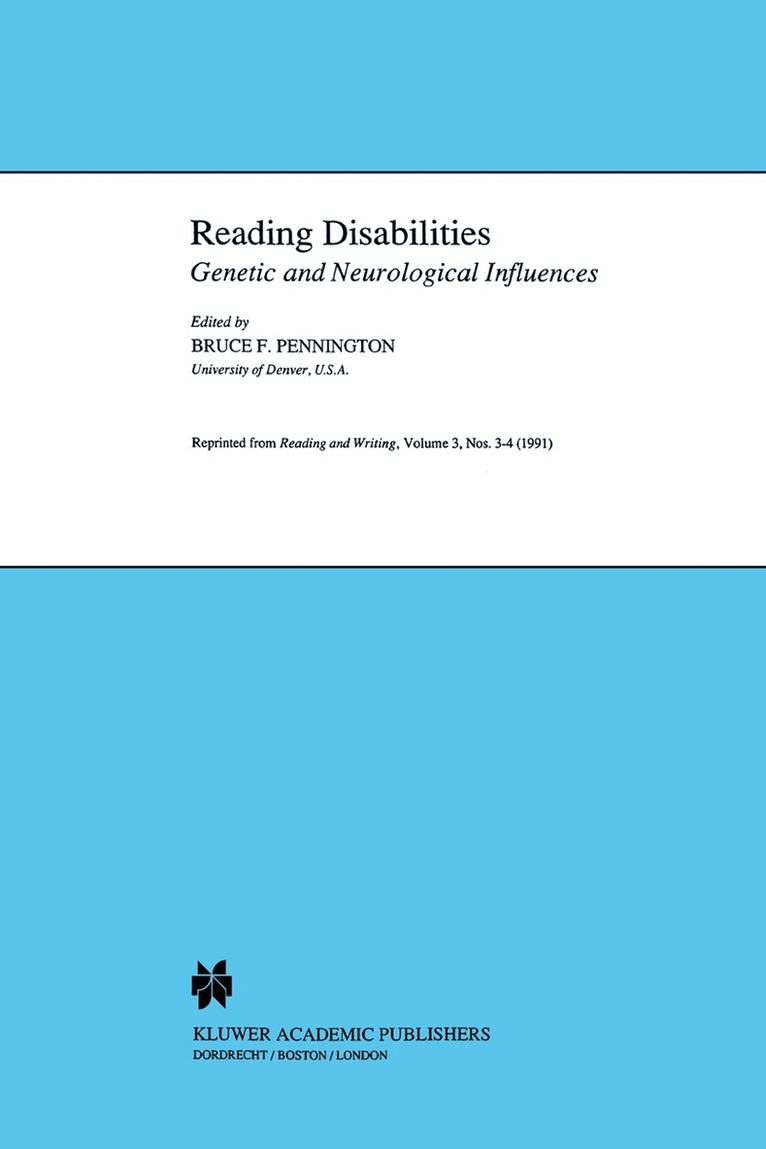
Reading Disabilities
Genetic and Neurological Influences
Häftad, Engelska, 2012
1 632 kr
Skickas inom 10-15 vardagar
This book is unique in that it brings together in one place an account of recent advances in our understanding of the biology of dyslexia. It grew out of a Rodin Remediation Foundation International conference held on this topic in Boulder, Colorado in 1990, which included most of the world's experts on the genetics and neurology of dyslexia. Ten years ago a volume on this topic would scarcely been possible, and now we have an emerging, comprehensive neuroscientific understanding of this complex behavioral disorder that goes from genes to brain to behavior. Building on recent advances in the understanding of the cognitive phenotype of dyslexia, these authors present new data on both the etiology and brain mechanisms underlying that phenotype. Reading disability or dyslexia has a high familial recurrence rate, and is partly heritable. Genetic linkage studies are beginning to identify the possible locations of genes influencing this phenotype. On the neurological side, several independent studies have found neuroanatomical differences in the dyslexic brain, which are due to early changes in brain development. Thus, contrary to the views held by some educators that dyslexia is a myth, the results presented in this book firmly establish dyslexia as a real, biological condition. This book is relevant to researchers and practitioners concerned with both normal and abnormal reading development.