Babak Taghvaee – författare
Visar alla böcker från författaren Babak Taghvaee. Handla med fri frakt och snabb leverans.
11 produkter
11 produkter
Häftad, Engelska, 2023
181 kr
Skickas
Häftad, Engelska, 2023
175 kr
Skickas
Häftad, Engelska, 2023
181 kr
Skickas
Häftad, Engelska, 2023
181 kr
Skickas
Häftad, Engelska, 2023
181 kr
Skickas
Häftad, Engelska, 2024
178 kr
Skickas
Häftad, Engelska, 2015
213 kr
Skickas
E-bok
Engelska, 2021123 kr
Läs direkt efter köp
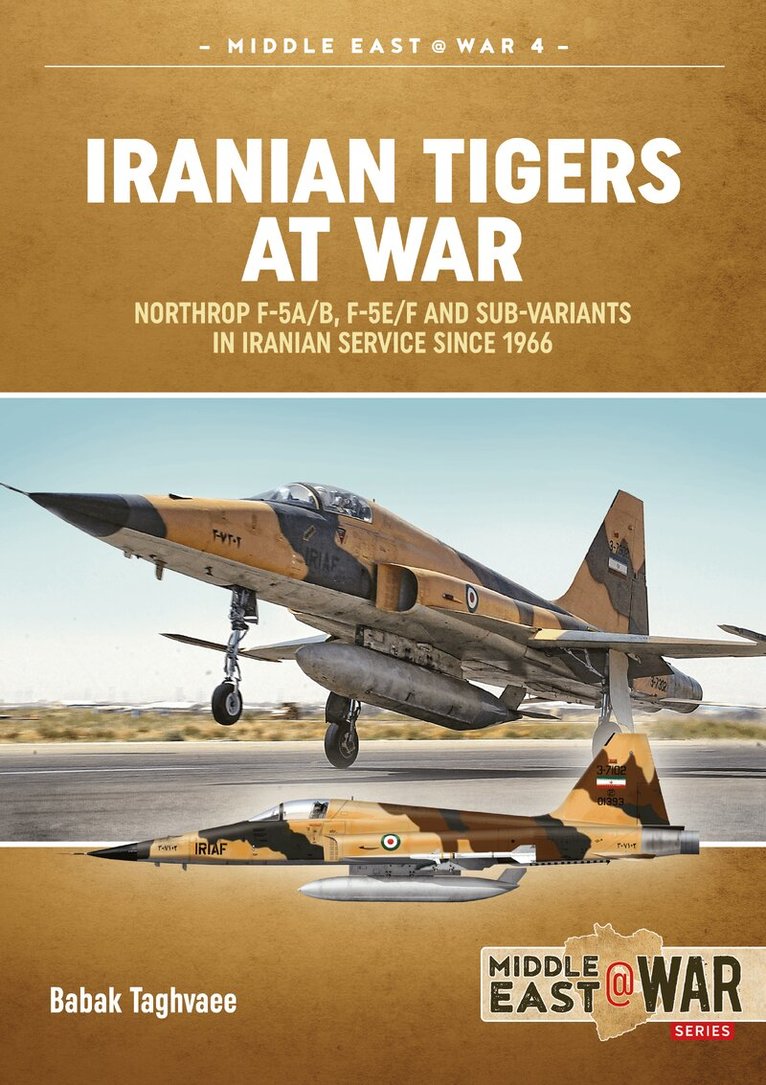
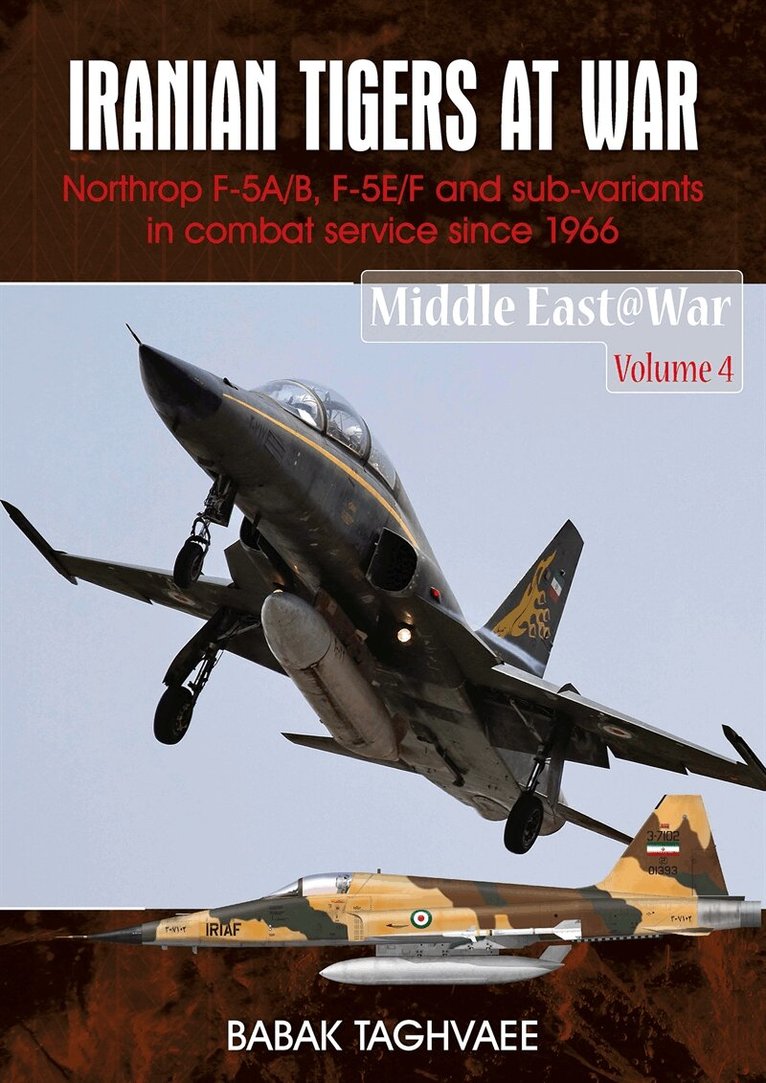
The development of the F-5 lightweight supersonic fighter in the mid 1950s was almost a gamble for the Northrop Corporation, but ultimately resulted in one of most commercially successful combat aircraft in modern history. Iran was one of its major export customers, yet the long and often violent history of deployment of the F-5 in that country has largely escaped attention of historians. No less than 309 aircraft of five major variants of the jet – the F-5A, F-5B, RF-5A, F-5E and F-5F – have provided the backbone of the front line strength of the Iranian Air Force since the mid 1960s. Additional examples were clandestinely purchased from Ethiopia and Vietnam in the 1980s. The type bore the brunt of combat operations during the long war with Iraq, 1980-1988, and remains a mainstay of the Islamic Republic of Iran Air Force as of today. This breathtaking account provides a detailed chronological history of the F-5 in combat service in Iran, a history dominated by long-range strikes against some of best defended targets inside Iraq, and by thousands of dramatic close-air-support and reconnaissance sorties, but also fierce air combats against the then most modern fighter types in Iraqi service, including the MiG-23s and MiG-25s. It is completed with practically unknown stories of their combat presence in Pakistan, Afghanistan and the war against drug traffickers in recent years. Good though the F-5 has been, the advances of domestic Iranian aircraft building companies have resulted in attempts to continue the F-5 line with further redesign and developments, resulting in a number of indigenous variants. Combined, this means that the diverse and involved story about one of most interesting military aircraft of modern times is still far from over.The author's detailed text is fully supported by an extensive selection of photographs and color profiles.Middle East@War - following on from our highly successful Africa@War series, Middle East@War replicates the same format - concise, incisive text, rare images and high quality color artwork providing fresh accounts of both well-known and more esoteric aspects of conflict in this part of the world since 1945.EPUB3: Reflowable
E-bok
Engelska, 2021123 kr
Läs direkt efter köp
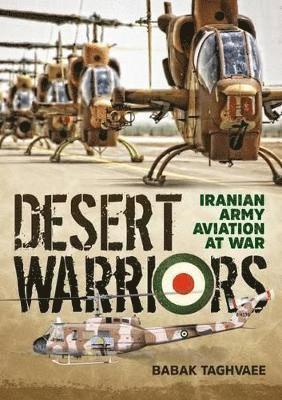
Under the leadership of a sagacious and patriotic ruler, who wasn't only cautious about the security of his state but was acting to stabilize worldwide peace by means of keeping the Middle East secure from the danger of Communism, the third most powerful Army Aviation in the world was born and flourished, its efficiency proven during its role defending Iran during the war with Iraq, 1980-88.One of the weaknesses of NATO's combat strength set against the Warsaw Pact was its armored force. Following 1945 the armored forces of the Soviet Union had quickly surpassed the West. Before the development of powerful new tanks such as the Shir 2 (Lion 2), Challenger 1, M1 Abrams in services with the Iranian, British and US armies, the only solution for confrontation with Soviet armor was the establishment of powerful Army Aviation forces. From the late 1960s His Imperial Majesty Mohammad Reza Pahlavi and many other commanders had realized the weakness of the Iranian Army compared to the powerful armored forces of the Soviet Union and Iraq, two historical enemies of Iran, states who dreamed of reaching the waters of the Persian Gulf and the oil fields of Khuzestan province respectively. By following such a strategy, Iran possessed the third-largest Army Aviation Power in the world in just ten years, not only by being equipped with 800 of the latest and most advanced AB.205, AB.206, Bell 214, AH-1J and CH-47C helicopters but thanks to thousands of skillful and knowledgeable personnel. Iranian Army Aviation was used to provide for the security of Iran as well as helping to establish peace in Pakistan and Oman in the wars against terrorism and communism in 1970s.After the Revolution, and even after the execution, arrest and dismissal of the architects of the force, it was effectively used to defend Iran during eight years of war with Iraq, 1980-88. Its AH-1Js hunted hundreds of Iraqi tanks and armored carriers and its Bell 214As saved lives of thousands of wounded civilians and soldiers while the CH-47Cs were airlifting ammunition and soldiers to the frontline under the threat of direct fire from Iraqi AA guns and SAMs.Based on the recently declassified official records of the Iranian Joint Chiefs of Staff, Ground Force and Army Aviation, this book provides details of the Iranian Army Aviation missions and roles during 97 major operations in the war with Iraq, including details on logged flying hours, performed sorties, launched missiles, carried cargos, wounded troops and soldiers beside the unheard history of the force since its foundation.The author's detailed text is fully supported by an extensive selection of previous unseen photographs and color profiles.EPUB3: Reflowable
Häftad, Engelska, 2023
175 kr
Tillfälligt slut
Häftad, Engelska, 2016
313 kr
Tillfälligt slut