Baijayanti Roy – författare
Visar alla böcker från författaren . Handla med fri frakt och snabb leverans.
4 produkter
4 produkter
Inbunden, Engelska, 2024
1 766 kr
Skickas inom 3-6 vardagar
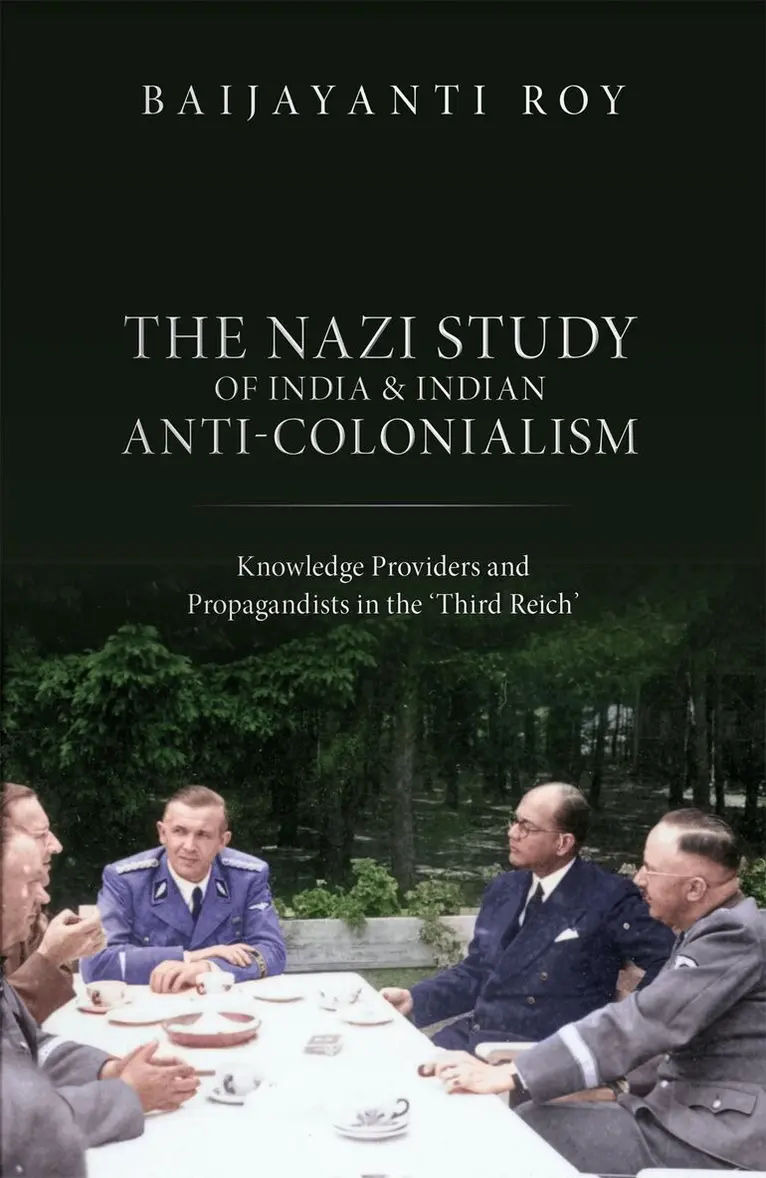
The Nazi Study of India and Indian Anti-Colonialism is the first detailed and critical study of the intellectual and political connections that existed between some German scholars specializing on India, non-academic 'India experts,' Indian anti-colonialists and various organs of the Nazi state. It explores the ways in which different knowledge discourses pertaining to India, particularly its colonization and the anti-colonial movement, were used by these individuals for a number of German organisations to fulfil the demands of Nazi politics. This monograph also inspects the links between the knowledge providers and embodiments of National Socialist politics like the Nazi party and its affiliates. In this study, Baijayanti Roy aims to ascertain whether such political engagements were actually more rewarding for the scholars than their 'practical services' to the state in the form of strategic deployment of their knowledge of India. The Nazi Study of India and Indian Anti-Colonialism offers case studies of four organisations which incorporated such complicated entanglements of knowledge and power: the India Institute of the Deutsche Akademie in Munich, the Special Department India of the German Foreign Ministry, the Seminar for Oriental languages and its successor institutions at the University of Berlin, and the Indian Legion of the German Army. The knowledge networks underlying these organisations were dominated by German Indologists, but non-specialist knowledge providers, both German and Indian were also included. The Nazi regime expected all scholars and intellectuals to engage in Kulturpolitik (cultural politics), which entailed propagating the glories of the 'Reich' and its supreme leader as well as collecting 'politically valuable' knowledge within and outside Germany. For the four organizations concerned, this meant conducting pro-German and from around 1938, anti-British propaganda aimed at Indians. Loosely following an analogy provided by Herbert Mehrtens in the context of natural sciences, this monograph posits that there were 'patterns of collaboration' between the knowledge providers and the representatives of the Nazi regime. At the core of these 'patterns' was, to borrow Mitchell Ash`s theory, an exchange of resources and capital in which scholars and experts offered their knowledge of Indian languages, history and culture to authorities like the Foreign Ministry, the SS and the Army. In return, they received increased professional opportunities, financial remuneration or in some cases, increased power and influence.
E-bok
Engelska, 20241 082 kr
Läs direkt efter köp
The Nazi Study of India and Indian Anti-Colonialism is the first detailed and critical study of the intellectual and political connections that existed between some German scholars specializing on India, non-academic 'India experts,' Indian anti-colonialists and various organs of the Nazi state. It explores the ways in which different knowledge discourses pertaining to India, particularly its colonization and the anti-colonial movement, were used by these individuals for a number of German organisations to fulfil the demands of Nazi politics. This monograph also inspects the links between the knowledge providers and embodiments of National Socialist politics like the Nazi party and its affiliates. In this study, Baijayanti Roy aims to ascertain whether such political engagements were actually more rewarding for the scholars than their 'practical services' to the state in the form of strategic deployment of their knowledge of India. The Nazi Study of India and Indian Anti-Colonialism offers case studies of four organisations which incorporated such complicated entanglements of knowledge and power: the India Institute of the Deutsche Akademie in Munich, the Special Department India of the German Foreign Ministry, the Seminar for Oriental languages and its successor institutions at the University of Berlin, and the Indian Legion of the German Army. The knowledge networks underlying these organisations were dominated by German Indologists, but non-specialist knowledge providers, both German and Indian were also included. The Nazi regime expected all scholars and intellectuals to engage in Kulturpolitik (cultural politics), which entailed propagating the glories of the 'Reich' and its supreme leader as well as collecting 'politically valuable' knowledge within and outside Germany. For the four organizations concerned, this meant conducting pro-German and from around 1938, anti-British propaganda aimed at Indians. Loosely following an analogy provided by Herbert Mehrtens in the context of natural sciences, this monograph posits that there were 'patterns of collaboration' between the knowledge providers and the representatives of the Nazi regime. At the core of these 'patterns' was, to borrow Mitchell Ash`s theory, an exchange of resources and capital in which scholars and experts offered their knowledge of Indian languages, history and culture to authorities like the Foreign Ministry, the SS and the Army. In return, they received increased professional opportunities, financial remuneration or in some cases, increased power and influence.
E-bok
PDF, Engelska, 20241 082 kr
Läs direkt efter köp
The Nazi Study of India and Indian Anti-Colonialism is the first detailed and critical study of the intellectual and political connections that existed between some German scholars specializing on India, non-academic 'India experts,' Indian anti-colonialists and various organs of the Nazi state. It explores the ways in which different knowledge discourses pertaining to India, particularly its colonization and the anti-colonial movement, were used by these individuals for a number of German organisations to fulfil the demands of Nazi politics. This monograph also inspects the links between the knowledge providers and embodiments of National Socialist politics like the Nazi party and its affiliates. In this study, Baijayanti Roy aims to ascertain whether such political engagements were actually more rewarding for the scholars than their 'practical services' to the state in the form of strategic deployment of their knowledge of India. The Nazi Study of India and Indian Anti-Colonialism offers case studies of four organisations which incorporated such complicated entanglements of knowledge and power: the India Institute of the Deutsche Akademie in Munich, the Special Department India of the German Foreign Ministry, the Seminar for Oriental languages and its successor institutions at the University of Berlin, and the Indian Legion of the German Army. The knowledge networks underlying these organisations were dominated by German Indologists, but non-specialist knowledge providers, both German and Indian were also included. The Nazi regime expected all scholars and intellectuals to engage in Kulturpolitik (cultural politics), which entailed propagating the glories of the 'Reich' and its supreme leader as well as collecting 'politically valuable' knowledge within and outside Germany. For the four organizations concerned, this meant conducting pro-German and from around 1938, anti-British propaganda aimed at Indians. Loosely following an analogy provided by Herbert Mehrtens in the context of natural sciences, this monograph posits that there were 'patterns of collaboration' between the knowledge providers and the representatives of the Nazi regime. At the core of these 'patterns' was, to borrow Mitchell Ash`s theory, an exchange of resources and capital in which scholars and experts offered their knowledge of Indian languages, history and culture to authorities like the Foreign Ministry, the SS and the Army. In return, they received increased professional opportunities, financial remuneration or in some cases, increased power and influence.
Del 5 - Beitraege zur Aufarbeitung der NS-Herrschaft
Making of a Gentleman Nazi
Albert Speer’s Politics of History in the Federal Republic of Germany
Inbunden, Engelska, 2016
1 341 kr
Skickas inom 5-8 vardagar
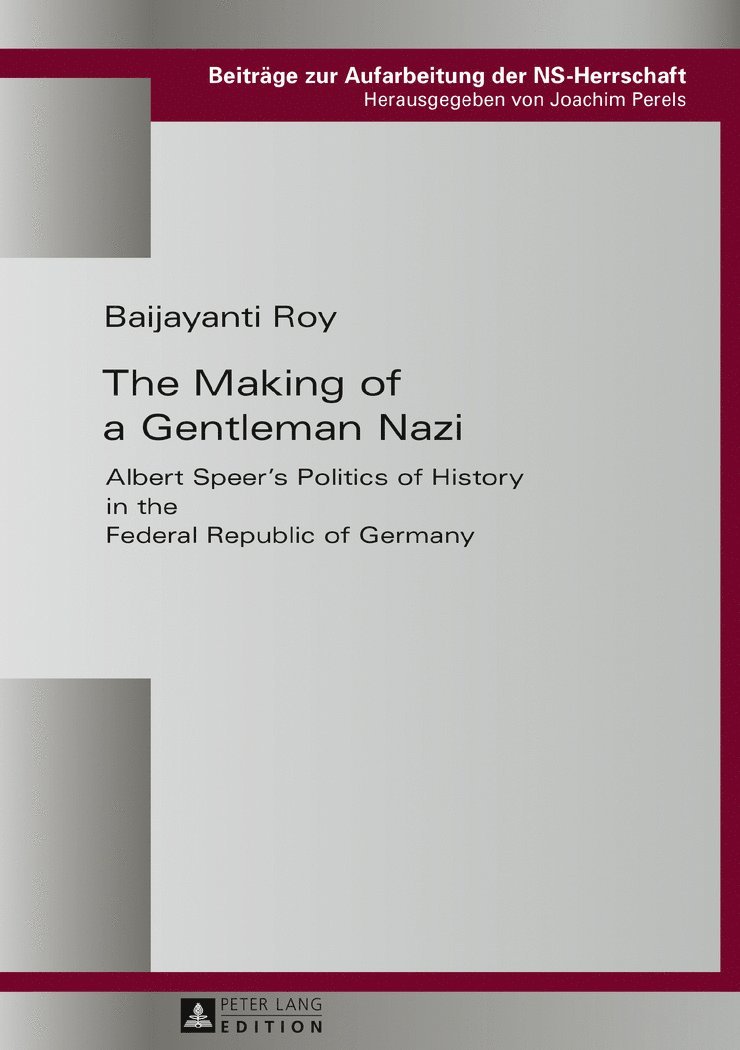
At the Nuremberg Trial and through his bestselling books, Albert Speer, Hitler’s architect and minister, could successfully project an image of himself as the «gentleman Nazi». Using hitherto unexplored archival sources, this book looks at those aspects of his career that Speer retrospectively manipulated (e.g. his resistance to Hitler’s Nero order), to construct this image. The evolution of the «Speer myth», analysed here, shows how West Germany’s politics influenced Speer’s narrative, as well as the impact that his image had on Federal Republic’s efforts to cope with its past. This book also examines the role of historians and public intellectuals in and outside Germany in reinforcing the Speer myth – the British historian Hugh Trevor Roper and the Nazi hunter Simon Wiesenthal among others.