Baird Tipson – författare
Visar alla böcker från författaren Baird Tipson. Handla med fri frakt och snabb leverans.
6 produkter
6 produkter
Inbunden, Engelska, 2015
1 200 kr
Skickas inom 5-8 vardagar
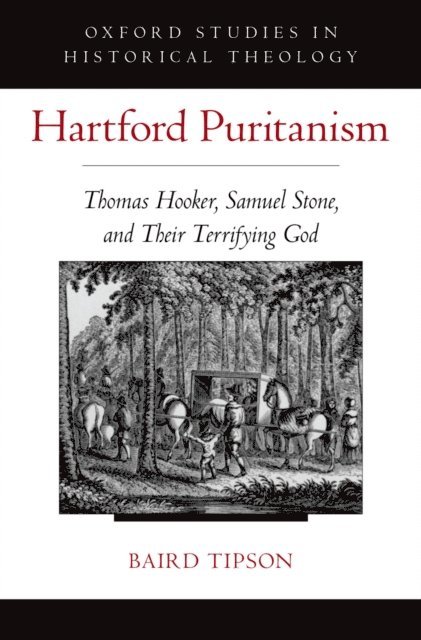
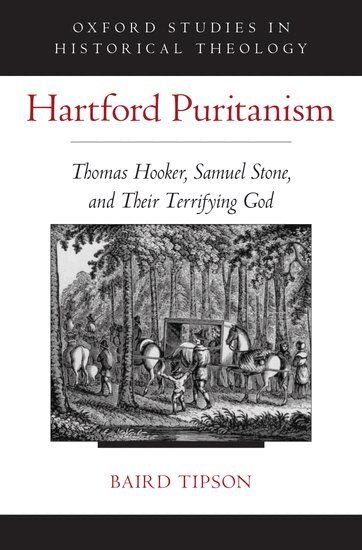
Although their statues grace downtown Hartford, Connecticut, few tourists are aware that the founding ministers of Hartford's First Church, Thomas Hooker and Samuel Stone (after whose English birthplace the city is named), carried a distinctive version of Puritanism to the Connecticut wilderness. Shaped by Protestant interpretations of the writings of Saint Augustine, and largely developed during the ministers' years at Emmanuel College, Cambridge, and as "godly" lecturers in English parish churches, Hartford's church order diverged in significant ways from its counterpart in the churches of the Massachusetts Bay Colony.Focusing especially on Hooker, Baird Tipson explores the contributions of William Perkins, Alexander Richardson, and John Rogers to his thought and practice, the art and content of his preaching, and his determination to define and impose a distinctive notion of conversion on his hearers. Hooker's colleague Samuel Stone composed The Whole Body of Divinity, a comprehensive treatment of his thought (and the first systematic theology written in the American colonies). Stone's Whole Body, virtually unknown to scholars, not only provides the indispensable intellectual context for the religious development of early Connecticut but also offers a more comprehensive description of the Puritanism of early New England than anything previously available.Hartford Puritanism argues for a new paradigm of New England Puritanism, one where Hartford's founding ministers, Thomas Hooker and Samuel Stone, both fully embraced and even harshened Calvin's double predestination.
E-bok
PDF, Engelska, 2015996 kr
Läs direkt efter köp
Statues of Thomas Hooker and Samuel Stone grace downtown Hartford, Connecticut, but few residents are aware of the distinctive version of Puritanism that these founding ministers of Harford''s First Church carried into to the Connecticut wilderness (or indeed that the city takes its name from Stone''s English birthplace). Shaped by interpretations of the writings of Saint Augustine largely developed during the ministers'' years at Emmanuel College, Cambridge, Hartford''s church order diverged in significant ways from its counterpart in the churches of the Massachusetts Bay Colony.Hartford Puritanism argues for a new paradigm of New England Puritanism. Hartford''s founding ministers, Baird Tipson shows, both fully embraced - and even harshened - Calvin''s double predestination. Tipson explores the contributions of the lesser-known William Perkins, Alexander Richardson, and John Rogers to Thomas Hooker''s thought and practice: the art and content of his preaching, as well as his determination to define and impose a distinctive notion of conversion on his hearers. The book draws heavily on Samuel Stone''s The Whole Body of Divinity, a comprehensive exposition of his thought and the first systematic theology written in the American colonies. Virtually unknown today, The Whole Body of Divinity not only provides the indispensable intellectual context for the religious development of early Connecticut but also offers a more comprehensive description of the Puritanism of early New England than any other document.
E-bok
Engelska, 20151 005 kr
Läs direkt efter köp
Statues of Thomas Hooker and Samuel Stone grace downtown Hartford, Connecticut, but few residents are aware of the distinctive version of Puritanism that these founding ministers of Harford''s First Church carried into to the Connecticut wilderness (or indeed that the city takes its name from Stone''s English birthplace). Shaped by interpretations of the writings of Saint Augustine largely developed during the ministers'' years at Emmanuel College, Cambridge, Hartford''s church order diverged in significant ways from its counterpart in the churches of the Massachusetts Bay Colony.Hartford Puritanism argues for a new paradigm of New England Puritanism. Hartford''s founding ministers, Baird Tipson shows, both fully embraced - and even harshened - Calvin''s double predestination. Tipson explores the contributions of the lesser-known William Perkins, Alexander Richardson, and John Rogers to Thomas Hooker''s thought and practice: the art and content of his preaching, as well as his determination to define and impose a distinctive notion of conversion on his hearers. The book draws heavily on Samuel Stone''s The Whole Body of Divinity, a comprehensive exposition of his thought and the first systematic theology written in the American colonies. Virtually unknown today, The Whole Body of Divinity not only provides the indispensable intellectual context for the religious development of early Connecticut but also offers a more comprehensive description of the Puritanism of early New England than any other document.
Inbunden, Engelska, 2020
1 303 kr
Skickas inom 5-8 vardagar
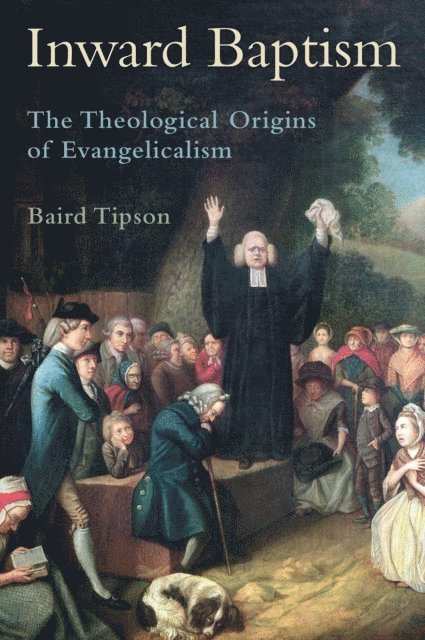
Inward Baptism analyses the theological developments that led to the great evangelical revivals of the mid-eighteenth century. Baird Tipson here demonstrates how the rationale for the "new birth," the characteristic and indispensable evangelical experience, developed slowly but inevitably from Luther's critique of late medieval Christianity.Addressing the great indulgence campaigns of the late fifteenth and early sixteenth centuries, Luther's perspective on sacramental baptism, as well as the confrontation between Lutheran and Reformed theologians who fastened on to different aspects of Luther's teaching, Tipson sheds light on how these disparate historical moments collectively created space for evangelicalism. This leads to an exploration of the theology of the leaders of the Evangelical awakening in the British Isles, George Whitefield and John Wesley, who insisted that by preaching the immediate revelation of the Holy Spirit during the "new birth," they were recovering an essential element of primitive Christianity that had been forgotten over the centuries. Ultimately, Inward Baptism examines how these shifts in religious thought made possible a commitment to an inward baptism and consequently, the evangelical experience.
E-bok
PDF, Engelska, 20201 099 kr
Läs direkt efter köp
Inward Baptism analyses the theological developments that led to the great evangelical revivals of the mid-eighteenth century. Baird Tipson here demonstrates how the rationale for the "new birth," the characteristic and indispensable evangelical experience, developed slowly but inevitably from Luther''s critique of late medieval Christianity.Addressing the great indulgence campaigns of the late fifteenth and early sixteenth centuries, Luther''s perspective on sacramental baptism, as well as the confrontation between Lutheran and Reformed theologians who fastened on to different aspects of Luther''s teaching, Tipson sheds light on how these disparate historical moments collectively created space for evangelicalism.This leads to an exploration of the theology of the leaders of the Evangelical awakening in the British Isles, George Whitefield and John Wesley, who insisted that by preaching the immediate revelation of the Holy Spirit during the "new birth," they were recovering an essential element of primitive Christianity that had been forgotten over the centuries. Ultimately, Inward Baptism examines how these shifts in religious thought made possible a commitment to an inward baptism and consequently, the evangelical experience.
E-bok
Engelska, 20201 099 kr
Läs direkt efter köp
Inward Baptism analyses the theological developments that led to the great evangelical revivals of the mid-eighteenth century. Baird Tipson here demonstrates how the rationale for the "new birth," the characteristic and indispensable evangelical experience, developed slowly but inevitably from Luther''s critique of late medieval Christianity.Addressing the great indulgence campaigns of the late fifteenth and early sixteenth centuries, Luther''s perspective on sacramental baptism, as well as the confrontation between Lutheran and Reformed theologians who fastened on to different aspects of Luther''s teaching, Tipson sheds light on how these disparate historical moments collectively created space for evangelicalism.This leads to an exploration of the theology of the leaders of the Evangelical awakening in the British Isles, George Whitefield and John Wesley, who insisted that by preaching the immediate revelation of the Holy Spirit during the "new birth," they were recovering an essential element of primitive Christianity that had been forgotten over the centuries. Ultimately, Inward Baptism examines how these shifts in religious thought made possible a commitment to an inward baptism and consequently, the evangelical experience.