Balazs Halmos – författare
Visar alla böcker från författaren Balazs Halmos. Handla med fri frakt och snabb leverans.
6 produkter
6 produkter
E-bok
Engelska, 2023283 kr
Läs direkt efter köp
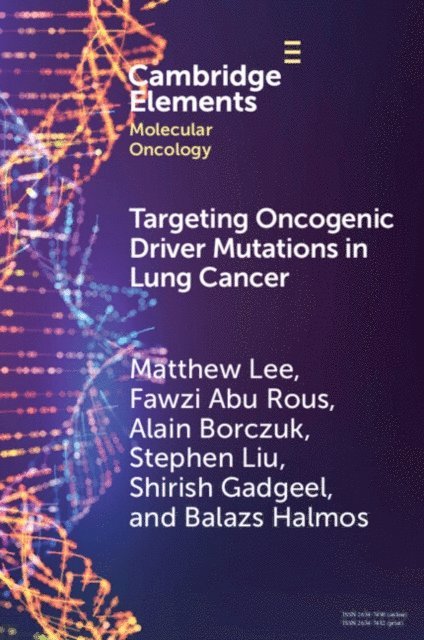
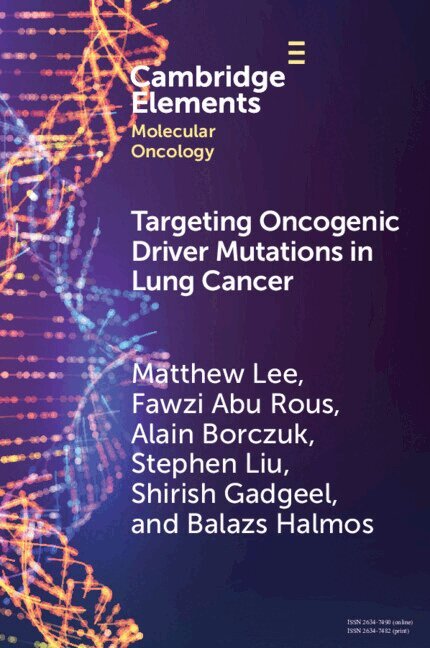
The recent advances in the field of molecular diagnostic techniques have led to the identification of targetable alterations prompting a paradigm shift in the management of non-small cell lung cancer (NSCLC) and an era of precision oncology. This Element highlights the most clinically relevant oncogenic drivers other than EGFR, their management and current advancements in treatment. It also examines the different challenges in resistance to targeted therapies and diagnostic dilemmas for each oncogenic driver and the future direction of NSCLC management.
E-bok
PDF, Engelska, 2023294 kr
Läs direkt efter köp
The recent advances in the field of molecular diagnostic techniques have led to the identification of targetable alterations prompting a paradigm shift in the management of non-small cell lung cancer (NSCLC) and an era of precision oncology. This Element highlights the most clinically relevant oncogenic drivers other than EGFR, their management and current advancements in treatment. It also examines the different challenges in resistance to targeted therapies and diagnostic dilemmas for each oncogenic driver and the future direction of NSCLC management.
Häftad, Engelska, 2023
246 kr
Skickas inom 7-10 vardagar
The recent advances in the field of molecular diagnostic techniques have led to the identification of targetable alterations prompting a paradigm shift in the management of non-small cell lung cancer (NSCLC) and an era of precision oncology. This Element highlights the most clinically relevant oncogenic drivers other than EGFR, their management and current advancements in treatment. It also examines the different challenges in resistance to targeted therapies and diagnostic dilemmas for each oncogenic driver and the future direction of NSCLC management.
E-bok
PDF, Engelska, 2023294 kr
Läs direkt efter köp
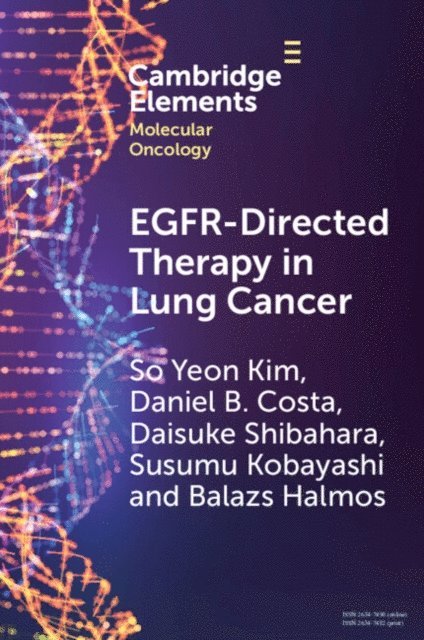
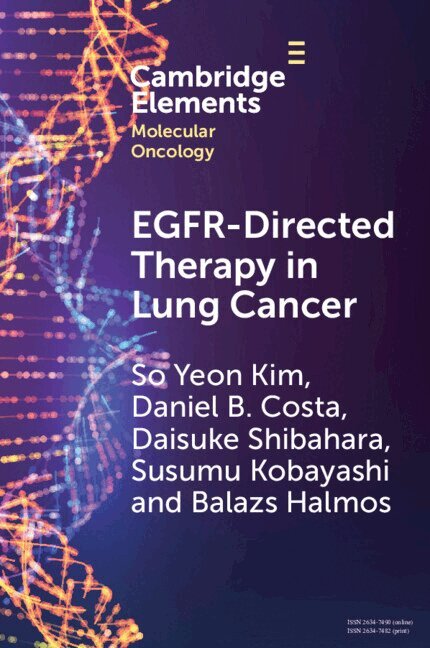
Epidermal growth factor receptor (EGFR)-mutant non-small cell lung cancer (NSCLC) is a clinically important driver alteration affecting approximately one-third of lung cancer patients. Treatments for EGFR-exon 19 deletion and exon 21 L858R NSCLC have evolved over the last decade from first-generation reversible tyrosine kinase inhibitors (TKI) to third-generation irreversible TKIs, of which osimertinib has been the widely accepted as first-line therapy. Despite survival improvement seen with osimertinib and its efficacy against acquired T790M mutation, resistance through on-target and off-target pathways eventually develop. This Element describes the structural biology and pathophysiology of EGFR-mutant NSCLC and discusses past, current, and future treatment options in the metastatic, neoadjuvant, and adjuvant settings. It describes the biology and recently approved treatment for EGFR-exon 20 insertion mutation and the treatment for the uncommon exon 18 (G719X), 20 (S768I), and 21 (L861Q) mutations. It also outlines the promising clinical applications of circulating tumor DNA (ctDNA).
Häftad, Engelska, 2023
246 kr
Skickas inom 7-10 vardagar
Epidermal growth factor receptor (EGFR)-mutant non-small cell lung cancer (NSCLC) is a clinically important driver alteration affecting approximately one-third of lung cancer patients. Treatments for EGFR-exon 19 deletion and exon 21 L858R NSCLC have evolved over the last decade from first-generation reversible tyrosine kinase inhibitors (TKI) to third-generation irreversible TKIs, of which osimertinib has been the widely accepted as first-line therapy. Despite survival improvement seen with osimertinib and its efficacy against acquired T790M mutation, resistance through on-target and off-target pathways eventually develop. This Element describes the structural biology and pathophysiology of EGFR-mutant NSCLC and discusses past, current, and future treatment options in the metastatic, neoadjuvant, and adjuvant settings. It describes the biology and recently approved treatment for EGFR-exon 20 insertion mutation and the treatment for the uncommon exon 18 (G719X), 20 (S768I), and 21 (L861Q) mutations. It also outlines the promising clinical applications of circulating tumor DNA (ctDNA).
E-bok
Engelska, 2023294 kr
Läs direkt efter köp
Epidermal growth factor receptor (EGFR)-mutant non-small cell lung cancer (NSCLC) is a clinically important driver alteration affecting approximately one-third of lung cancer patients. Treatments for EGFR-exon 19 deletion and exon 21 L858R NSCLC have evolved over the last decade from first-generation reversible tyrosine kinase inhibitors (TKI) to third-generation irreversible TKIs, of which osimertinib has been the widely accepted as first-line therapy. Despite survival improvement seen with osimertinib and its efficacy against acquired T790M mutation, resistance through on-target and off-target pathways eventually develop. This Element describes the structural biology and pathophysiology of EGFR-mutant NSCLC and discusses past, current, and future treatment options in the metastatic, neoadjuvant, and adjuvant settings. It describes the biology and recently approved treatment for EGFR-exon 20 insertion mutation and the treatment for the uncommon exon 18 (G719X), 20 (S768I), and 21 (L861Q) mutations. It also outlines the promising clinical applications of circulating tumor DNA (ctDNA).