Barbara B. Oberg – författare
Visar alla böcker från författaren Barbara B. Oberg. Handla med fri frakt och snabb leverans.
40 produkter
Benjamin Franklin, Jonathan Edwards, and the Representation of American Culture
Av Barbara B. Oberg, Harry S. Stout
Inbunden, 1993
1985 kr
Lägg i varukorg
This is an interdisciplinary collection of comparative essays which look at aspects of the thought of Jonathan Edwards and Benjamin Franklin and consider the place of these two men in American culture. The essays have their origin in a conference held at Yale University, the home of the modern …
Benjamin Franklin, Jonathan Edwards, and the Representation of American Culture
Av Harry S. Stout, Barbara B. Oberg
E-bok, 1993
1307 kr
Lägg i varukorg
This interdisciplinary collection of comparative essays by distinguished historians and literary critics looks at aspects of the thought of Jonathan Edwards and Benjamin Franklin and considers the place of these two men in American culture. Probably the two most examined figures of the colonial …
Papers of Thomas Jefferson, Volume 29
1 March 1796 to 31 December 1797
Av Thomas Jefferson, Barbara B. Oberg
Inbunden, 2001
1648 kr
Lägg i varukorg
In the twenty-two months covered by this volume, Jefferson spent most of his time at Monticello, where in his short-lived retirement from office he turned in earnest to the renovation of his residence and described himself as a "monstrous farmer." Yet he narrowly missed being elected George …
Papers of Thomas Jefferson, Volume 30
1 January 1798 to 31 January 1799
Av Thomas Jefferson, Barbara B. Oberg
Inbunden, 2003
1785 kr
Lägg i varukorg
During the thirteen months covered by this volume, Thomas Jefferson spent more than half of his time in Philadelphia serving as vice president under President John Adams and presiding over a Senate that was dominated by his political opponents, the Federalists. Debates in Congress took place …
Papers of Thomas Jefferson, Volume 31
1 February 1799 to 31 May 1800
Av Thomas Jefferson, Barbara B. Oberg
Inbunden, 2004
1785 kr
Lägg i varukorg
As this volume opens, partisan politics in the United States are building to a crescendo with the approach of the presidential election. Working for a Republican victory, Jefferson consults frequently with Madison, Monroe, and others to achieve favorable results in state elections. He corresponds …
Papers of Thomas Jefferson, Volume 32
1 June 1800 to 16 February 1801
Av Thomas Jefferson, Barbara B. Oberg
Inbunden, 2005
1785 kr
Lägg i varukorg
"I have sometimes asked myself whether my country is the better for my having lived at all?" Jefferson muses in this volume. His answer: "I do not know that it is." Required by custom to be "entirely passive" during the presidential campaign, Jefferson, at Monticello during the summer of 1800, …
Papers of Thomas Jefferson, Volume 33
17 February to 30 April 1801
Av Thomas Jefferson, Barbara B. Oberg
Inbunden, 2007
1599 kr
Lägg i varukorg
Under normal circumstances, Thomas Jefferson would have had more than two months to prepare for his presidency. However, since the House of Representatives finally settled a tied electoral vote only on 17 February 1801, he had two weeks. This book, which covers the two-and-a-half-month period from …
Papers of Thomas Jefferson, Volume 34
1 May to 31 July 1801
Av Thomas Jefferson, Barbara B. Oberg
Inbunden, 2008
1599 kr
Lägg i varukorg
In Volume 34, covering May through July 1801, the story of Thomas Jefferson's first presidential administration continues to unfold. He quickly begins to implement his objectives of economy and efficiency in government. Requesting the chief clerk of the War Department to prepare a list of …
Papers of Thomas Jefferson, Volume 36
1 December 1801 to 3 March 1802
Av Thomas Jefferson, Barbara B. Oberg
Inbunden, 2010
1599 kr
Lägg i varukorg
The period covered by this volume brings to a conclusion Thomas Jefferson's first year as president. On 8 December he communicates his first annual message to Congress: peace between France and England is restored; a rise in population will increase revenue and help abolish internal taxes; the …
Papers of Thomas Jefferson, Volume 37
4 March to 30 June 1802
Av Thomas Jefferson, Barbara B. Oberg
Inbunden, 2011
1648 kr
Lägg i varukorg
This volume opens on 4 March 1802, the first anniversary of Thomas Jefferson's inauguration as the nation's third president, and closes on 30 June. In March, a delegation of Seneca Indians comes to Washington to discuss their tribe's concerns, and Jefferson names a commissioner to handle a land …
Papers of Thomas Jefferson, Volume 38
1 July to 12 November 1802
Av Thomas Jefferson, Barbara B. Oberg
Inbunden, 2012
1599 kr
Lägg i varukorg
Volume 38 opens on 1 July 1802, when Jefferson is in Washington, and closes on 12 November, when he is again there. For the last week of July and all of August and September, he resides at Monticello. Frequent correspondence with his heads of department and two visits with Secretary of State James …
Papers of Thomas Jefferson, Volume 39
13 November 1802 to 3 March 1803
Av Thomas Jefferson, Barbara B. Oberg
Inbunden, 2013
1599 kr
Lägg i varukorg
This volume opens on 13 November 1802, when Jefferson is in Washington, and closes on 3 March 1803, the final day of his second year as president. The central issue of these months is the closing of the right of deposit at New Orleans, an act that threatens the economic wellbeing of Westerners. …
Papers of Thomas Jefferson, Volume 40
4 March to 10 July 1803
Av Thomas Jefferson, Barbara B. Oberg
Inbunden, 2014
1599 kr
Lägg i varukorg
This volume opens on 4 March 1803, the first day of Jefferson's third year as president. Still shaken by the closing of the right of deposit at New Orleans, he confronts the potential political consequences of a cession of Louisiana to France that might result in a denial of American access to the …
Papers of Thomas Jefferson, Volume 32
1 June 1800 to 16 February 1801
Av Thomas Jefferson, Barbara B. Oberg
E-bok, 2018
2203 kr
Lägg i varukorg
"e;I have sometimes asked myself whether my country is the better for my having lived at all?"e; Jefferson muses in this volume. His answer: "e;I do not know that it is."e; Required by custom to be "e;entirely passive"e; during the presidential campaign, Jefferson, at …
Papers of Thomas Jefferson, Volume 33
17 February to 30 April 1801
Av Thomas Jefferson, Barbara B. Oberg
E-bok, 2018
2203 kr
Lägg i varukorg
Under normal circumstances, Thomas Jefferson would have had more than two months to prepare for his presidency. However, since the House of Representatives finally settled a tied electoral vote only on 17 February 1801, he had two weeks. This book, which covers the two-and-a-half-month period from …
Papers of Thomas Jefferson, Volume 34
1 May to 31 July 1801
Av Thomas Jefferson, Barbara B. Oberg
E-bok, 2018
2203 kr
Lägg i varukorg
In Volume 34, covering May through July 1801, the story of Thomas Jefferson's first presidential administration continues to unfold. He quickly begins to implement his objectives of economy and efficiency in government. Requesting the chief clerk of the War Department to prepare a list of …
Papers of Thomas Jefferson, Volume 35
1 August to 30 November 1801
Av Thomas Jefferson, Barbara B. Oberg
E-bok, 2018
2203 kr
Lägg i varukorg
For the first two months covered by this volume, Thomas Jefferson is residing at Monticello, avoiding the "e;rather sickly"e; season in the nation's capital. His mountaintop house finally has a roof and both daughters and their families come to stay with him. Using cowpox vaccine received …
Papers of Thomas Jefferson, Volume 40
4 March to 10 July 1803
Av Thomas Jefferson, Barbara B. Oberg
E-bok, 2018
2271 kr
Lägg i varukorg
This volume opens on 4 March 1803, the first day of Jefferson's third year as president. Still shaken by the closing of the right of deposit at New Orleans, he confronts the potential political consequences of a cession of Louisiana to France that might result in a denial of American access to the …
Papers of Thomas Jefferson, Volume 41
11 July to 15 November 1803
Av Thomas Jefferson, Barbara B. Oberg
E-bok, 2018
2203 kr
Lägg i varukorg
The Louisiana Purchase dominates the months covered in this volume. Jefferson departs for Monticello to enjoy a needed respite after the busy three and a half months he has just spent in the nation's capital. Shortly before leaving Washington, he has a last meeting with his cabinet, after which he …
Papers of Thomas Jefferson, Volume 29
1 March 1796 to 31 December 1797
Av Thomas Jefferson, Barbara B. Oberg
E-bok, 2018
2271 kr
Lägg i varukorg
In the twenty-two months covered by this volume, Jefferson spent most of his time at Monticello, where in his short-lived retirement from office he turned in earnest to the renovation of his residence and described himself as a 'monstrous farmer.' Yet he narrowly missed being elected George …
Papers of Thomas Jefferson, Volume 30
1 January 1798 to 31 January 1799
Av Thomas Jefferson, Barbara B. Oberg
E-bok, 2018
2222 kr
Lägg i varukorg
During the thirteen months covered by this volume, Thomas Jefferson spent more than half of his time in Philadelphia serving as vice president under President John Adams and presiding over a Senate that was dominated by his political opponents, the Federalists. Debates in Congress took place …
Papers of Thomas Jefferson, Volume 31
1 February 1799 to 31 May 1800
Av Thomas Jefferson, Barbara B. Oberg
E-bok, 2018
2203 kr
Lägg i varukorg
As this volume opens, partisan politics in the United States are building to a crescendo with the approach of the presidential election. Working for a Republican victory, Jefferson consults frequently with Madison, Monroe, and others to achieve favorable results in state elections. He corresponds …
Federalists Reconsidered
Av Doron Ben-Atar, Barbara B. Oberg
Inbunden, 1999
935 kr
Lägg i varukorg
This collection of essays demonstrate that American political culture was fashioned in a dialogue between Federalists and Jeffersonians. They portray an active Federalist coalition that offered an intellectual and political alternative throughout the era of the early republic.
Federalists Reconsidered
Av Doron Ben-Atar, Barbara B. Oberg
Häftad, 1999
355 kr
Lägg i varukorg
This collection of essays demonstrate that American political culture was fashioned in a dialogue between Federalists and Jeffersonians. They portray an active Federalist coalition that offered an intellectual and political alternative throughout the era of the early republic.
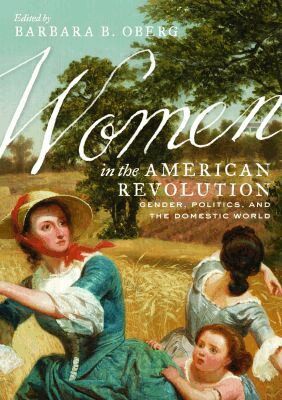
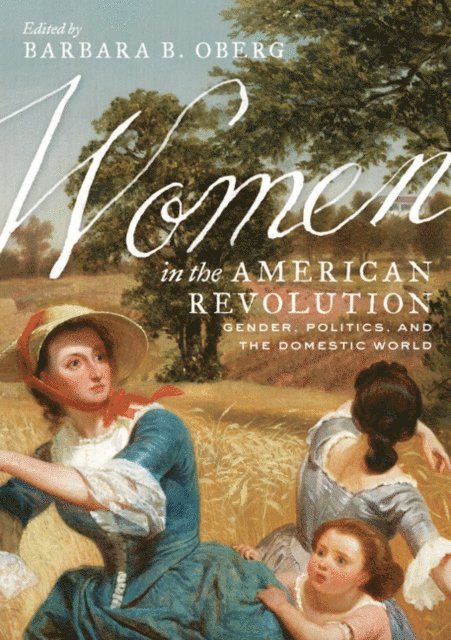
Women in the American Revolution
Gender, Politics, and the Domestic World
Inbunden, 2019
539 kr
Lägg i varukorg
Building on a quarter century of scholarship following the publication of the groundbreaking Women in the Age of the American Revolution, the engagingly written essays in this volume offer an updated answer to the question, What was life like for women in the era of the American Revolution? The …
Women in the American Revolution
Gender, Politics, and the Domestic World
E-bok, 2019
500 kr
Lägg i varukorg
Building on a quarter century of scholarship following the publication of the groundbreaking Women in the Age of the American Revolution, the engagingly written essays in this volume offer an updated answer to the question, What was life like for women in the era of the American Revolution? The …
Papers of Thomas Jefferson, Volume 36
1 December 1801 to 3 March 1802
Av Thomas Jefferson, Barbara B. Oberg
E-bok, 2018
2222 kr
Lägg i varukorg
The period covered by this volume brings to a conclusion Thomas Jefferson's first year as president. On 8 December he communicates his first annual message to Congress: peace between France and England is restored; a rise in population will increase revenue and help abolish internal taxes; the …
Papers of Thomas Jefferson, Volume 37
4 March to 30 June 1802
Av Thomas Jefferson, Barbara B. Oberg
E-bok, 2018
2205 kr
Lägg i varukorg
This volume opens on 4 March 1802, the first anniversary of Thomas Jefferson's inauguration as the nation's third president, and closes on 30 June. In March, a delegation of Seneca Indians comes to Washington to discuss their tribe's concerns, and Jefferson names a commissioner to handle a land …
Papers of Thomas Jefferson, Volume 38
1 July to 12 November 1802
Av Thomas Jefferson, Barbara B. Oberg
E-bok, 2012
2203 kr
Lägg i varukorg
Volume 38 opens on 1 July 1802, when Jefferson is in Washington, and closes on 12 November, when he is again there. For the last week of July and all of August and September, he resides at Monticello. Frequent correspondence with his heads of department and two visits with Secretary of State James …
Papers of Thomas Jefferson, Volume 39
13 November 1802 to 3 March 1803
Av Thomas Jefferson, Barbara B. Oberg
E-bok, 2018
2222 kr
Lägg i varukorg
This volume opens on 13 November 1802, when Jefferson is in Washington, and closes on 3 March 1803, the final day of his second year as president. The central issue of these months is the closing of the right of deposit at New Orleans, an act that threatens the economic wellbeing of Westerners. …