Barbara Deitel – författare
Visar alla böcker från författaren Barbara Deitel. Handla med fri frakt och snabb leverans.
4 produkter
4 produkter
E-bok
Engelska, 2014779 kr
Läs direkt efter köp
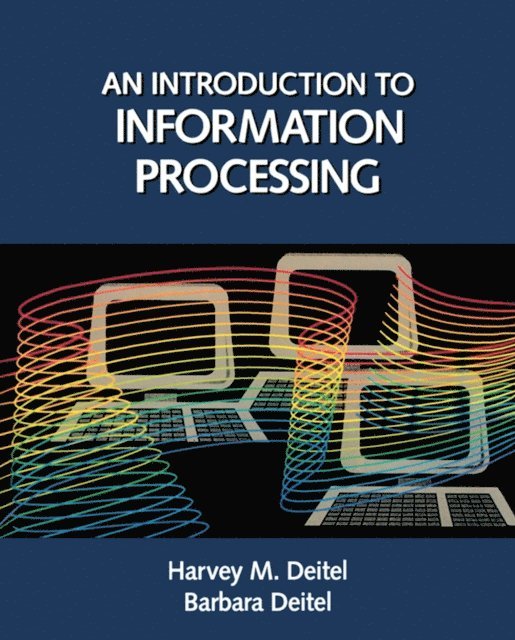
An Introduction to Information Processing provides an informal introduction to the computer field. This book introduces computer hardware, which is the actual computing equipment. Organized into three parts encompassing 12 chapters, this book begins with an overview of the evolution of personal computing and includes detailed case studies on two of the most essential personal computers for the 1980s, namely, the IBM Personal Computer and Apple''s Macintosh. This text then traces the evolution of modern computing systems from the earliest mechanical calculating devices to microchips. Other chapters consider the components and operation of typical data communications systems. This book discusses as well the various types of communications networks and communications via space satellites. The final chapter deals with software or computer programs, the sets of instructions that programmers write to inform the computer how to solve particular problems. This book is a valuable resource for computer specialists, mathematicians, and computer programmers.
E-bok
PDF, Engelska, 2014756 kr
Läs direkt efter köp
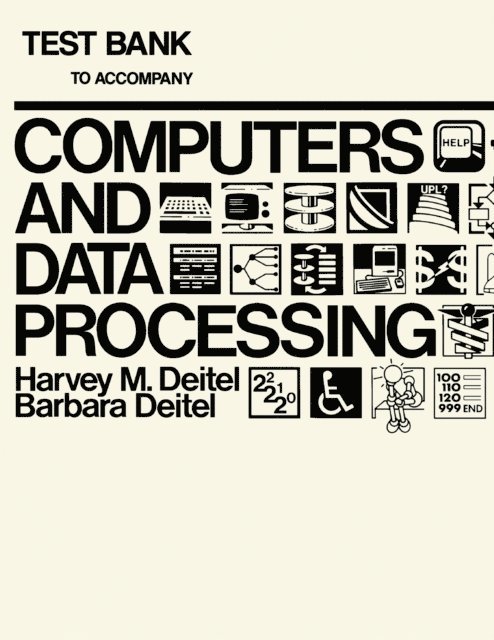
Test Bank to Accompany Computers and Data Processing provides a variety of questions from which instructors can easily custom tailor exams appropriate for their particular courses. This book contains over 4000 short-answer questions that span the full range of topics for introductory computing course. This book is organized into five parts encompassing 19 chapters. This text provides a very large number of questions so that instructors can produce different exam testing essentially the same topics in succeeding semesters. Three types of questions are included in this book, including multiple choices, true/false, and fill-in-the-blanks. The answers are provided side-by-side with the questions so that instructors can easily locate questions that are unambiguous and appropriate in the context of their courses.This book covers a variety of topics, including evolution of computers, computer processor, input, output, software, programming languages, and data communications. This book is a valuable resource for students and instructors in introductory computing course.
E-bok
PDF, Engelska, 2014756 kr
Läs direkt efter köp
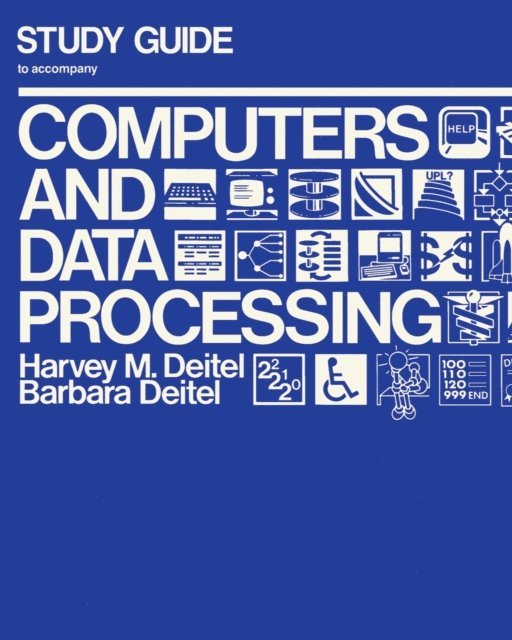
Study Guide to Accompany Computer and Data Processing provides information pertinent to the fundamental aspects of computers and computer technology. This book presents the key benefits of using computers. Organized into five parts encompassing 19 chapters, this book begins with an overview of the evolution of modern computing systems from the earliest mechanical calculating devices to microchips. This text then introduces computer hardware and describes the processor. Other chapters describe how microprocessors are made and describe the physical operation of computers. This book discusses as well how computers present their outputs and explains the storage and retrieval of massive amounts of computer-accessible information from secondary storage devices. The final chapter discusses the use of computers in the transportation systems and the ways in which they make possible other innovations in transportation. This book is a valuable resource for computer scientists, systems analysts, computer programmers, mathematicians, historians, computer specialists, and students.
E-bok
PDF, Engelska, 20141 008 kr
Läs direkt efter köp
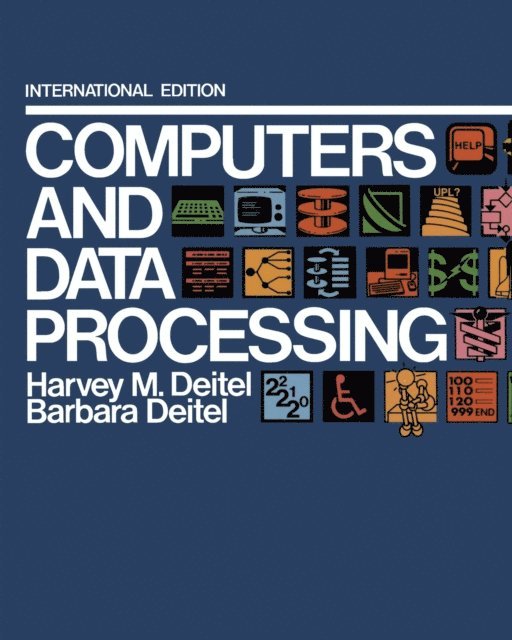
Computers and Data Processing provides information pertinent to the advances in the computer field. This book covers a variety of topics, including the computer hardware, computer programs or software, and computer applications systems. Organized into five parts encompassing 19 chapters, this book begins with an overview of some of the fundamental computing concepts. This text then explores the evolution of modern computing systems from the earliest mechanical calculating devices to microchips. Other chapters consider how computers present their results and explain the storage and retrieval of massive amounts of computer-accessible information from secondary storage devices. This book discusses as well the development installation, evaluation, and control of computer systems. The final chapter discusses the use of computers in the transportation systems and the ways in which they make possible other innovations in transportation. This book is a valuable resource for computer scientists, systems analysts, computer programmers, mathematicians, and computer specialists.