Barbara Hales - Böcker
Visar alla böcker från författaren Barbara Hales. Handla med fri frakt och snabb leverans.
5 produkter
5 produkter
Del 15 - Screen Cultures: German Film and the Visual
Continuity and Crisis in German Cinema, 1928-1936
Inbunden, Engelska, 2016
1 225 kr
Skickas inom 7-10 vardagar
New essays examining the differences and commonalities between late Weimar-era and early Nazi-era German cinema against a backdrop of the crises of that time.Hitler's Machtergreifung, or seizure of power, on January 30, 1933, marked the end of the Weimar Republic and the beginning of the Third Reich, and German film scholarship has generally accepted this date as the break between Weimar and Nazi-era film as well. This collection of essays interrogates the continuities and discontinuities in German cinema before and after January 1933 and their relationship to the various crises of the years 1928 to 1936in seven areas: politics, the economy, concepts of race and ethnicity, the making of cinema stars, genre cinema, film technologies and aesthetics, and German-international film relations. Focusing both on canonical and lesser-known works, the essays analyze a representative sample of films and genres from the period. This book will be of interest to scholars and students of Weimar and Third Reich cinema and of the sociopolitical, economic, racial, artistic, and technological spheres in both late Weimar and the early Third Reich, as well as to film scholars in general.Contributors: Paul Flaig, Margrit Frölich, Barbara Hales, Anjeana Hans, Bastian Heinsohn, Brook Henkel,Kevin B. Johnson, Owen Lyons, Richard W. McCormick, Kalani Michell, Mihaela Petrescu, Christian Rogowski, Valerie Weinstein, Wilfried Wilms.Barbara Hales is Associate Professor of History at the University of Houston-Clear Lake. Mihaela Petrescu is Visiting Lecturer at the University of Pittsburgh. Valerie Weinstein is Assistant Professor of Women's, Gender, and Sexuality Studies and German Studies at the University of Cincinnati.
2 229 kr
Skickas inom 3-6 vardagar
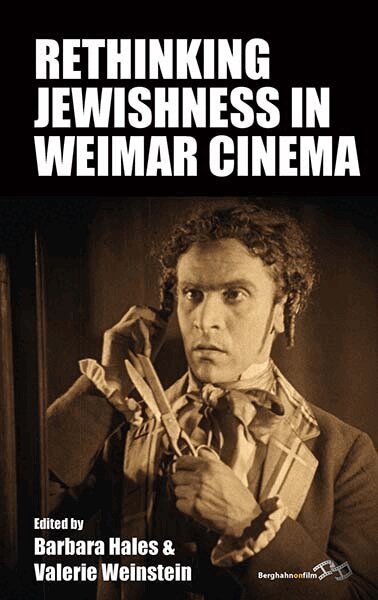
The burgeoning film industry in the Weimar Republic was, among other things, a major site of German-Jewish experience, one that provided a sphere for Jewish “outsiders” to shape mainstream culture. The chapters collected in this volume deploy new historical, theoretical, and methodological approaches to understanding the significant involvement of German Jews in Weimar cinema. Reflecting upon different conceptions of Jewishness – as religion, ethnicity, social role, cultural code, or text – these studies offer a wide-ranging exploration of an often overlooked aspect of German film history.
Del 23 - Women, Gender and Sexuality in German Literature and Culture
Black Magic Woman
Gender and the Occult in Weimar Germany
Häftad, Engelska, 2021
618 kr
Skickas inom 5-8 vardagar
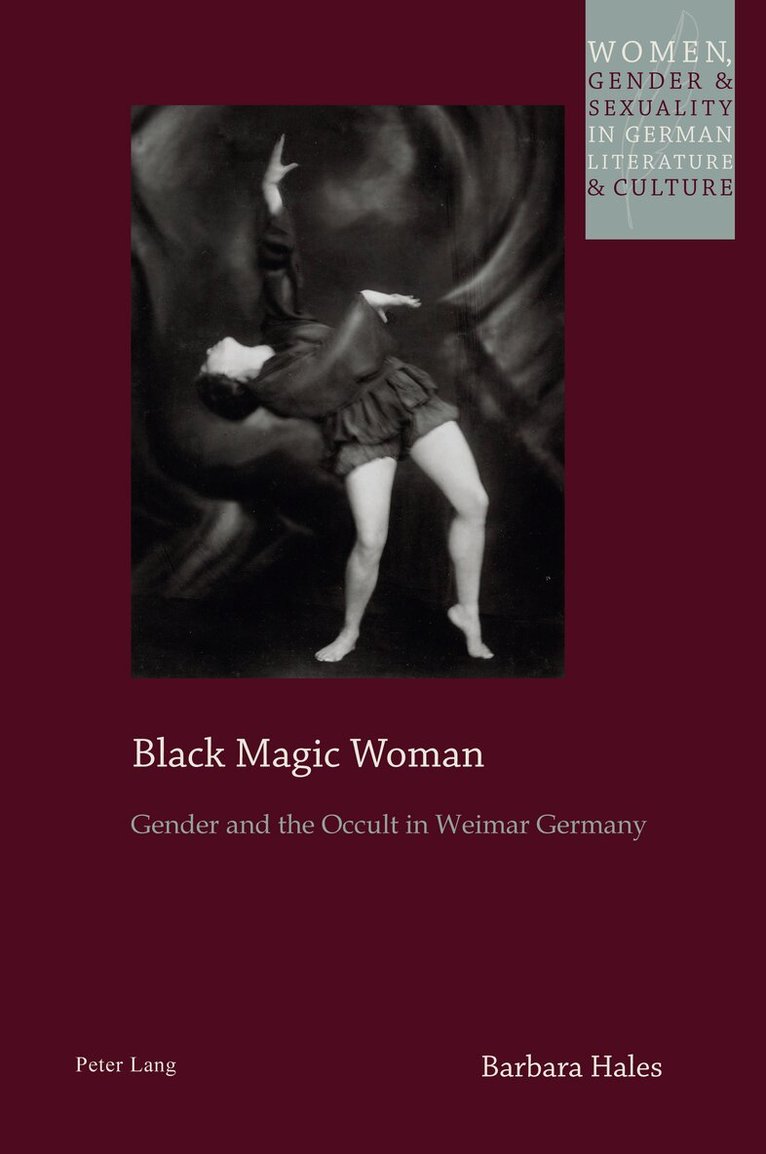
This book is a study of women’s involvement in occult practices in Weimar Germany. Women during the Weimar period experienced an unprecedented level of liberation. This included a greatly increased role in the work force as well as participation in other realms that were traditionally the province of men. They were also given the liberty to be more outwardly sexualized. Women engaging in occult practices during this period present an interesting example of the liberated woman. The occult woman reversed all traditional gender roles by the pretense of possessing powers that threatened male dominance.The book investigates the significance of the occult in the Weimar period by drawing on popular, scientific, and legal writings of women’s involvement in the occult. In addition to examining reports of women engaging in actual occult practices (expressive dance, mediumism, and witchcraft), this book also considers various fictional depictions of women as demonic or as possessing supernatural powers (ghosts, vampires, and monsters). The author contends that both actual practices, as well as fictional depictions, constructed an imaginary female identity as a dangerous and grotesque monster.
654 kr
Skickas inom 3-6 vardagar
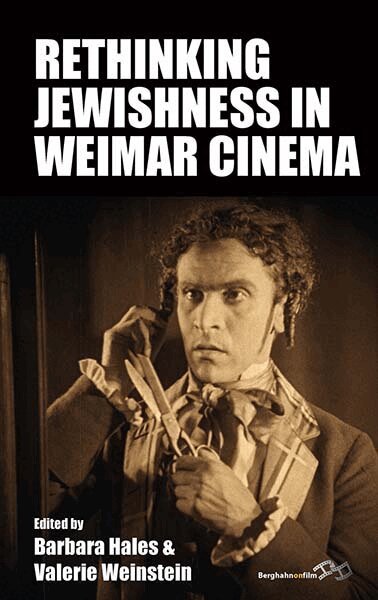
The burgeoning film industry in the Weimar Republic was, among other things, a major site of German-Jewish experience, one that provided a sphere for Jewish “outsiders” to shape mainstream culture. The chapters collected in this volume deploy new historical, theoretical, and methodological approaches to understanding the significant involvement of German Jews in Weimar cinema. Reflecting upon different conceptions of Jewishness – as religion, ethnicity, social role, cultural code, or text – these studies offer a wide-ranging exploration of an often overlooked aspect of German film history.
Cinematically Transmitted Disease
Eugenics and Film in Weimar and Nazi Germany
Inbunden, Engelska, 2024
1 747 kr
Skickas inom 3-6 vardagar
Propaganda played an essential role in influencing the attitudes and policies of German National Socialism on racial purity and euthanasia, but little has been said on the impact of medical hygiene films. Cinematically Transmitted Disease explores these films for the first time, from their inception during the Weimar era and throughout the years to come. In this innovative volume, author Barbara Hales demonstrates how medical films as well as feature films were circulated among the German people to embed and enforce notions of scientific legitimacy for racial superiority and genetically spread “incurable” diseases, creating and maintaining an instrumental fear of degradation in the German national population.