Barbara Hanawalt - Böcker
Visar alla böcker från författaren Barbara Hanawalt. Handla med fri frakt och snabb leverans.
3 produkter
3 produkter
1 956 kr
Skickas inom 3-6 vardagar
The completion of the first draft of the human genome has led to an explosion of interest in genetics and molecular biology. The view of the genome as a network of interacting computational components is well-established, but researchers are now trying to reverse the analogy, by using living organisms to construct logic circuits. The potential applications for such technologies is huge, ranging from bio-sensors, through industrial applications to drug delivery and diagnostics. This book would be the first to deal with the implementation of this technology, describing several working experimental demonstrations using cells as components of logic circuits, building toward computers incorporating biological components in their functioning.
310 kr
Skickas inom 7-10 vardagar
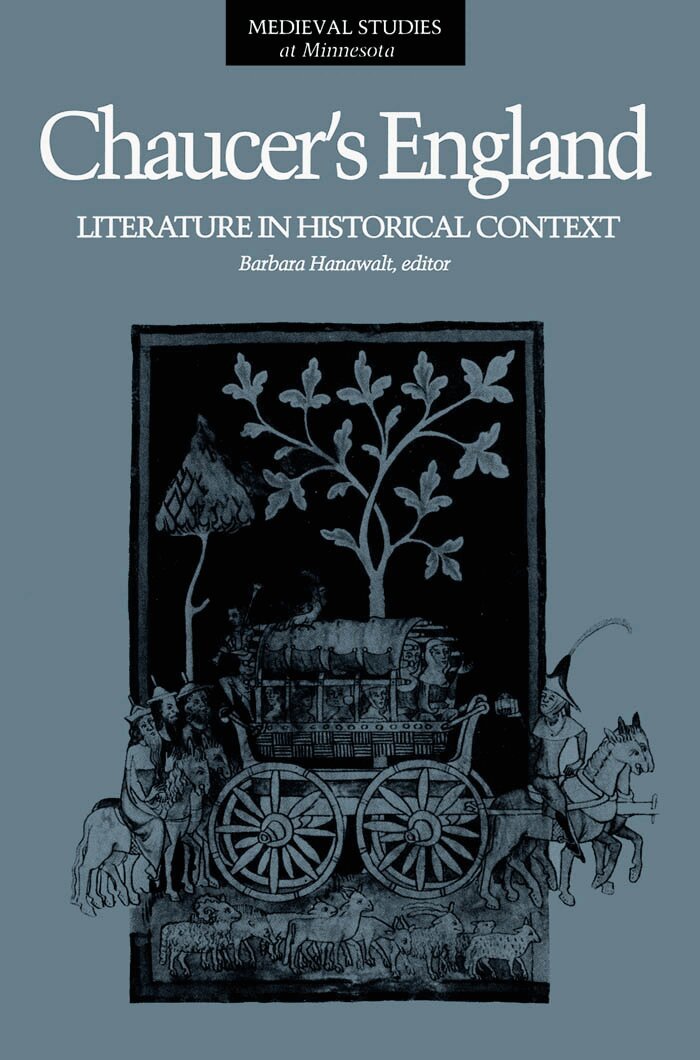
Chaucer’s England presents new interpretations of late fourteenth-century English society through a unique combination of historical inquiry and literary analysis. Beginning with the turbulent reign of Richard I and Bolingbroke’s coup, the contributors look at organized crime, illiteracy, patronage, the influence Richard might have had personally over the remarkable literary production of the period, the concepts of gentility that shaped Chaucer’s own thinking, the pervasive influence of hunting on medieval literature, the role London played as the center of both the court and the literary world , and more.Contributors to the volume include:Caroline Barron, Royal Holloway and Bedford CollegeMichael Bennett, University of TasmaniaLawrence Clopper, Indiana UniversitySusan Crane, Rutgers UniversityRichard Firth Green, University of Western OntarioBarbara Hanawalt, University of MinnesotaNicholas Orme, University of ExeterNigel Saul, Royal Holloway and Bedford CollegePaul Strohm, Indiana UniversityDavid Wallace, University of Minnesota
278 kr
Skickas inom 7-10 vardagar
Medieval Europe is known for its sense of ceremony and drama. Knightings, tournaments, coronations, religious processions, and even private celebrations such as baptisms, weddings, and funerals were occasions for ritual, feasting, and public display. This volume is the first to take a comprehensive look at the many types of city spectacles that entertained the masses and confirmed various messages of power in late medieval Europe. Bringing together leading scholars in history, art history, and literature, this interdisciplinary collection sets new standards for the study of medieval popular culture. Drawing examples from Spain, England, France, Italy, and the Netherlands, most of them in the fifteenth century, the authors explore the uses of ceremony as statements of political power, as pleas for divine intercession, and as expressions of popular culture. Their essays show us spectacles meant to confirm events such as victories, the signing of a city charter, or the coronation of a king. In other circumstances, the spectacle acts as a battleground where a struggle for the control of the metaphors of power is played out between factions within cities or between cities and kings. Still other ceremonies called upon divine spiritual powers in the hope that their intervention might save the urban inhabitants.We see here a public cognizant of the power of symbols to express its goals and achievements, a society reaching the height of sophistication in its manipulation of popular and elite culture for grand shows.