Barbara M. Byrne – författare
2 195 kr
Skickas inom 10-15 vardagar
939 kr
Skickas inom 10-15 vardagar
2 661 kr
Skickas inom 10-15 vardagar
992 kr
Läs direkt efter köp
This book illustrates the ease with which various features of LISREL 8 and PRELIS 2 can be implemented in addressing research questions that lend themselves to SEM. Its purpose is threefold: (a) to present a nonmathmatical introduction to basic concepts associated with SEM, (b) to demonstrate basic applications of SEM using both the DOS and Windows versions of LISREL 8, as well as both the LISREL and SIMPLIS lexicons, and (c) to highlight particular features of the LISREL 8 and PRELIS 2 progams that address important caveats related to SEM analyses.
This book is intended neither as a text on the topic of SEM, nor as a comprehensive review of the many statistical funcitons available in the LISREL 8 and PRELIS 2 programs. Rather, the intent is to provide a practical guide to SEM using the LISREL approach. As such, the reader is "walked through" a diversity of SEM applications that include both factor analytic and full latent variable models, as well as a variety of data management procedures.
992 kr
Läs direkt efter köp
This book illustrates the ease with which various features of LISREL 8 and PRELIS 2 can be implemented in addressing research questions that lend themselves to SEM. Its purpose is threefold: (a) to present a nonmathmatical introduction to basic concepts associated with SEM, (b) to demonstrate basic applications of SEM using both the DOS and Windows versions of LISREL 8, as well as both the LISREL and SIMPLIS lexicons, and (c) to highlight particular features of the LISREL 8 and PRELIS 2 progams that address important caveats related to SEM analyses.
This book is intended neither as a text on the topic of SEM, nor as a comprehensive review of the many statistical funcitons available in the LISREL 8 and PRELIS 2 programs. Rather, the intent is to provide a practical guide to SEM using the LISREL approach. As such, the reader is "walked through" a diversity of SEM applications that include both factor analytic and full latent variable models, as well as a variety of data management procedures.
1 110 kr
Läs direkt efter köp
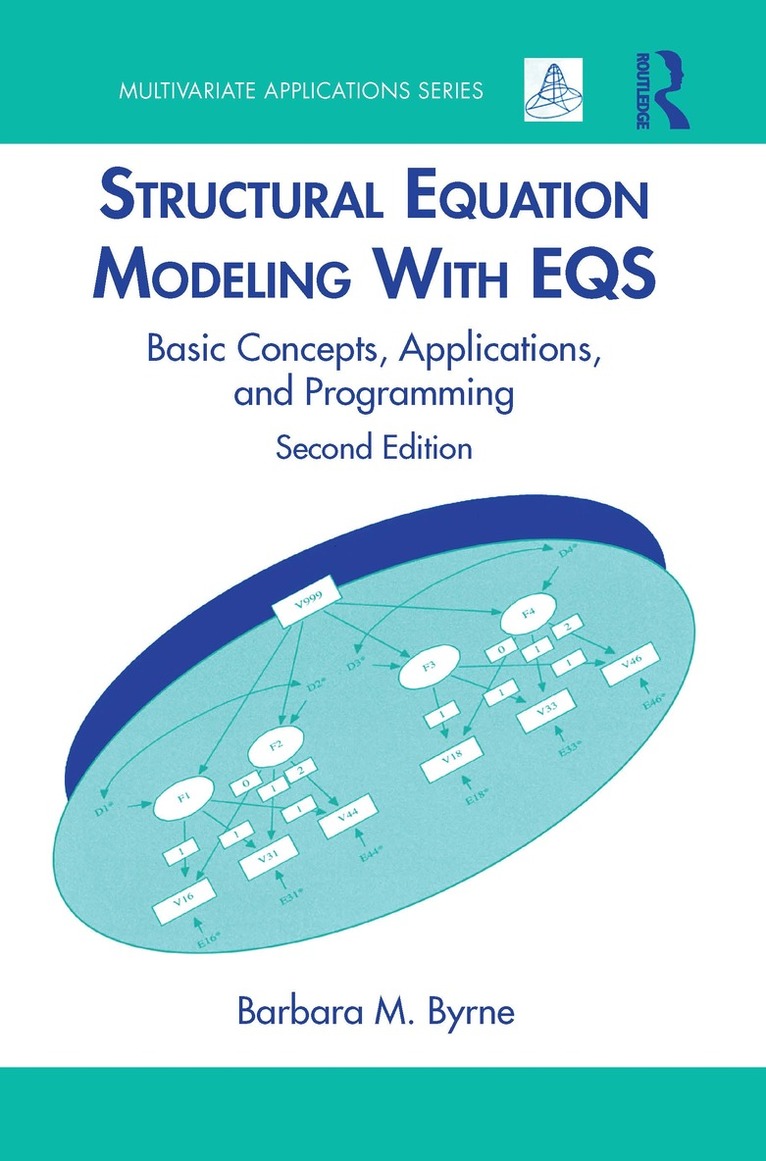
Readers who want a less mathematical alternative to the EQS manual will find exactly what they''re looking for in this practical text. Written specifically for those with little to no knowledge of structural equation modeling (SEM) or EQS, the author''s goal is to provide a non-mathematical introduction to the basic concepts of SEM by applying these principles to EQS, Version 6.1. The book clearly demonstrates a wide variety of SEM/EQS applications that include confirmatory factor analytic and full latent variable models.
Written in a "user-friendly" style, the author "walks" the reader through the varied steps involved in the process of testing SEM models: model specification and estimation, assessment of model fit, EQS output, and interpretation of findings. Each of the book''s applications is accompanied by: a statement of the hypothesis being tested, a schematic representation of the model, explanations of the EQS input and output files, tips on how to use the pull-down menus, and the data file upon which the application is based. The book carefully works through applications starting with relatively simple single group analyses, through to more advanced applications, such as a multi-group, latent growth curve, and multilevel modeling.
The new edition features:
many new applications that include a latent growth curve model, a multilevel model, a second-order model based on categorical data, a missing data multigroup model based on the EM algorithm, and the testing for latent mean differences related to a higher-order model; downloadable resources includes all application data; vignettes illustrating procedural and/or data management tasks; and description of how to build models both interactively using the BUILD-EQ interface and graphically using the EQS Diagrammer.1 110 kr
Läs direkt efter köp
Readers who want a less mathematical alternative to the EQS manual will find exactly what they''re looking for in this practical text. Written specifically for those with little to no knowledge of structural equation modeling (SEM) or EQS, the author''s goal is to provide a non-mathematical introduction to the basic concepts of SEM by applying these principles to EQS, Version 6.1. The book clearly demonstrates a wide variety of SEM/EQS applications that include confirmatory factor analytic and full latent variable models.
Written in a "user-friendly" style, the author "walks" the reader through the varied steps involved in the process of testing SEM models: model specification and estimation, assessment of model fit, EQS output, and interpretation of findings. Each of the book''s applications is accompanied by: a statement of the hypothesis being tested, a schematic representation of the model, explanations of the EQS input and output files, tips on how to use the pull-down menus, and the data file upon which the application is based. The book carefully works through applications starting with relatively simple single group analyses, through to more advanced applications, such as a multi-group, latent growth curve, and multilevel modeling.
The new edition features:
many new applications that include a latent growth curve model, a multilevel model, a second-order model based on categorical data, a missing data multigroup model based on the EM algorithm, and the testing for latent mean differences related to a higher-order model; downloadable resources includes all application data; vignettes illustrating procedural and/or data management tasks; and description of how to build models both interactively using the BUILD-EQ interface and graphically using the EQS Diagrammer.992 kr
Läs direkt efter köp
Modeled after Barbara Byrne’s other best-selling structural equation modeling (SEM) books, this practical guide reviews the basic concepts and applications of SEM using Mplus Versions 5 & 6. The author reviews SEM applications based on actual data taken from her own research. Using non-mathematical language, it is written for the novice SEM user. With each application chapter, the author "walks" the reader through all steps involved in testing the SEM model including:
an explanation of the issues addressed illustrated and annotated testing of the hypothesized and post hoc models explanation and interpretation of all Mplus input and output files important caveats pertinent to the SEM application under study a description of the data and reference upon which the model was based the corresponding data and syntax files available under "Supplementary Material" belowThe first two chapters introduce the fundamental concepts of SEM and important basics of the Mplus program. The remaining chapters focus on SEM applications and include a variety of SEM models presented within the context of three sections: Single-group analyses, Multiple-group analyses, and other important topics, the latter of which includes the multitrait-multimethod, latent growth curve, and multilevel models.
Intended for researchers, practitioners, and students who use SEM and Mplus, this book is an ideal resource for graduate level courses on SEM taught in psychology, education, business, and other social and health sciences and/or as a supplement for courses on applied statistics, multivariate statistics, intermediate or advanced statistics, and/or research design. Appropriate for those with limited exposure to SEM or Mplus, a prerequisite of basic statistics through regression analysis is recommended.
992 kr
Läs direkt efter köp
Modeled after Barbara Byrne’s other best-selling structural equation modeling (SEM) books, this practical guide reviews the basic concepts and applications of SEM using Mplus Versions 5 & 6. The author reviews SEM applications based on actual data taken from her own research. Using non-mathematical language, it is written for the novice SEM user. With each application chapter, the author "walks" the reader through all steps involved in testing the SEM model including:
an explanation of the issues addressed illustrated and annotated testing of the hypothesized and post hoc models explanation and interpretation of all Mplus input and output files important caveats pertinent to the SEM application under study a description of the data and reference upon which the model was based the corresponding data and syntax files available under "Supplementary Material" belowThe first two chapters introduce the fundamental concepts of SEM and important basics of the Mplus program. The remaining chapters focus on SEM applications and include a variety of SEM models presented within the context of three sections: Single-group analyses, Multiple-group analyses, and other important topics, the latter of which includes the multitrait-multimethod, latent growth curve, and multilevel models.
Intended for researchers, practitioners, and students who use SEM and Mplus, this book is an ideal resource for graduate level courses on SEM taught in psychology, education, business, and other social and health sciences and/or as a supplement for courses on applied statistics, multivariate statistics, intermediate or advanced statistics, and/or research design. Appropriate for those with limited exposure to SEM or Mplus, a prerequisite of basic statistics through regression analysis is recommended.
840 kr
Skickas inom 10-15 vardagar
2 971 kr
Skickas inom 10-15 vardagar
910 kr
Skickas inom 10-15 vardagar
1 046 kr
Läs direkt efter köp
1 046 kr
Läs direkt efter köp
692 kr
Läs direkt efter köp
530 kr
Skickas inom 10-15 vardagar
857 kr
Skickas inom 10-15 vardagar