Barbara Schmidt-Dounas – författare
Visar alla böcker från författaren Barbara Schmidt-Dounas. Handla med fri frakt och snabb leverans.
2 produkter
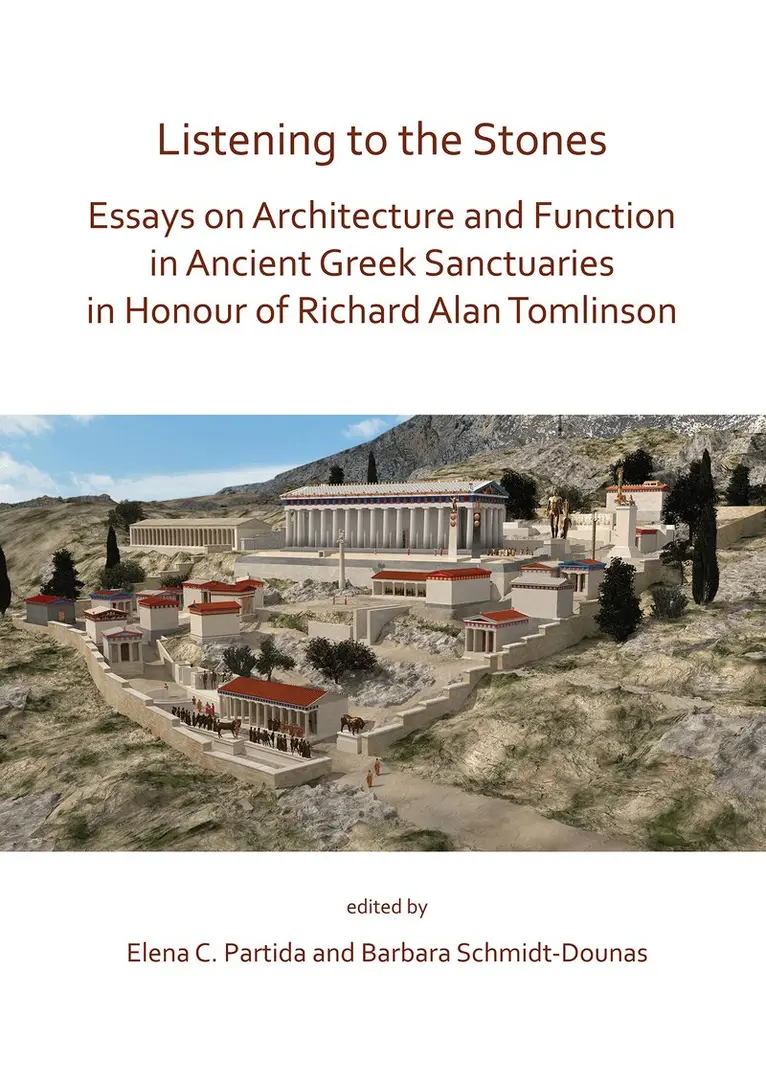
Listening to the Stones: Essays on Architecture and Function in Ancient Greek Sanctuaries in Honour of Richard Alan Tomlinson
Av Elena C. Partida, Barbara Schmidt-Dounas
Häftad, 2019
715 kr
Lägg i varukorg
Listening to the Stones: Essays on Architecture and Function in Ancient Greek Sanctuaries in Honour of Richard Alan Tomlinson deals with a range of topics that relate to the broad scope of Richard Tomlinson’s archaeological quests and echoes his own methodology in research. Innovative masonry …
Historische und archäologische Auswertung
Band 1: Geben und Nehmen. Band 2: Geschenke erhalten die Freundschaft
Av Barbara Schmidt-Dounas, Klaus Bringmann
E-bok, 2014
3693 kr
Lägg i varukorg
Der bereits erschienene Teil I als auch der hier angezeigte Teil II gelten dem seit einiger Zeit in das Zentrum wissenschaftlichen Interesses gerückten Phänomen des Euergetismus, hier in der Komponente der monarchischen Freigebigkeit gegenüber griechischen Städten und Heiligtümern. Während Teil I …