Barbara T. Walton – författare
Visar alla böcker från författaren Barbara T. Walton. Handla med fri frakt och snabb leverans.
3 produkter
3 produkter
Inbunden, Engelska, 2000
1 086 kr
Skickas inom 10-15 vardagar
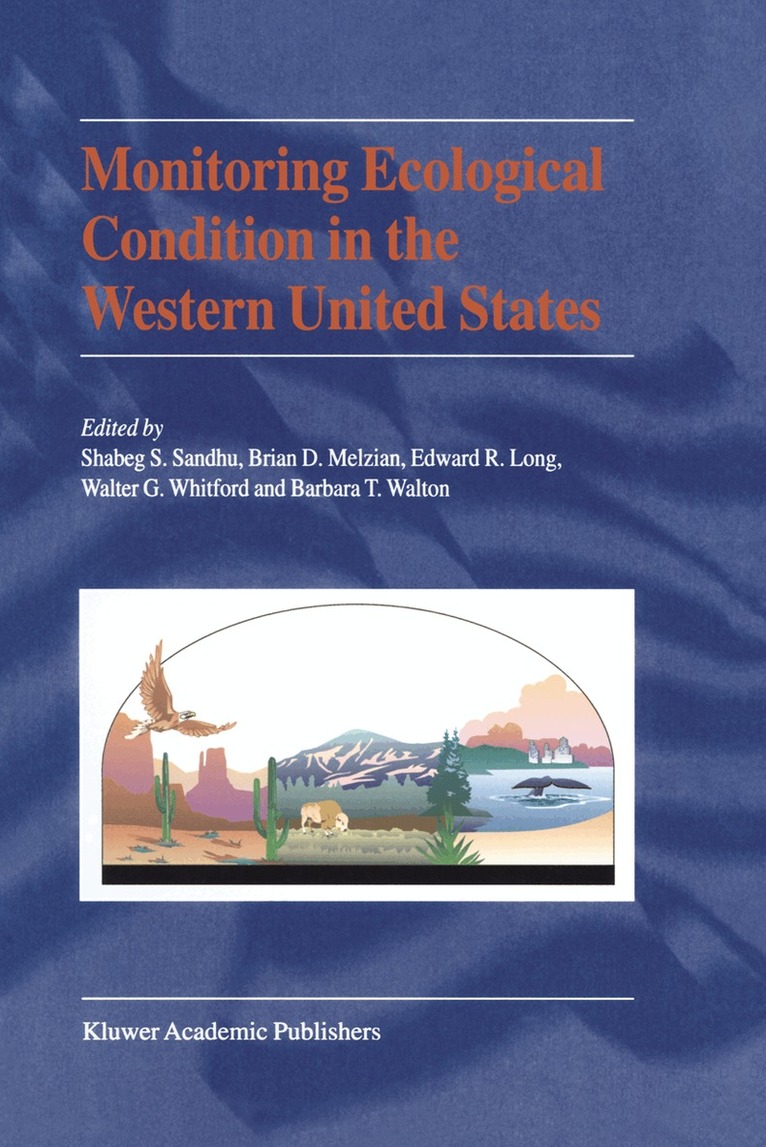
This volume is the proceedings of a symposium held on April 6-8, 1999, in San Francisco, California, USA, and sponsored by the US Environmental Protection Agency's (EPA) Environmental Monitoring and Assessment Program (EMAP). EMAP is the primary program of the EPA's Office of Research and Development to advance the science of statistically-based ecosystem monitoring; and establish baseline conditions and trends of the nation's natural resources. The first volume in this series of EMAP-sponsored symposium proceedings addressed "Monitoring Ecological Condition at Regional Scales" (1998). The current proceedings was the result of the "EMAP Symposium on Western Ecological Systems" (1999), and presaged the new EMAP Western Pilot Study, which will include one third of the contiguous United States. The information found in these proceedings on the state of monitoring science, and existing monitoring programs undertaken by Federal and State agencies, academic institutions, tribal governments, and environmental protection interest groups helped to establish a starting point for embarking on the EMAP Western Pilot.This volume represents scientific and management approaches, and the results of monitoring and assessment in the western US ecosystems. The chapter topics include regional assessments, approaches to database design, landscape considerations, water quality and land use, and focuses on watersheds, lakes and rivers, and marine coastal areas. Publication of these proceedings constitutes a sound starting point for the assessment of the ecological resources in the western US and should facilitate collaborative efforts in the development and application of sound approaches to monitoring and assessment of ecological resources in the US and abroad.
Häftad, Engelska, 2012
1 091 kr
Skickas inom 10-15 vardagar
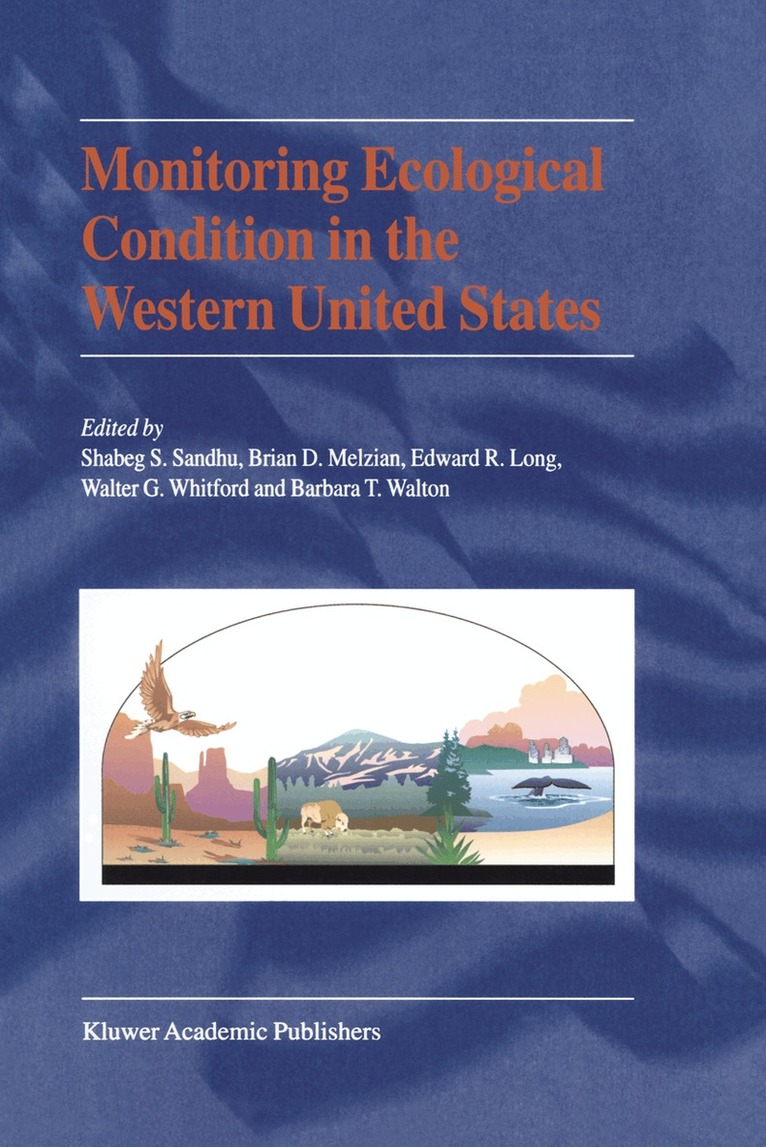
The monitoring of point sources by the Environmental Protection Agency (EPA), the states, and the tribes has documented and helped reduce the levels of chemical stressors affecting our ecosystems. With the controls on point sources reducing chemical contamination, new environmental challenges associated with nonpoint sources have emerged. To adequately deal with these new problems, EPA's Office of Research and Development recognized the need to develop an overall under standing of the condition of our ecological resources, the trends in their condition, and the stressors affecting these systems on a broad scale. Toward this end, the En vironmental Monitoring and Assessment Program (EMAP) was established by EPA and has been strategically developing the scientific tools and techniques to monitor and assess the status and trends of aquatic ecosystems. EMAP scientists have developed new indicators and probability-based de signs to fill data gaps in the development of regional-scale assessments of our aquatic resources, as required in the Clean Water Act. We have a scientifically de fensible approach that allows: 100 percent coverage of the aquatic resources within broad geographic areas and the formulation of reference 'conditions for es tablishing the health of these resources. The use of these indicators and designs were successfully demonstrated in the landscapes, streams, and estuaries of the mid-Atlantic states as part of the Mid-Atlantic Integrated Assessment (MAlA).
E-bok
PDF, Engelska, 20121 367 kr
Läs direkt efter köp
The monitoring of point sources by the Environmental Protection Agency (EPA), the states, and the tribes has documented and helped reduce the levels of chemical stressors affecting our ecosystems. With the controls on point sources reducing chemical contamination, new environmental challenges associated with nonpoint sources have emerged. To adequately deal with these new problems, EPA''s Office of Research and Development recognized the need to develop an overall under standing of the condition of our ecological resources, the trends in their condition, and the stressors affecting these systems on a broad scale. Toward this end, the En vironmental Monitoring and Assessment Program (EMAP) was established by EPA and has been strategically developing the scientific tools and techniques to monitor and assess the status and trends of aquatic ecosystems. EMAP scientists have developed new indicators and probability-based de signs to fill data gaps in the development of regional-scale assessments of our aquatic resources, as required in the Clean Water Act. We have a scientifically de fensible approach that allows: 100 percent coverage of the aquatic resources within broad geographic areas and the formulation of reference ''conditions for es tablishing the health of these resources. The use of these indicators and designs were successfully demonstrated in the landscapes, streams, and estuaries of the mid-Atlantic states as part of the Mid-Atlantic Integrated Assessment (MAlA).