Barbara Witt – författare
Visar alla böcker från författaren Barbara Witt. Handla med fri frakt och snabb leverans.
4 produkter
4 produkter
E-bok
Engelska, 200299 kr
Läs direkt efter köp
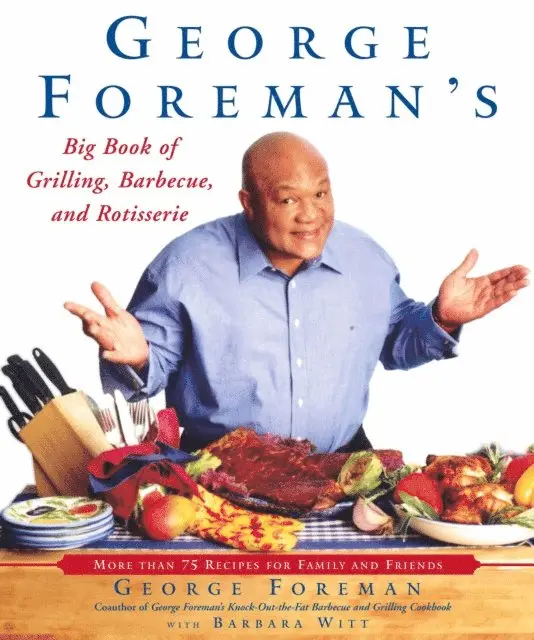
King of the ring and king of the grill, George Foreman joins forces with chef Barbara Witt to provide all-new dishes for grill and rotisserie cooking. The recipes in this book can be prepared indoors, using an electric or stovetop grill; or outdoors, on an electric, charcoal, or gas-powered barbecue. Grilling is healthful and quick. If you do a little work in advance, once you fire up the grill, dinner can be ready in a matter of minutes. So dishes like Rib Roast with Rosemary and Roasted-Garlic Wine Sauce, Chicken Breasts with Peanut Sauce, Ginger Honey Duck, and Curried Salmon Steak become easy weeknight dinners instead of party fare. Foreman and Witt have created delicious recipes for grilled meats, poultry, seafood, vegetables, innovative grilled salads and pasta sauces -- even pizza. Complete with full nutritional information, the recipes reflect an international range of flavors -- Caribbean, Pan-Asian, and Latin -- and provide new twists on all-American favorites. In the recipe introductions and in the vegetable chapter, there are suggestions for side dishes, some of which can be prepared on the grill alongside the main course. You''ll find everything you need to know about equipment; ways to maximize flavor by using seasoning rubs, pastes, marinades, and brines; and there are sources for the best meats and ingredients. While these dishes are full of big flavors, the ingredients can be found in any well-stocked supermarket. Whether you want a quick-fix family meal, a backyard barbecue feast, or an elegant dinner party, you''ll find the perfect recipe in George Foreman''s Big Book of Grilling, Barbecue, and Rotisserie.
E-bok
Engelska, 2010142 kr
Läs direkt efter köp
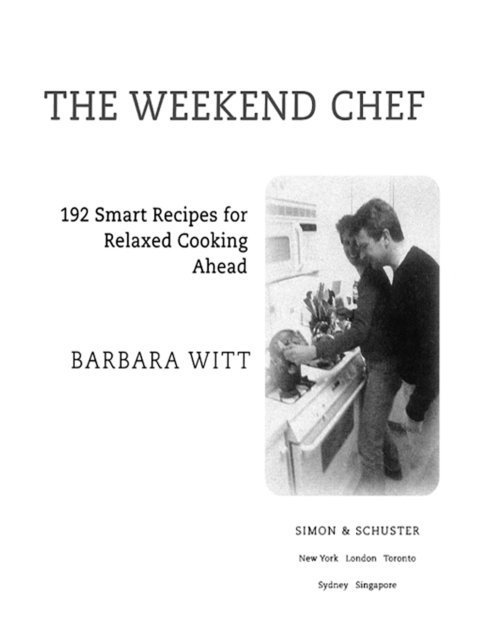
Are your taste buds as demanding as your schedule? With busy work and social calendars and family obligations, few people have time to prepare elaborate meals during the week. But that doesn''t mean you and your family are doomed to a diet of frozen dinners; with a little planning, anyone can prepare delicious meals even on hectic weeknights. In The Weekend Chef: 192 Smart Recipes for Relaxed Cooking Ahead, Barbara Witt shows you how to cook for pleasure on the weekend and eat with pleasure during the week.Want a chicken potpie on Tuesday? No problem. Make the pie crusts and prep the filling on Sunday, and the dish is almost ready to go. Not sure what to do with the leftover fruit in the fruit bowl on Saturday? Turn those apples and pears into a chutney to serve with a pork dish on Thursday or with lamb chops on Friday. Clean, chop, and bag vegetables on Sunday to add to frozen beef broth for a quick and delicious soup, or make an Italian beef stew and use the leftovers to make a hearty pasta sauce. With a little advance work, the possibilities are endless.The Weekend Chef: 192 Smart Recipes for Relaxed Cooking Ahead includes detailed, step-by-step, mouthwatering recipes for sophisticated dishes like Garlicky Roasted Tomato Soup, Polenta with Gorgonzola and Caramelized Onions, Saffron Rice Pilaf, Five-Spice Baby Carrots, Short Ribs Braised with Three-Color Peppers, Trinidad Curried Pork, Mexican Meat Loaf, Leek and Fennel Pasta Sauce, and Bolognese Meat Sauce. Simple yet sumptuous dessert recipes include 30-Minute Lime Cheesecake and Apple and Currant Sour Cream Pie. Recipes for condiments that can transform a meal -- such as Asian Pear with Mango Chutney, Tomatillo and Green Chili Salsa, and Red Onion Confit -- round out this user-friendly volume. Witt even provides details on how to stock your pantry. After all, what''s the point of having pasta sauce in the freezer if you don''t have any pasta in the cupboard?The Weekend Chef: 192 Smart Recipes for Relaxed Cooking Ahead is for those who love good food and love to cook but just don''t have the time during the week. Witt invites you to relax in the kitchen on the weekends and shows you that with a little planning, weekday meals can be just as wonderful as weekend meals.
Häftad, Engelska, 1989
1 082 kr
Skickas inom 10-15 vardagar
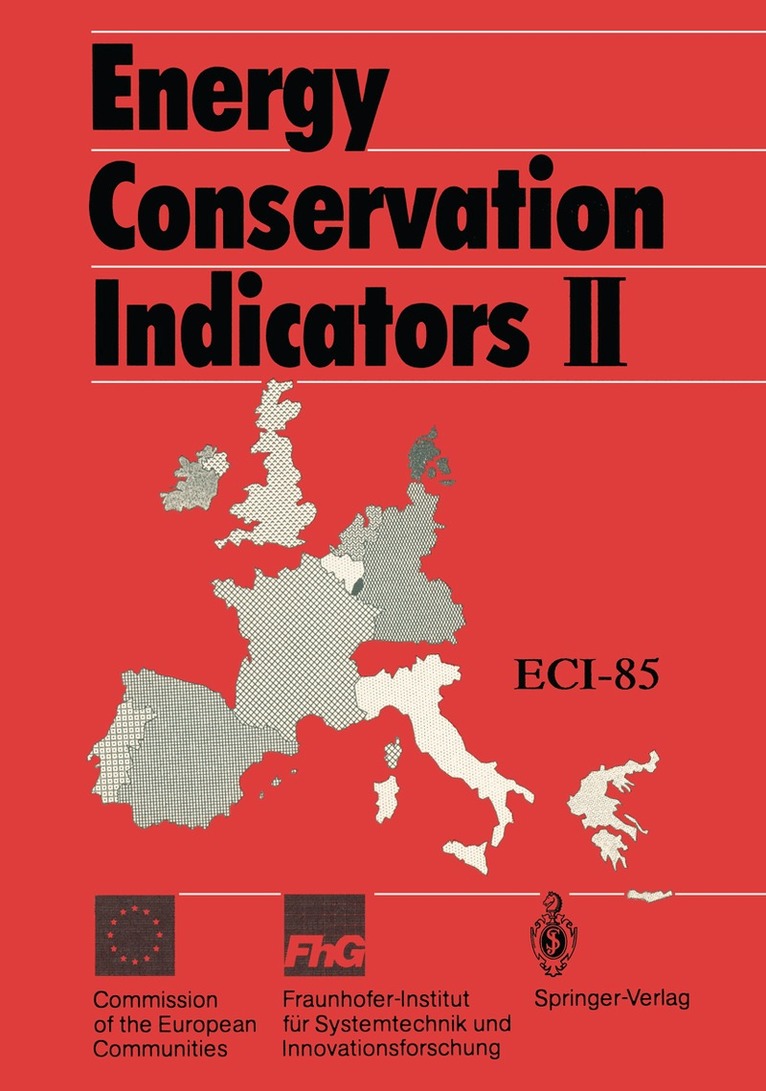
Energy Conservation Indicators is a methodology to break down energy consumption data into their component parts in the same way as those which are due to annual weather fluctuations, business cycle, structural changes in the economy and higher energy efficiency. This methodology is applied for the first time to all twelve Member Countries of the European Communities for the period 1979 to 1985. It represents a tool for a long-term monitoring of the efforts towards the goal set by the Council of Ministers of the European Community to achieve a 20% improvement in intensity of final energy demand between 1985 and 1995. In addition, it is used by the Commission of the European Communities for considerations regarding energy conservation policies for the Community. The results of the analysis performed showed that the goal set by the Council cannot be reached if the current trends prevail in the years to come. The reasons are the declining impact of structural changes towards less energy-intensive production and the increasing level of energy-consuming comfort in the residential and private transportation sectors.
E-bok
PDF, Engelska, 20121 379 kr
Läs direkt efter köp
Energy Conservation Indicators is a methodology to break down energy consumption data into their component parts in the same way as those which are due to annual weather fluctuations, business cycle, structural changes in the economy and higher energy efficiency. This methodology is applied for the first time to all twelve Member Countries of the European Communities for the period 1979 to 1985. It represents a tool for a long-term monitoring of the efforts towards the goal set by the Council of Ministers of the European Community to achieve a 20% improvement in intensity of final energy demand between 1985 and 1995. In addition, it is used by the Commission of the European Communities for considerations regarding energy conservation policies for the Community. The results of the analysis performed showed that the goal set by the Council cannot be reached if the current trends prevail in the years to come. The reasons are the declining impact of structural changes towards less energy-intensive production and the increasing level of energy-consuming comfort in the residential and private transportation sectors.