Barbara Zipser – författare
Visar alla böcker från författaren Barbara Zipser. Handla med fri frakt och snabb leverans.
3 produkter
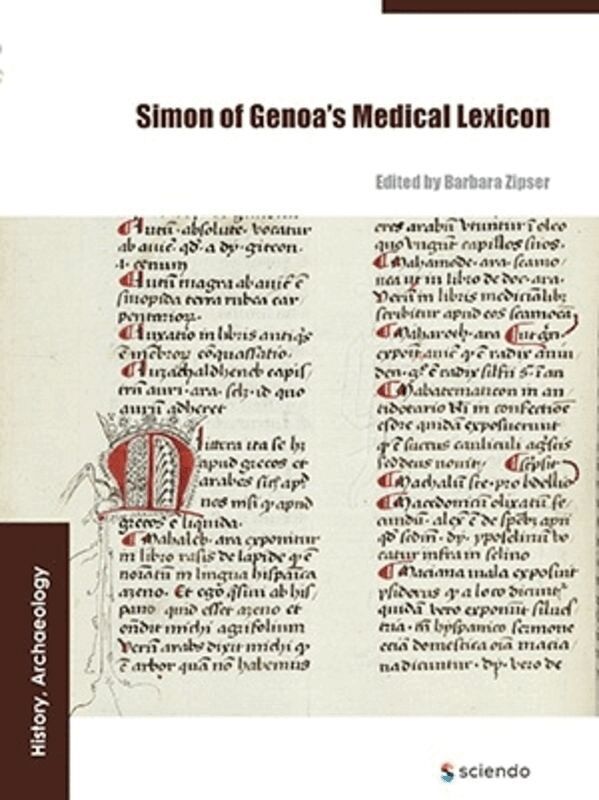
Simon of Genoa's Medical Lexicon
Inbunden, 2013
901 kr
Lägg i varukorg
“Simon of Genoa's Medical Lexicon”, an edited volume based on the conference held on March 17th, 2012, is part of the Simon Online project – a dynamically growing Wiki edition of Simon of Genoa's Clavis sanationis, a Latin-Greek-Arabic medical dictionary from the late 13th century. In the …
John the Physician's Therapeutics
A Medical Handbook in Vernacular Greek
Inbunden, 2009
3273 kr
Lägg i varukorg
The Therapeutics of John the Physician is a medical handbook from the thirteenth century, holding important new evidence on medicine as craft. Of particular interest is a vernacular version of the text, which also contains a commentary. Here, an unknown reviser vividly describes cases and medical …
Brill's Companion to the Reception of Galen
Av Petros Bouras-Vallianatos, Barbara Zipser
Inbunden, 2019
3743 kr
Lägg i varukorg
Brill’s Companion to the Reception of Galen presents a comprehensive account of the afterlife of the corpus of the second-century AD Greek physician Galen of Pergamum. In 31 chapters, written by a range of experts in the field, it shows how Galen was adopted, adapted, admired, contested, and …