Barclay Alistair Barclay – författare
Visar alla böcker från författaren . Handla med fri frakt och snabb leverans.
8 produkter
8 produkter
E-bok
Engelska, 2017351 kr
Läs direkt efter köp
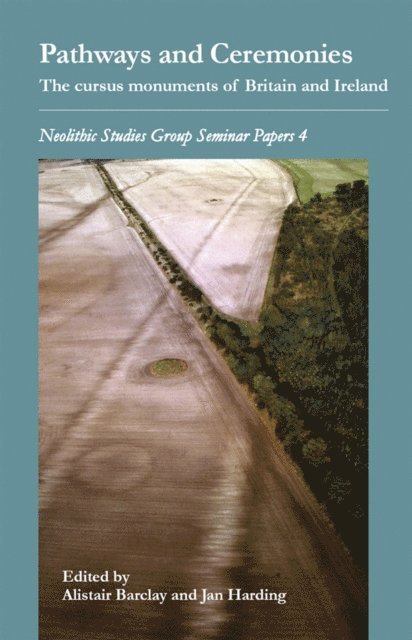
A review of the most recent evidence from cursuses, and ideas on their interpretation, with contributions as follows: Introduction (J Harding and A Barclay) , the radiocarbon problem (A Barclay and A Bayliss) , symbolic territories (J Harding) , processions, memories and the Dorset cursus (R Johnston) , Dorchester on Thames - ritual complex or ritual landscape (R Loveday) , cattle, cursus monuments and the river ... the Upper Thames (A Barclay and G Hey) , the Cambridgeshire Ouse (T Malim) , Eastern England (J Last) , the Cleaven Dyke (A Barclay and G Maxwell) , the Holywood cursus, Dumfries (J Thomas et al) , cursus monuments in Scotland (K Brophy) , cursus monuments in Wales (A Gibson) , cursus-like monuments in Ireland (C Newman) , Passy-Rots and linear monuments in northern France (I Kinnes) .
E-bok
PDF, Engelska, 2017352 kr
Läs direkt efter köp
A review of the most recent evidence from cursuses, and ideas on their interpretation, with contributions as follows: Introduction (J Harding and A Barclay) , the radiocarbon problem (A Barclay and A Bayliss) , symbolic territories (J Harding) , processions, memories and the Dorset cursus (R Johnston) , Dorchester on Thames - ritual complex or ritual landscape (R Loveday) , cattle, cursus monuments and the river ... the Upper Thames (A Barclay and G Hey) , the Cambridgeshire Ouse (T Malim) , Eastern England (J Last) , the Cleaven Dyke (A Barclay and G Maxwell) , the Holywood cursus, Dumfries (J Thomas et al) , cursus monuments in Scotland (K Brophy) , cursus monuments in Wales (A Gibson) , cursus-like monuments in Ireland (C Newman) , Passy-Rots and linear monuments in northern France (I Kinnes) .
E-bok
Engelska, 2020367 kr
Läs direkt efter köp
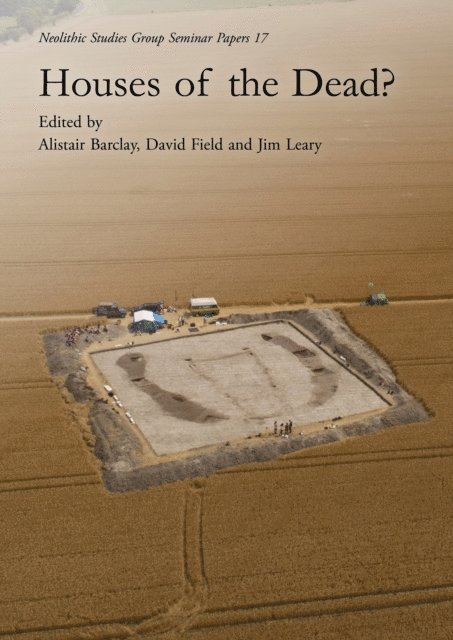
The chronological disjuncture, LBK longhouses have widely been considered to provide ancestral influence for both rectangular and trapezoidal long barrows and cairns, but with the discovery and excavation of more houses in recent times is it possible to observe evidence of more contemporary inspiration. What do the features found beneath long mounds tell us about this and to what extent do they represent domestic structures. Indeed, how can we distinguish between domestic houses or halls and those that may have been constructed for ritual purposes or ended up beneath mounds? Do so called ''mortuary enclosures'' reflect ritual or domestic architecture and did side ditches always provide material for a mound or for building construction? This collection of papers seeks to explore the interface between structures often considered to be those of the living with those for the dead.
E-bok
PDF, Engelska, 2020367 kr
Läs direkt efter köp
The chronological disjuncture, LBK longhouses have widely been considered to provide ancestral influence for both rectangular and trapezoidal long barrows and cairns, but with the discovery and excavation of more houses in recent times is it possible to observe evidence of more contemporary inspiration. What do the features found beneath long mounds tell us about this and to what extent do they represent domestic structures. Indeed, how can we distinguish between domestic houses or halls and those that may have been constructed for ritual purposes or ended up beneath mounds? Do so called ''mortuary enclosures'' reflect ritual or domestic architecture and did side ditches always provide material for a mound or for building construction? This collection of papers seeks to explore the interface between structures often considered to be those of the living with those for the dead.
E-bok
Engelska, 2015320 kr
Läs direkt efter köp
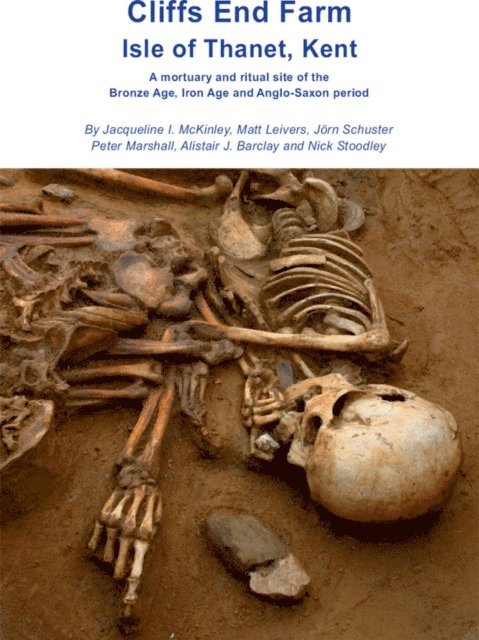
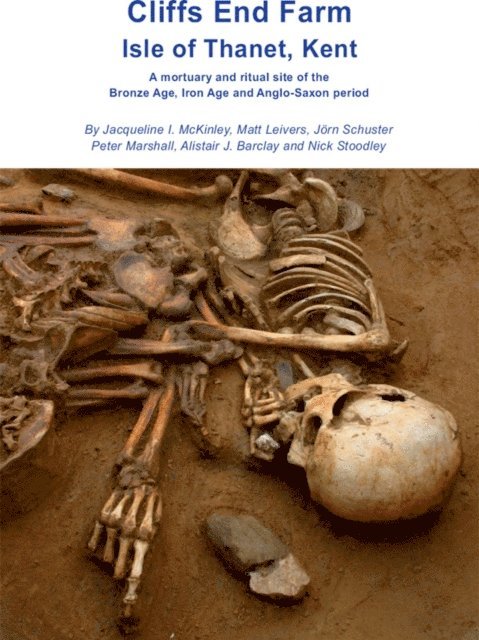
Excavations at Cliffs End Farm, Thanet, Kent, undertaken in 2004/5 uncovered a dense area of archaeological remains including Bronze Age barrows and enclosures, and a large prehistoric mortuary feature, as well as a small early 6th to late 7th century Anglo-Saxon inhumation cemetery. An extraordinary series of human and animal remains were recovered from the Late Bronze Age–Middle Iron Age mortuary feature, revealing a wealth of evidence for mortuary rites including exposure, excarnation and curation. The site seems to have been largely abandoned in the later Iron Age and very little Romano-British activity was identified. In the early 6th century a small inhumation cemetery was established. Very little human bone survived within the 21 graves, where the burial environment differed from that within the prehistoric mortuary feature, but grave goods indicate ‘females’ and ‘males’ were buried here. Richly furnished graves included that of a ‘female’ buried with a necklace, a pair of brooches and a purse, as well as a ‘male’ with a shield covering his face, a knife and spearhead. In the Middle Saxon period lines of pits, possibly delineating boundaries, were dug, some of which contained large deposits of marine shells. English Heritage funded an extensive programme of radiocarbon and isotope analyses, which have produced some surprising results that shed new light on long distance contacts, mobility and mortuary rites during later prehistory. This volume presents the results of the investigations together with the scientific analyses, human bone, artefact and environmental reports.
E-bok
PDF, Engelska, 2015320 kr
Läs direkt efter köp
Excavations at Cliffs End Farm, Thanet, Kent, undertaken in 2004/5 uncovered a dense area of archaeological remains including Bronze Age barrows and enclosures, and a large prehistoric mortuary feature, as well as a small early 6th to late 7th century Anglo-Saxon inhumation cemetery. An extraordinary series of human and animal remains were recovered from the Late Bronze Age–Middle Iron Age mortuary feature, revealing a wealth of evidence for mortuary rites including exposure, excarnation and curation. The site seems to have been largely abandoned in the later Iron Age and very little Romano-British activity was identified. In the early 6th century a small inhumation cemetery was established. Very little human bone survived within the 21 graves, where the burial environment differed from that within the prehistoric mortuary feature, but grave goods indicate ‘females’ and ‘males’ were buried here. Richly furnished graves included that of a ‘female’ buried with a necklace, a pair of brooches and a purse, as well as a ‘male’ with a shield covering his face, a knife and spearhead. In the Middle Saxon period lines of pits, possibly delineating boundaries, were dug, some of which contained large deposits of marine shells. English Heritage funded an extensive programme of radiocarbon and isotope analyses, which have produced some surprising results that shed new light on long distance contacts, mobility and mortuary rites during later prehistory. This volume presents the results of the investigations together with the scientific analyses, human bone, artefact and environmental reports.
E-bok
Engelska, 2016275 kr
Läs direkt efter köp
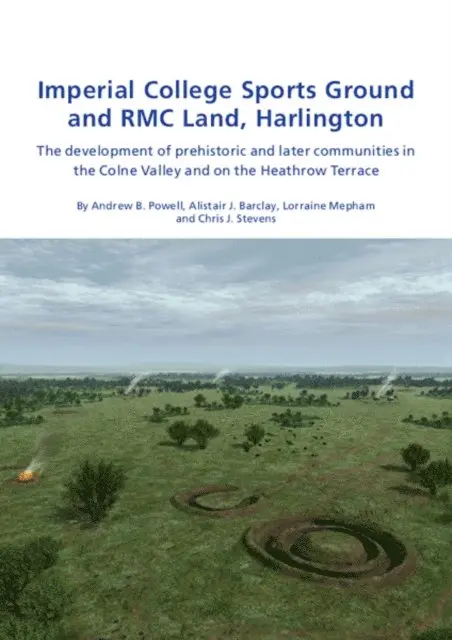
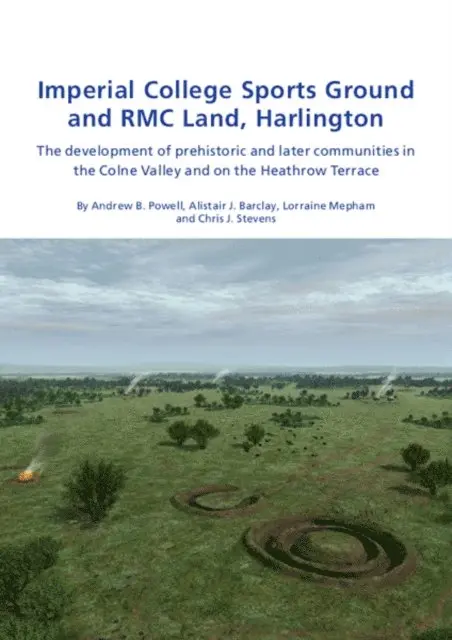
This volume brings together the results from the excavations at the former Imperial College Sports Ground, RMC Land and Land East of Wall Garden Farm, near the villages of Harlington and Sipson in the London Borough of Hillingdon. The excavations revealed parts of an archaeological landscape with a rich history of development from before 4000 BC to the post-medieval period. The opportunity to investigate two large areas of this landscape provided evidence for possible settlement continuity and shift over a period of 6000 years. Early to Middle Neolithic occupation was represented by a rectangular ditched mortuary enclosure and a large spread of pits, many containing deposits of Peterborough Ware pottery, flint and charred plant remains. A possible dispersed monument complex of three hengiform enclosures was associated with the rare remains of cremation burials radiocarbon dated to the Middle Neolithic. Limited Late Neolithic and Early Bronze Age activity was identified, which is in stark contrast to the Middle to Late Bronze Age when a formalized landscape of extensive rectangular fields, enclosures, wells and pits was established. This major reorganized land division can be traced across the two sites and over large parts of the adjacent Heathrow terraces. A small, Iron Age and Romano-British nucleated settlement was constructed, with associated enclosures flanking a trackway. There were wayside inhumations, cremation burials and middens and more widely dispersed wells and quarries. Two possible sunken-featured buildings of early Saxon date were found. There was also a small cemetery. Subsequently, a middle Saxon and medieval field system of small enclosures and wells was established.
E-bok
PDF, Engelska, 2016275 kr
Läs direkt efter köp
This volume brings together the results from the excavations at the former Imperial College Sports Ground, RMC Land and Land East of Wall Garden Farm, near the villages of Harlington and Sipson in the London Borough of Hillingdon. The excavations revealed parts of an archaeological landscape with a rich history of development from before 4000 BC to the post-medieval period. The opportunity to investigate two large areas of this landscape provided evidence for possible settlement continuity and shift over a period of 6000 years. Early to Middle Neolithic occupation was represented by a rectangular ditched mortuary enclosure and a large spread of pits, many containing deposits of Peterborough Ware pottery, flint and charred plant remains. A possible dispersed monument complex of three hengiform enclosures was associated with the rare remains of cremation burials radiocarbon dated to the Middle Neolithic. Limited Late Neolithic and Early Bronze Age activity was identified, which is in stark contrast to the Middle to Late Bronze Age when a formalized landscape of extensive rectangular fields, enclosures, wells and pits was established. This major reorganized land division can be traced across the two sites and over large parts of the adjacent Heathrow terraces. A small, Iron Age and Romano-British nucleated settlement was constructed, with associated enclosures flanking a trackway. There were wayside inhumations, cremation burials and middens and more widely dispersed wells and quarries. Two possible sunken-featured buildings of early Saxon date were found. There was also a small cemetery. Subsequently, a middle Saxon and medieval field system of small enclosures and wells was established.