Leary Jim Leary – författare
Visar alla böcker från författaren . Handla med fri frakt och snabb leverans.
4 produkter
4 produkter
E-bok
PDF, Engelska, 2016352 kr
Läs direkt efter köp
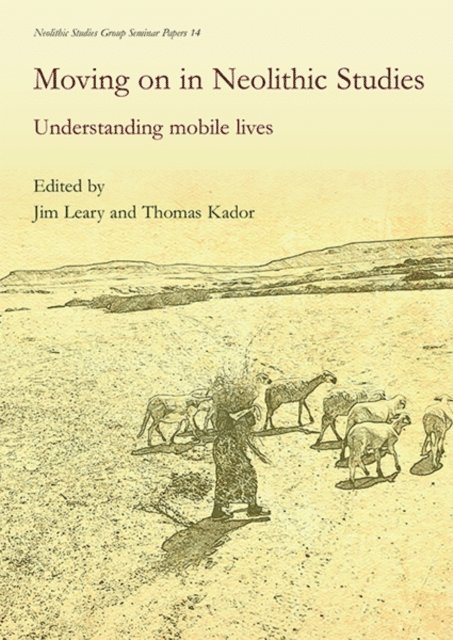
Mobility is a fundamental facet of being human and should be central to archaeology. Yet mobility itself and the role it plays in the production of social life, is rarely considered as a subject in its own right. This is particularly so with discussions of the Neolithic people where mobility is often framed as being somewhere between a sedentary existence and nomadic movements. This latest collection of papers from the Neolithic Studies Group seminars examines the importance and complexities of movement and mobility, whether on land or water, in the Neolithic period. It uses movement in its widest sense, ranging from everyday mobilities – the routines and rhythms of daily life – to proscribed mobility, such as movement in and around monuments, and occasional and large-scale movements and migrations around the continent and across seas. Papers are roughly grouped and focus on ‘mobility and the landscape’, ‘monuments and mobility’, ‘travelling by water’, and ‘materials and mobility’. Through these themes the volume considers the movement of people, ideas, animals, objects, and information, and uses a wide range of archaeological evidence from isotope analysis; artefact studies; lithic scatters and assemblage diversity.
E-bok
Engelska, 2020367 kr
Läs direkt efter köp
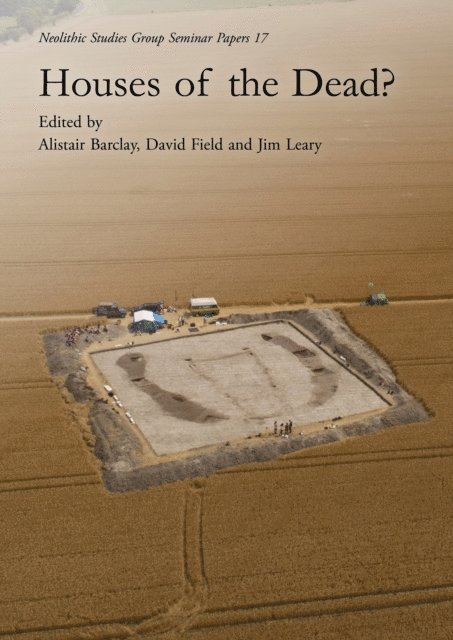
The chronological disjuncture, LBK longhouses have widely been considered to provide ancestral influence for both rectangular and trapezoidal long barrows and cairns, but with the discovery and excavation of more houses in recent times is it possible to observe evidence of more contemporary inspiration. What do the features found beneath long mounds tell us about this and to what extent do they represent domestic structures. Indeed, how can we distinguish between domestic houses or halls and those that may have been constructed for ritual purposes or ended up beneath mounds? Do so called ''mortuary enclosures'' reflect ritual or domestic architecture and did side ditches always provide material for a mound or for building construction? This collection of papers seeks to explore the interface between structures often considered to be those of the living with those for the dead.
E-bok
PDF, Engelska, 2020367 kr
Läs direkt efter köp
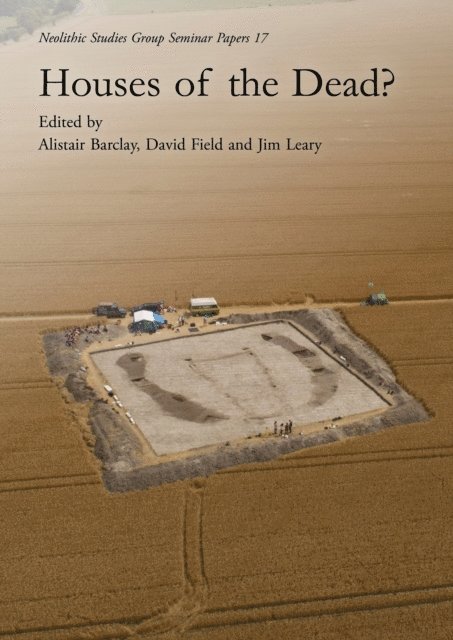
The chronological disjuncture, LBK longhouses have widely been considered to provide ancestral influence for both rectangular and trapezoidal long barrows and cairns, but with the discovery and excavation of more houses in recent times is it possible to observe evidence of more contemporary inspiration. What do the features found beneath long mounds tell us about this and to what extent do they represent domestic structures. Indeed, how can we distinguish between domestic houses or halls and those that may have been constructed for ritual purposes or ended up beneath mounds? Do so called ''mortuary enclosures'' reflect ritual or domestic architecture and did side ditches always provide material for a mound or for building construction? This collection of papers seeks to explore the interface between structures often considered to be those of the living with those for the dead.
E-bok
PDF, Engelska, 2010321 kr
Läs direkt efter köp
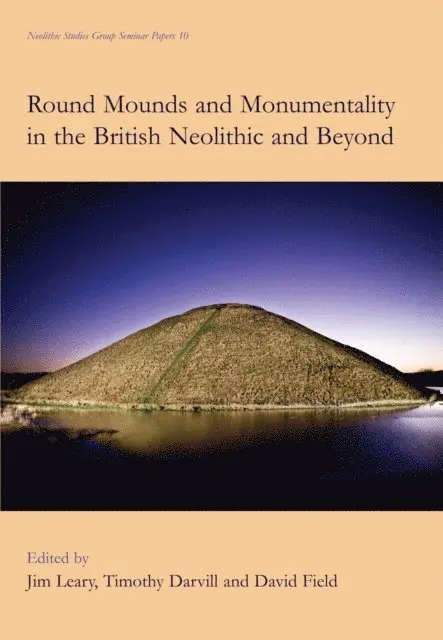
This volume, the tenth published collection of seminar papers from the Neolithic Studies Group, is based upon a conference that took place at the British Museum in November 2008. The meeting aimed to consider the chronology and development of Neolithic round mounds; their changing form and use; their relationships to contemporary cultural, ancestral and natural landscapes; the extent to which they provide scope for identifying local and regional social organization; and, not least, why they were round. Following the conference, further papers were offered for this edited volume, widening and broadening the initial discussion. The papers are arranged in rough geographic order starting in the north and working southwards before heading across the Irish Sea and then the Atlantic. Following a wide-ranging discussion of round mounds across the world, two papers discuss aspects of Scottish round mounds, before moving down to the Isle of Man, the Neolithic round mounds of the Yorkshire Wolds, Liffs Low in the Derbyshire Peak District, and round mounds on the Cotswolds. The volume then moves to Wessex, starting with a discussion of Silbury Hill, and followed by a re-evaluation of the Great Barrow at Knowlton, Conquer Barrow at Mount Pleasant, and the Hatfield Barrow at Marden. How archaeologists and heritage managers choose to interpret round mounds is the subject of the next paper, using Silbury Hill as the primary case study. This is followed by a broad discussion of circular traditions, particularly formative henges, in Wales and adjacent counties, round burial mounds in the Boyne Valley, Ireland, such as Knowth, Dowth and Newgrange, and Irish round mounds containing portal tombs. By way of comparison with the evidence from the British Isles, the volume then crosses over to North America for a broad discussion of mound-building traditions there. Rounding off the volume is another wide-ranging essay on the nature of round mounds, which challenges our very understanding and interpretation of them.