Darvill Timothy Darvill – författare
Visar alla böcker från författaren . Handla med fri frakt och snabb leverans.
4 produkter
4 produkter
E-bok
PDF, Engelska, 2002328 kr
Läs direkt efter köp
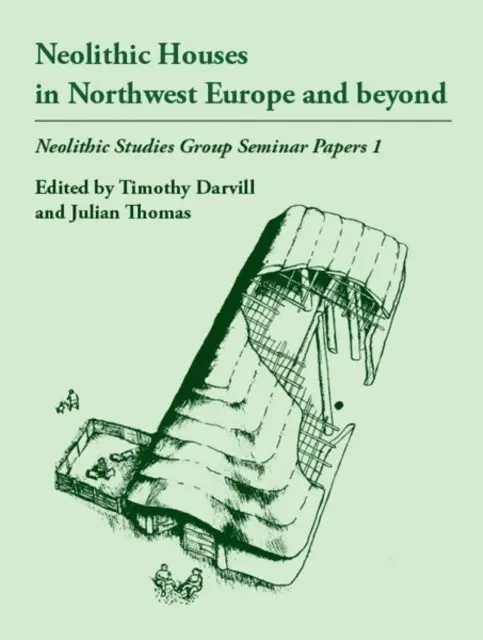
A digital reprint which makes available again the first publication of the Neolithic Studies Group, containing papers given to a special colloquium on the `structures'' of Neolithic Europe. Contributions include: Neolithic houses in mainland Britain and Ireland - a skeptical view (Julian Thomas); Houses in context: Building as process (Alasdair Whitlle); A Central European Perspective (Jonathon Last); Neolithic houses in Ireland (Eoin Grogan); Neolithic buildings in Scotland (Gordon Barclay); Neolithic buildings in England, Wales and the Isle of Man (Tim Darvill); Mesolithic or later houses at Bowmans Farm, Romsey Extra, Hampshire (Francis Green); Ballygalley houses, co.Antrim (Derek Simpson); Later Neolthic Structires at Trelystan, Powys (Alex Gibson); Life, times and works of House 59, Tell Ovcharovo, Bulgaria (Douglass Bailey); Structure ans ritual in Neolithic houses (Peter Topping); Architecture and Cosmology in the Balinese house: life is not that simple (Colin Richards); Houses in the Neolithic imagination: an Amazonian Example (Christine Hugh-Jones).
E-bok
Engelska, 2019229 kr
Läs direkt efter köp
The Archaeological Investigations Project (AIP), funded by English Heritage, systematically collected information about the nature and outcomes of more than 86,000 archaeological projects undertaken between 1990 and 2010. This volume looks at the long-term trends in archaeological investigation and reporting, places this work within wider social, political, and professional contexts, and reviews its achievements. Information was collected through visits to public and private organizations undertaking archaeological work. Planning Policy Guidance Note 16: Archaeology and Planning (known as PPG16), published in 1990, saw the formal integration of archaeological considerations with the UK town and country planning system that, and set out processes for informed decision-making and the implementation of post-determination mitigation strategies, defined a formative era in archaeological practice and established principles that underpin today’s planning policy framework. The scale of activity represented – more 1000 excavations per year for most of the PPG16 Era – is more than double the level of work undertaken at peak periods during the previous three decades. This comprehensive review of the project presents a wealth of data. A series of case studies examines the illustrate different types of development project, revealing many ways in which projects develop, how archaeology is integrated with planning and execution, and the range of outputs documenting the process, and identified a series of ten important lessons that can be learned from these investigations. Looking into the post-PPG16 Era, the volume considers anticipated developments in the changing worlds of planning, property development, and archaeological practice and proposes the monitoring of archaeological investigations in England using a two-pronged approach that involves self-reporting and periodic strategic overviews.
E-bok
PDF, Engelska, 2018222 kr
Läs direkt efter köp
The Archaeological Investigations Project (AIP), funded by English Heritage, systematically collected information about the nature and outcomes of more than 86,000 archaeological projects undertaken between 1990 and 2010. This volume looks at the long-term trends in archaeological investigation and reporting, places this work within wider social, political, and professional contexts, and reviews its achievements. Information was collected through visits to public and private organizations undertaking archaeological work. Planning Policy Guidance Note 16: Archaeology and Planning (known as PPG16), published in 1990, saw the formal integration of archaeological considerations with the UK town and country planning system that, and set out processes for informed decision-making and the implementation of post-determination mitigation strategies, defined a formative era in archaeological practice and established principles that underpin today’s planning policy framework. The scale of activity represented – more 1000 excavations per year for most of the PPG16 Era – is more than double the level of work undertaken at peak periods during the previous three decades. This comprehensive review of the project presents a wealth of data. A series of case studies examines the illustrate different types of development project, revealing many ways in which projects develop, how archaeology is integrated with planning and execution, and the range of outputs documenting the process, and identified a series of ten important lessons that can be learned from these investigations. Looking into the post-PPG16 Era, the volume considers anticipated developments in the changing worlds of planning, property development, and archaeological practice and proposes the monitoring of archaeological investigations in England using a two-pronged approach that involves self-reporting and periodic strategic overviews.
E-bok
PDF, Engelska, 2010321 kr
Läs direkt efter köp
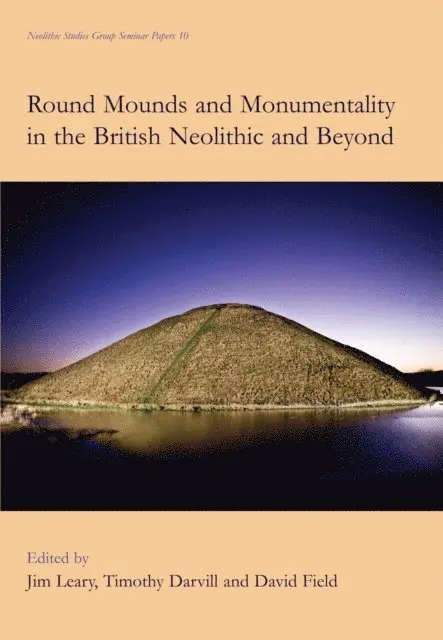
This volume, the tenth published collection of seminar papers from the Neolithic Studies Group, is based upon a conference that took place at the British Museum in November 2008. The meeting aimed to consider the chronology and development of Neolithic round mounds; their changing form and use; their relationships to contemporary cultural, ancestral and natural landscapes; the extent to which they provide scope for identifying local and regional social organization; and, not least, why they were round. Following the conference, further papers were offered for this edited volume, widening and broadening the initial discussion. The papers are arranged in rough geographic order starting in the north and working southwards before heading across the Irish Sea and then the Atlantic. Following a wide-ranging discussion of round mounds across the world, two papers discuss aspects of Scottish round mounds, before moving down to the Isle of Man, the Neolithic round mounds of the Yorkshire Wolds, Liffs Low in the Derbyshire Peak District, and round mounds on the Cotswolds. The volume then moves to Wessex, starting with a discussion of Silbury Hill, and followed by a re-evaluation of the Great Barrow at Knowlton, Conquer Barrow at Mount Pleasant, and the Hatfield Barrow at Marden. How archaeologists and heritage managers choose to interpret round mounds is the subject of the next paper, using Silbury Hill as the primary case study. This is followed by a broad discussion of circular traditions, particularly formative henges, in Wales and adjacent counties, round burial mounds in the Boyne Valley, Ireland, such as Knowth, Dowth and Newgrange, and Irish round mounds containing portal tombs. By way of comparison with the evidence from the British Isles, the volume then crosses over to North America for a broad discussion of mound-building traditions there. Rounding off the volume is another wide-ranging essay on the nature of round mounds, which challenges our very understanding and interpretation of them.