Barrett Terence William Barrett – författare
Visar alla böcker från författaren Barrett Terence William Barrett. Handla med fri frakt och snabb leverans.
5 produkter
5 produkter
E-bok
Engelska, 20221 335 kr
Läs direkt efter köp
The aims of the book are: (1) to extend Maxwell theory to non-Abelian group forms; (2) to demonstrate that the foundations of electromagnetism are topological; (3) to show the multi-disciplinary nature of communications; (4) to demonstrate the effectiveness of modulated signals in penetrating media; (5) to demonstrate that geometric (Clifford) algebra is the appropriate algebra describing modulated signals.The book is important in indicating that the classical theory of electromagnetism, or Maxwell theory, can be developed to address situations and signals of differing symmetry form, and that different topological spaces require that development.
E-bok
PDF, Engelska, 2011579 kr
Läs direkt efter köp
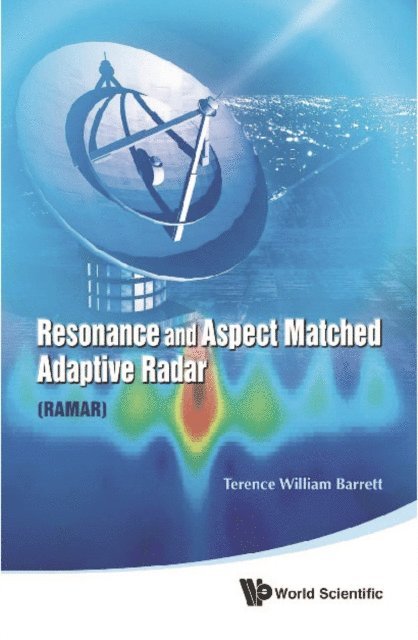
The book describes a new form of radar for which the target response is frequency, i.e., resonance-dependent. The book provides both prototype designs and empirical results collected from a variety of targets. The new form of radar, called RAMAR (Resonance and Aspect Matched Adaptive Radar) advances radar — mere ranging and detection — to the level of RF spectroscopy, and permits an advance of spectroscopic methods from optical, through infra-red and into the RF spectral range. The book will describe how a target''s response can be a function of frequency components in the transmitted signal''s envelope as well as the signal''s carrier.
E-bok
PDF, Engelska, 2008430 kr
Läs direkt efter köp
Topological Foundations of Electromagnetism seeks a fundamental understanding of the dynamics of electromagnetism; and marshals the evidence that in certain precisely defined topological conditions, electromagnetic theory (Maxwell''s theory) must be extended or generalized in order to provide an explanation and understanding of, until now, unusual electromagnetic phenomena. Key to this generalization is an understanding of the circumstances under which the so-called A potential fields have physical effects. Basic to the approach taken is that the topological composition of electromagnetic fields is the fundamental conditioner of the dynamics of these fields. The treatment of electromagnetism from, first, a topological perspective, continuing through group theory and gauge theory, to a differential calculus description is a major thread of the book. Suggestions for potential new technologies based on this new understanding and approach to conditional electromagnetism are also given.
E-bok
PDF, Engelska, 2001520 kr
Läs direkt efter köp
Divergencies in quantum field theory referred to as “infinite zero-point energy” have been a problem for 70 years. Renormalization has always been considered an unsatisfactory remedy.In 1985 it was found that Maxwell''s equations generally do not have solutions that satisfy the causality law. An additional term for magnetic dipole currents corrected this shortcoming. Rotating magnetic dipoles produce magnetic dipole currents, just as rotating electric dipoles in a material like barium titanate produce electric dipole currents. Electric dipole currents were always part of Maxwell''s equations.This book shows that the correction of Maxwell''s equations eliminates the infinite zero-point energy in quantum electrodynamics. In addition, it presents many more new results.
E-bok
PDF, Engelska, 19951 187 kr
Läs direkt efter köp
Advanced Electromagnetism: Foundations, Theory and Applications treats what is conventionally called electromagnetism or Maxwell''s theory within the context of gauge theory or Yang-Mills theory. A major theme of this book is that fields are not stand-alone entities but are defined by their boundary conditions. The book has practical relevance to efficient antenna design, the understanding of forces and stresses in high energy pulses, ring laser gyros, high speed computer logic elements, efficient transfer of power, parametric conversion, and many other devices and systems. Conventional electromagnetism is shown to be an underdeveloped, rather than a completely developed, field of endeavor, with major challenges in development still to be met.