Barry Brummett - Böcker
Visar alla böcker från författaren Barry Brummett. Handla med fri frakt och snabb leverans.
13 produkter
13 produkter
1 009 kr
Skickas inom 10-15 vardagar
Intellectuals today cringe when a politician speaks of the Second Coming, the millennium, or the Antichrist. Certain questions naturally arise about those who literally expect the end of the world in our day: Why do they think this? Why do some people believe them? How do their exhortations work to persuade an audience and to move that audience to actions and commitments? These are the motivating questions of Contemporary Apocalyptic Rhetoric, which describes apocalyptic as a rhetorical genre of discourse. Barry Brummett first recasts insights drawn from past scholarly and theological studies to demonstrate their relevance to contemporary apocalyptic, then examines a variety of real apocalyptic to illustrate the ways in which these rhetorical discourses actually work. The discussion focuses on those strategies, arguments, and stylistic features that are peculiar to apocalyptic and that support its social and political claims.Following an introductory first chapter, Chapter Two describes how apocalyptic rhetoric links a psychological context to an esoteric grand order underlying all of time and the cosmos. Chapter Three compares premillennial and postmillennial apocalyptic on three dimensions to show the different approaches they take to reach their audiences. Chapter Four describes specific rhetorical techniques designed to maintain a mystic persona and urge social and political commitments on audiences. The final two chapters apply the author's theories to secular and religious apocalyptic, both premillennial (Hal Lindsey and Ravi Batra) and postmillennial (Francis Fukuyama). Contemporary Apocalyptic Rhetoric will appeal to readers across many disciplines, including communications, religion, sociology, and psychology.
809 kr
Skickas inom 10-15 vardagar
Brummett addresses the question of how the aesthetic experience of machines can have rhetorical influence. He develops a theory of machine aesthetics, showing nine dimensions of the aesthetic experience of machines and machine-like objects or activities. He identifies three general types of machine aesthetics: Mechtech, classical machine aesthetics based on hardware, gears, pistons, and so forth; Electrotech, high technology machine aesthetics based on the ability of electricity to put machinery on the human scale; and Chaotech, the aesthetic appeal of the decayed machine. In each case, rhetorical applications of the aesthetic are explored. A final critical application shows how the film Brazil warns its audience that fascism can be supported by simulations based on machine aesthetics.Brummett's book develops and articulates ideas in the fields of rhetoric and literature that have not been brought together before. In a radical departure, Brummett sees machines not as passive backdrops to human intercourse, but rather as possessing a powerful rhetoric of their own. The book will be of great interest to scholars and students of communications, art, and aesthetics.
World and How We Describe It
Rhetorics of Reality, Representation, Simulation
Inbunden, Engelska, 2003
930 kr
Skickas inom 10-15 vardagar
Brummett explores the ways people use three key terms—reality, representation, and simulation—as rhetorical devices with political and social effect. Human perception, language, and aesthetics experiences are the bases for the fluidity among these terms. Each term's rhetoric is illustrated in an analysis of texts in popular culture: William Gibson's novels, the usenet group rec.motorcycles, and the film Groundhog Day.Brummett explores the ways people use three key terms—reality, representation, and simulation—as rhetorical devices with political and social effect. People write and speak as if there were such things as reality, representation, and simulation. People treat the terms as if they were clearly referential and as if those referents were clearly distinct. But what kind of political, social work do people do when they write and speak in those terms? What kind of claim is being made, or accusation leveled when such a term is used? How do the dimensions and parameters of meaning facilitated by each term work in the management and distribution of power?These are questions of rhetoric, the manipulation of signs and symbols for influence and effect. Brummett illustates the rhetoric of reality in a critical analysis of William Gibson's science fiction novels. The rhetoric of representation is shown in discusions on the usenet group rec.motorcyles. The rhetoric of simulation is explained through the film Groundhog Day. Of particular interest to scholars, students, and researchers involved with rhetoric and popular culture, media, communication, and technology, and the literature of science and science fiction.
682 kr
Skickas inom 10-15 vardagar
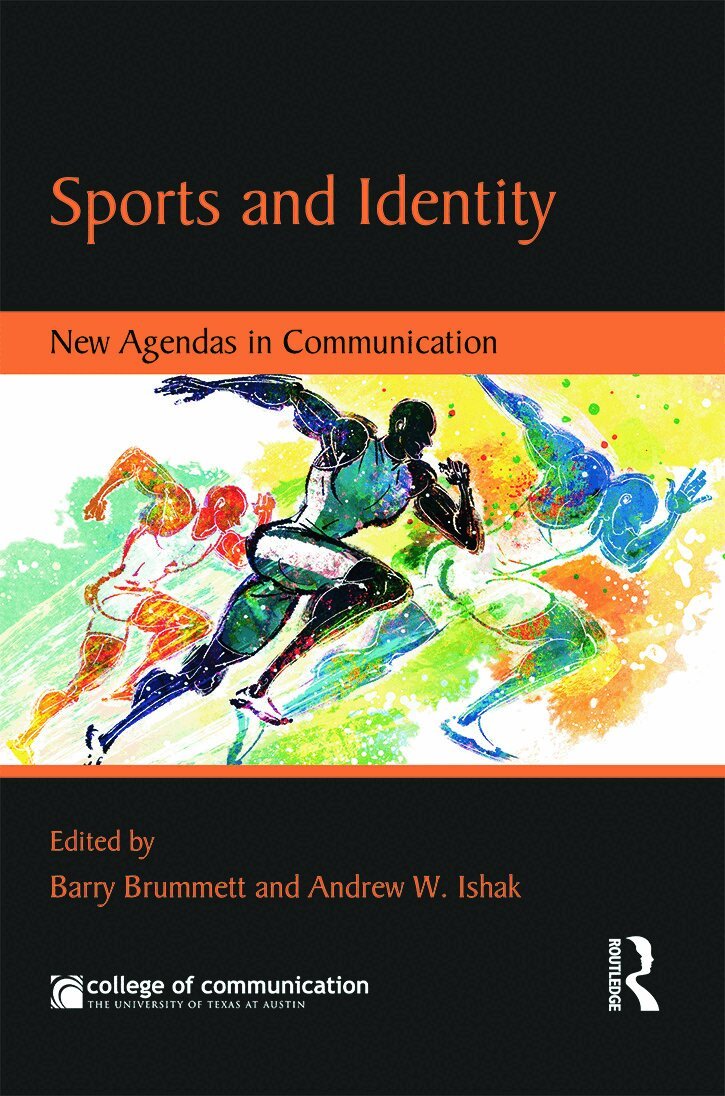
This volume of essays examines the ways in which sports have become a means for the communication of social identity in the United States. The essays included here explore the question, How is identity engaged in the performance and spectatorship of sports? Defining sports as the whole range of mediated professional sports, and considering actual participation in sports, the chapters herein address a varied range of ways in which sports as a cultural entity becomes a site for the creation and management of symbolic components of identity.Originating in the New Agendas in Communication symposium sponsored by the University of Texas College of Communication, this volume provides contemporary explorations of sports and identity, highlighting the perspectives of up-and-coming scholars and researchers. It has much to offer readers in communication, sociology of sport, human kinetics, and related areas.
2 100 kr
Skickas inom 10-15 vardagar
This volume of essays examines the ways in which sports have become a means for the communication of social identity in the United States. The essays included here explore the question, How is identity engaged in the performance and spectatorship of sports? Defining sports as the whole range of mediated professional sports, and considering actual participation in sports, the chapters herein address a varied range of ways in which sports as a cultural entity becomes a site for the creation and management of symbolic components of identity.Originating in the New Agendas in Communication symposium sponsored by the University of Texas College of Communication, this volume provides contemporary explorations of sports and identity, highlighting the perspectives of up-and-coming scholars and researchers. It has much to offer readers in communication, sociology of sport, human kinetics, and related areas.
361 kr
Skickas inom 7-10 vardagar
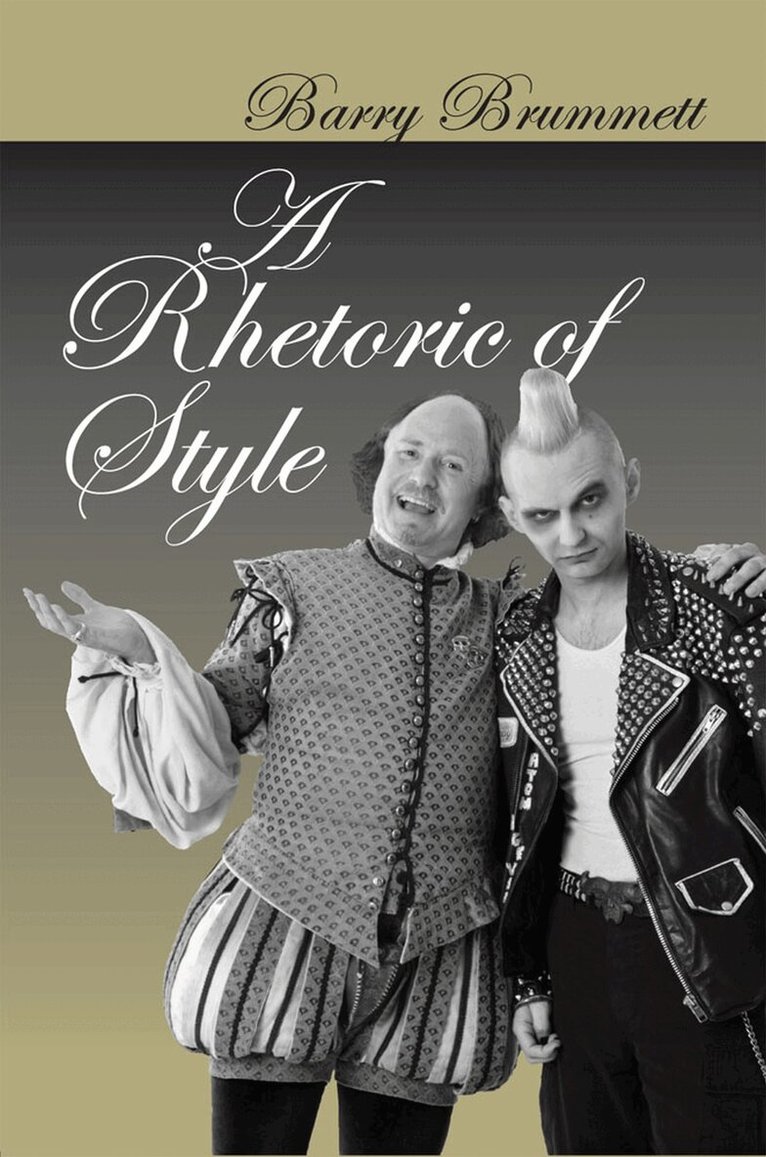
Exploring style in a global cultureIn A Rhetoric of Style, Barry Brummett illustrates how style is increasingly a global system of communication as people around the world understand what it means to dress a certain way, to dance a certain way, to decorate a certain way, to speak a certain way. He locates style at the heart of popular culture and asserts that it is the basis for social life and politics in the twenty-first century.Brummett sees style as a system of signification grounded largely in image, aesthetics, and extrarational modes of thinking. He discusses three important aspects of this system—its social and commercial structuring, its political consequences, and its role as the chief rhetorical system of the modern world. He argues that aesthetics and style are merging into a major engine of the global economy and that style is becoming a way to construct individual identity, as well as social and political structures of alliance and opposition. It is through style that we stereotype or make assumptions about others’ political identities, their sexuality, their culture, and their economic standing.To facilitate theoretical and critical analysis, Brummett develops a systematic rhetoric of style and then demonstrates its use through an in-depth exploration of gun culture in the United States. Armed with an understanding of how this rhetoric of style works methodologically, students and scholars alike will have the tools to do their own analyses. Written in clear and engaging prose, A Rhetoric of Style presents a novel discussion of the workings of style and sheds new light on a venerable and sometimes misunderstood rhetorical concept by illustrating how style is the key to constructing a rhetoric for the twenty-first century.
361 kr
Skickas inom 7-10 vardagar
308 kr
Skickas inom 7-10 vardagar
256 kr
Skickas inom 5-8 vardagar
950 kr
Tillfälligt slut
Millions of people around the world are engaged in sports and games. This volume studies the ways in which engagement is performed in popular culture. We do not just watch football – we perform by being a fan. NBA players do not simply run up and down the court. Instead, on and off the court they perform certain roles, many informed by hip hop culture. Such performances are rhetorical: they manage attitudes, behaviors, and predispositions, influencing the distribution of power. Competitive hot dog eaters, bull riding, and Mexican wrestlers are some of the other sports and games covered by the contributors. The book is unique in bringing together the three themes of sports and games, performance, and the rhetoric of popular culture, and is relevant for both scholarly use and classroom adoption in courses ranging from sport and society, rhetoric, composition, persuasion and argument, and popular culture.
366 kr
Skickas inom 10-15 vardagar
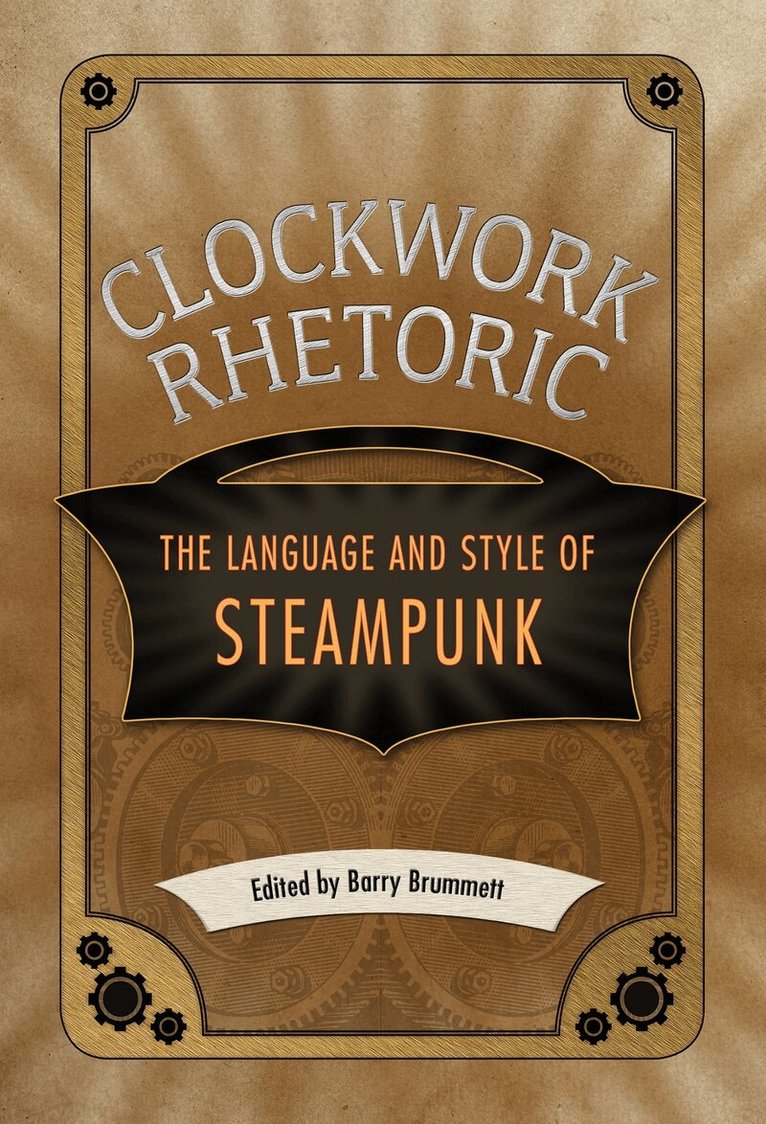
This unique book explores how the aesthetic and cultural movement ""Steampunk"" persuades audiences and wins new acolytes. Steampunk is an aesthetic style grounded in the Victorian era, in clothing and accoutrements modeled on a heightened and hyper-extended age of steam. In addition to its modeling of attire and other symbolic trappings, what is most distinctive is its adherents' use of a machined aesthetic based on steam engines and early electrical machinery - gears, pistons, shafts, wheels, induction motors, clockwork and so forth.Precursors to steampunk can be found in the works of Jules Verne and H. G. Wells. The imagery of the American West contributed to the aesthetic - revolvers, locomotives, and rifles of the late nineteenth century. Among young people, steampunk has found common aesthetic cause with Goth style. Examples from literature and popular culture include William Gibson's fiction, China Miéville's novels, the classic film Metropolis, and the BBC series Doctor Who. This volume recognizes that steampunk, a unique popular culture phenomenon, presents a prime opportunity for rhetorical criticism.Steampunk's art, style, and narratives convey complex social and political meanings. Chapters in Clockwork Rhetoric explore topics ranging from jewelry to Japanese anime to contemporary imperialism to fashion. Throughout, the book demonstrates how language influences consumers of steampunk to hold certain social and political attitudes and commitments.
1 176 kr
Skickas inom 10-15 vardagar
This unique book explores how the aesthetic and cultural movement ""Steampunk"" persuades audiences and wins new acolytes. Steampunk is an aesthetic style grounded in the Victorian era, in clothing and accoutrements modeled on a heightened and hyper-extended age of steam. In addition to its modeling of attire and other symbolic trappings, what is most distinctive is its adherents' use of a machined aesthetic based on steam engines and early electrical machinery: gears, pistons, shafts, wheels, induction motors, clockwork and so forth.The aesthetic was first articulated in literature in the works of Jules Verne and H. G. Wells. The American West later contributed images to the aesthetic--revolvers, locomotives, and rifles of the late nineteenth century. Among young people steampunk has found common aesthetic cause with Goth style. Examples from literature and popular culture include William Gibson's fiction, China Miéville's novels, the classic film Metropolis, and the BBC series Doctor Who. This volume recognizes that steampunk, a unique popular culture phenomenon, presents a prime opportunity for rhetorical criticism.Steampunk's art, style, and narratives convey complex social and political meanings. Chapters in Clockwork Rhetoric explore topics ranging from jewelry to Japanese anime to contemporary imperialism to fashion. Throughout, the book demonstrates how language influences consumers of steampunk to hold certain social and political attitudes and commitments.
753 kr
Skickas inom 10-15 vardagar
In the inaugural series of "Landmark Essay" books, this is the only volume which focuses on the work of one scholar. Kenneth Burke -- poet, scholar, critic, iconoclast, eccentric, and Yankee crank -- is the major figure in American humanities in the twentieth century. He does not fit tidily into any philosophical school, nor is he reducible to any simple set of principles and ideas. Scholars from many fields -- communication, English, history, sociology, and more -- have studied Burke's theories and critical methods which have spawned reams of commentary, extension, debate, and application. More than a single intellectual worker, he is the ore for a scholarly industry. This book contains a few outstanding examples of the products of that industry. Readers will find models of what it means to be Burkean, to study Burke, and to use Burke in developing an understanding of the human condition. The essays in this volume show that one can borrow ideas from Burke, or one can become wholly immersed in him. However, his work cannot be reduced to or equated with any other figure, method, or school of thought. The reader may find some striking similarities among the papers in this book. Written by scholars from several disciplines, they nevertheless address many of the same themes during the course of their exposition. What is also striking is the fact that most of the essays enter that Burkean system of themes from different starting points. Thus, they are models of what Burke claims for any critical vocabulary -- including his own -- that they are cycles of terms, any one of which leads into another.