Barry C Smith - Böcker
Visar alla böcker från författaren Barry C Smith. Handla med fri frakt och snabb leverans.
5 produkter
5 produkter
201 kr
Skickas inom 5-8 vardagar
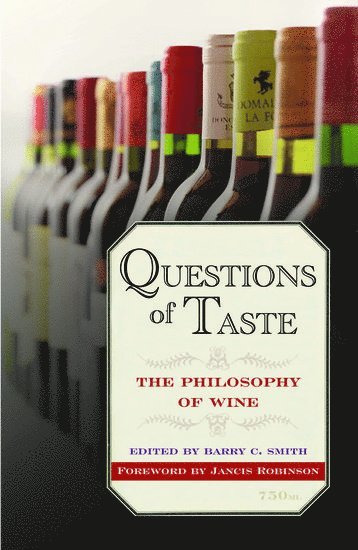
Interest in wine has steadily increased in recent years, with people far more sophisticated about wine than they used to be. And, inevitably, those who take a serious interest in wine find themselves asking questions about it that are at heart philosophical.Questions of Taste is the first book to tackle these questions, illuminating the philosophical issues surrounding our love of wine. Featuring lucid essays by top philosophers, a linguist, a biochemist, and a winemaker and wine critic, this book applies their critical and analytical skills to answer--or at least understand--many thorny questions. Does the experience of wine lie in the glass or in our minds? Does the elaborate language we use to describe wine--alluding to the flavors of cheese or fruit, or to a wine's "suppleness" or "brawniness"---really mean anything at all? Can two people taste one wine in the same way? Does a wine expert enjoy wine more than a novice? These questions and others are not just the concern of the wine lover, but go to the heart of how we think about the world around us--and are the province of the philosopher. With a foreword by leading wine authority Jancis Robinson (editor of the highly acclaimed Oxford Companion to Wine), this volume will be of interest to anyone who thinks seriously about the experience of enjoying wine, as well as those interested in seeing philosophy applied to the world of the everyday.
2 454 kr
Skickas inom 5-8 vardagar
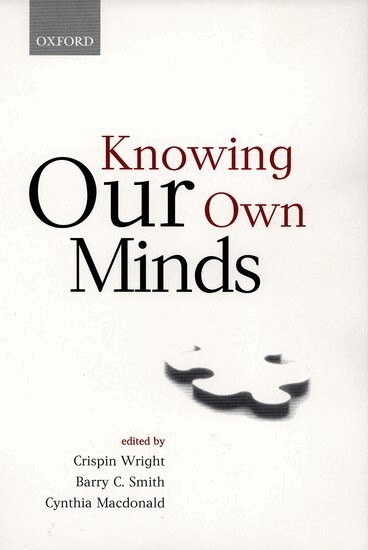
Self-knowledge is the focus of considerable attention from philosophers: Knowing Our Own Minds gives a much-needed overview of current work on the subject, bringing together new essays by leading figures. Knowledge of one's own sensations, desires, intentions, thoughts, beliefs, and other attitudes is characteristically different from other kinds of knowledge, such as knowledge of other people's mental attributes: it has greater immediacy, authority, and salience. The first six chapters examine philosophical questions raised by these features of self-knowledge. The next two look at the role of our knowledge of our own psychological states in our functioning as rational agents. The third group of essays examine the tension between the distinctive characteristics of self-knowledge and arguments that psychological content is externally--socially and environmentally--determined. The final pair of chapters extend the discussion to knowledge of one's own language. Together these original, stimulating, and closely interlinked essays demonstrate the special relevance of self-knowledge to a broad range of issues in epistemology, philosophy of mind, and philosophy of language.
904 kr
Skickas inom 5-8 vardagar
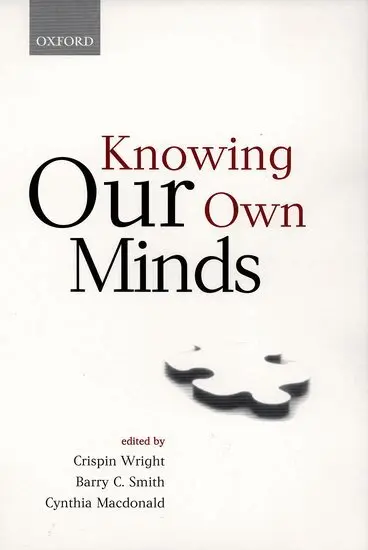
Self-knowledge is the focus of considerable attention from philosophers: Knowing Our Own Minds gives a much-needed overview of current work on the subject, bringing together new essays by leading figures. Knowledge of one's own sensations, desires, intentions, thoughts, beliefs, and other attitudes is characteristically different from other kinds of knowledge, such as knowledge of other people's mental attributes: it has greater immediacy, authority, and salience. The first six chapters examine philosophical questions raised by these features of self-knowledge. The next two look at the role of our knowledge of our own psychological states in our functioning as rational agents. The third group of essays examine the tension between the distinctive characteristics of self-knowledge and arguments that psychological content is externally -- socially and environmentally -- determined. The final pair of chapters extend the discussion to knowledge of one's own language. Together these original, stimulating, and closely interlinked essays demonstrate the special relevance of self-knowledge to a broad range of issues in epistemology, philosophy of mind, and philosophy of language.
2 756 kr
Skickas inom 7-10 vardagar
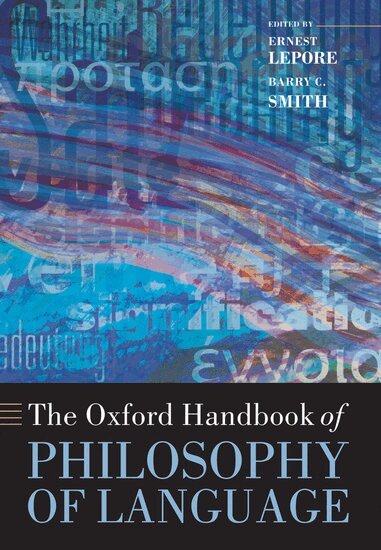
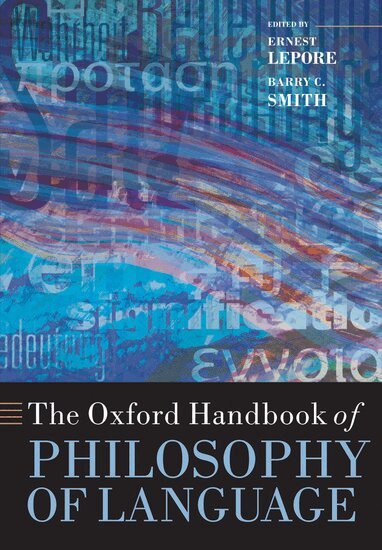
The Oxford Handbooks series is a major new initiative in academic publishing. Each volume offers an authoritative and up-to-date survey of original research in a particular subject area. Specially commissioned essays from leading figures in the discipline give critical examinations of the progress and direction of debates. Oxford Handbooks provide scholars and graduate students with compelling new perspectives upon a wide range of subjects in the humanities and social sciences. Ernie Lepore and Barry Smith present the definitive reference work for this diverse and fertile field of philosophy. A superb international team contribute more than forty brand-new essays covering topics from the nature of language to meaning, truth, and reference, and the interfaces of philosophy of language with linguistics, psychology, logic, epistemology, and metaphysics. It will be an essential resource for anyone working in the central areas of philosophy, for linguists interested in syntax, semantics, and pragmatics, and for psychologists and cognitive scientists working on language.
813 kr
The Oxford Handbooks series is a major new initiative in academic publishing. Each volume offers an authoritative and up-to-date survey of original research in a particular subject area. Specially commissioned essays from leading figures in the discipline give critical examinations of the progress and direction of debates. Oxford Handbooks provide scholars and graduate students with compelling new perspectives upon a wide range of subjects in the humanities and social sciences. Ernie Lepore and Barry Smith present the definitive reference work for this diverse and fertile field of philosophy. A superb international team contribute more than forty brand-new essays covering topics from the nature of language to meaning, truth, and reference, and the interfaces of philosophy of language with linguistics, psychology, logic, epistemology, and metaphysics. It will be an essential resource for anyone working in the central areas of philosophy, for linguists interested in syntax, semantics, and pragmatics, and for psychologists and cognitive scientists working on language.