Barry Krisberg – författare
Visar alla böcker från författaren Barry Krisberg. Handla med fri frakt och snabb leverans.
6 produkter
6 produkter
Inbunden, Engelska, 2001
1 938 kr
Skickas inom 10-15 vardagar
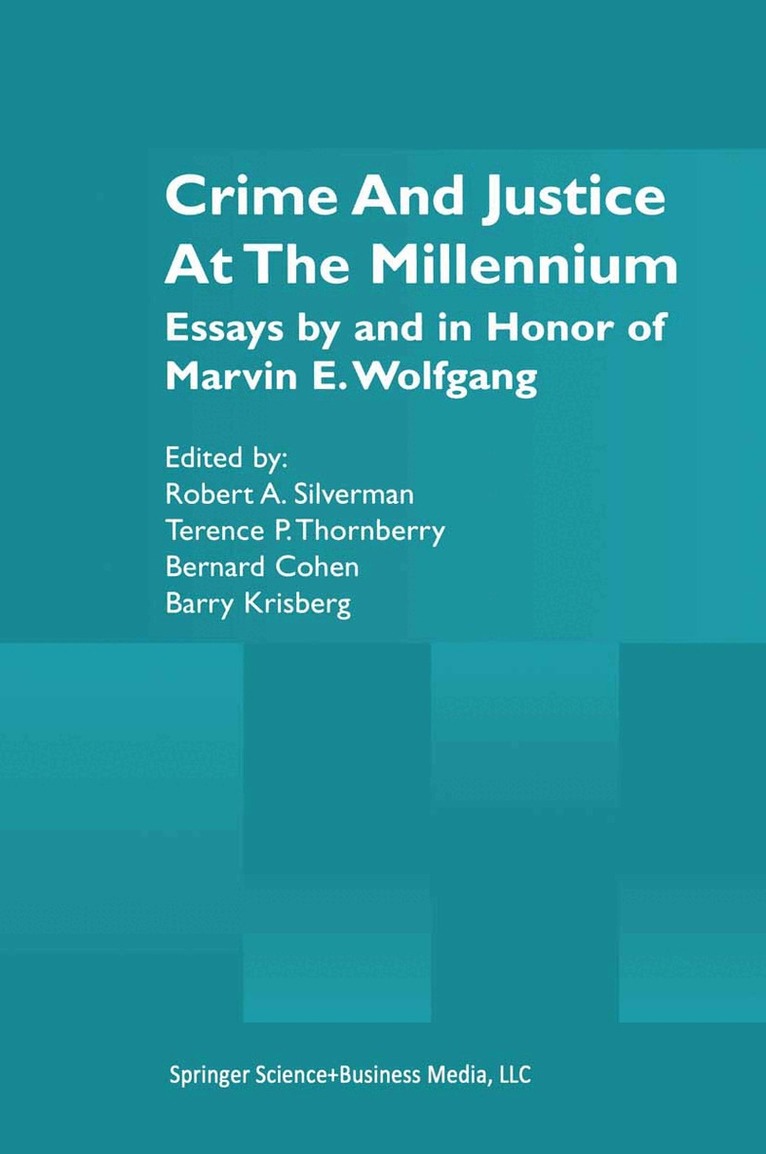
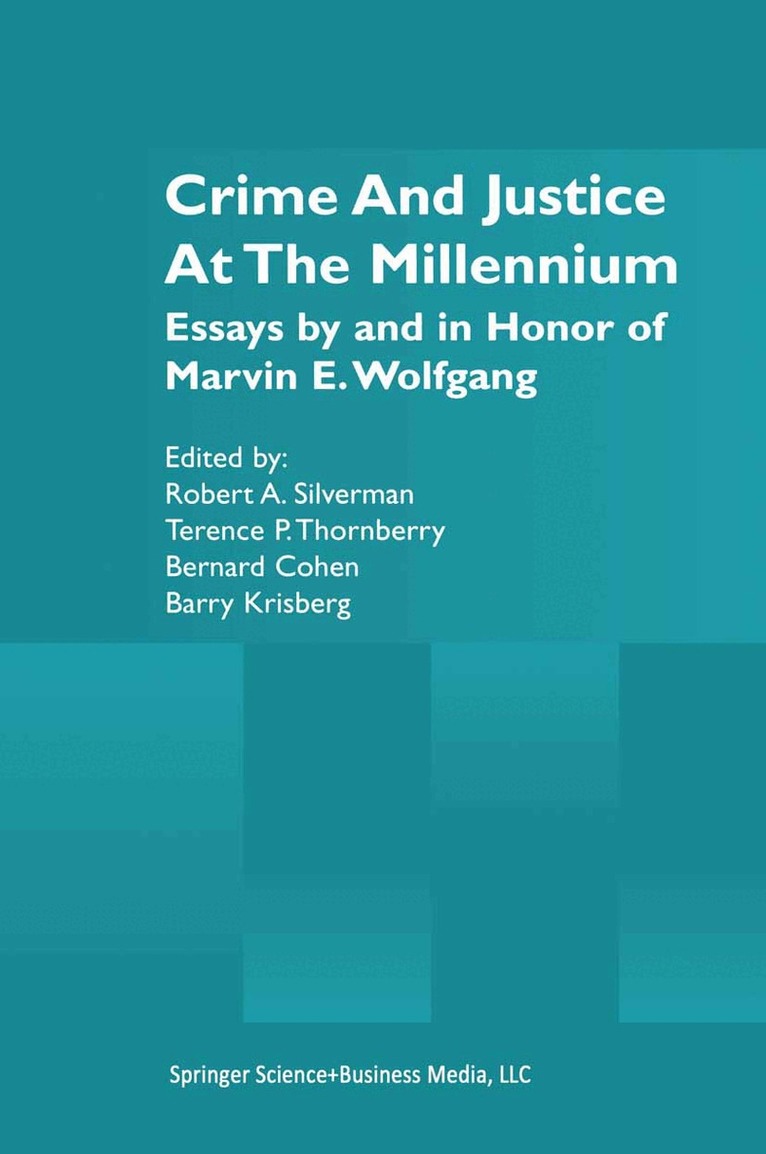
Ira Lipman Marvin Wolfgang was the greatest criminologist in the United States of America in the last half of the 20th century, if not the entire century. We first met on March 3, 1977, in Philadelphia. I sought him out after his work with Edwin Newman's NBC Reports: Violence in America. He was a tender, loving, caring individual who loved excellence-whether it be an intellectual challenge, the arts or any other pursuit. It is a great privilege to take part in honoring Marvin Wolfgang, a great American. Our approaches to the subject of crime came from different perspectives one as a researcher and the other as the founder of one of the world's largest security services companies. We both wanted to understand the causes of crime, and our discussions began a more than 21-year friendship, based on mutual respect and shared values. Dr. Wolfgang's scholarship aimed for the goal of promoting a safer, more prosperous society, one in which economic opportunity replaced criminal enterprise. He never saw crime in isolation but as part of a complex web of social relations. Only by understanding the causes and patterns of crime can society find ways to prevent it. Only through scholarship can the criminal justice community influence policy makers. To encourage the innovative scholarship that marked Marvin's career, Guardsmark established the Lipman Criminology Library at the University of Pennsylvania, at his request, and created a national criminology award in his name, the Wolfgang Award for Distinguished Achievement in Criminology.
Inbunden, Engelska, 1995
2 759 kr
Skickas inom 3-6 vardagar
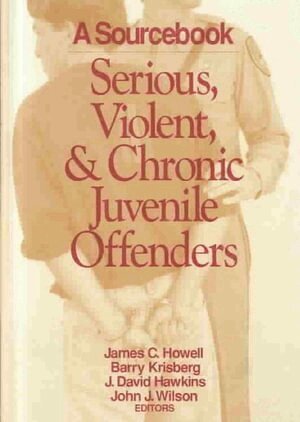
This sourcebook provides outstandingly important, up-to-date, and comprehensive reviews of knowledge about the prevention and treatment of serious, violent, and chronic juvenile offenders. It is an essential reference work for scholars, practitioners, and policymakers who are interested in this topic. --David P. Farrington, Professor of Psychological Criminology, University of Cambridge "At a time when the basic unit of policy about youth crime is often the sound bite, this volume shows the value of information and sustained analysis in creating a balanced program for dealing with the serious juvenile offender. The book is of value both as a specific set of youth crime proposals and as a model of the policy planning process in a difficult area." --Franklin E. Zimring, William Simon Professor of Law and Director, Earl Warren Legal Institute, University of California at Berkeley This indispensable sourcebook sculpts an alternative response to juvenile crime. The rise of violent crimes committed by youths and the lack of effective responses to treating juvenile offenders have underscored the dire need for a different approach. Some of the most respected experts in juvenile justice answer that need in this authoritative volume, presenting a balanced, humane, and effective strategy for change. The result is a comprehensive approach to preventing, treating, and controlling serious juvenile criminal behavior. Thorough analysis of strategy implementation complements discussion of core issues such as controlling delinquency, developing early and intensive intervention programs, risk assessment, and classification tools. The inclusion of special chapters on recent gang research and juveniles in the criminal court system make this volume the essential up-to-date resource for juvenile justice specialists. A Sourcebook: Serious, Violent, and Chronic Juvenile Offenders gathers together information integral to the work of policymakers, lawmakers, law enforcement personnel, and social workers as well as criminal justice researchers, sociologists, and advanced students in these fields.
Inbunden, Engelska, 2007
2 759 kr
Skickas inom 3-6 vardagar
This centennial collection of essays and original research studies captures the varied spectrum of philosophies and concerns of the board and staff of the National Council on Crime and Delinquency (NCCD) over the past century . The criminological experts represented in this volume are renowned for their study and research into the far reaches of this field of study. As a chronicle of the NCCD's development, editors Barry Krisberg, Susan Marchionna, and Christopher Baird include some of the most groundbreaking material to come out of the workings of this unique American institution. Key Features Includes insights from some of the greatest thinkers in the world of criminology: In its first 100 years, the Council has been guided by great criminological thinkers, including Milton Rector, Norval Morris, Marvin Wolfgang, Don Gottfredson, Allen Breed, Roscoe Pound, and others. This volume captures some of their best writing. Promotes the importance of the juvenile court: Respecting the rights of all citizens, NCCD supports the need for a separate system of justice for children. Considers alternatives to incarceration: The included essays and studies address the failings of mass incarceration as a crime control policy and review the value of alternatives to incarceration. Encourages the advancement of effective crime control strategies: The book explores the ways in which social justice and criminal justice are inextricably linked and ponders possible paths to breaking the cycles of violence and incarceration. Sets the foundation for future research: NCCD's gifted staff members, past and present, have created a legacy of research that will help chart a course into the organization's next century.
Intended Audience This supplemental text is designed for advanced undergraduate and graduate courses in criminology, law, jurisprudence, sociology, and social psychology.
Häftad, Engelska, 2007
1 692 kr
Skickas inom 3-6 vardagar
This centennial collection of essays and original research studies captures the varied spectrum of philosophies and concerns of the board and staff of the National Council on Crime and Delinquency (NCCD) over the past century . The criminological experts represented in this volume are renowned for their study and research into the far reaches of this field of study. As a chronicle of the NCCD's development, editors Barry Krisberg, Susan Marchionna, and Christopher Baird include some of the most groundbreaking material to come out of the workings of this unique American institution. Key Features Includes insights from some of the greatest thinkers in the world of criminology: In its first 100 years, the Council has been guided by great criminological thinkers, including Milton Rector, Norval Morris, Marvin Wolfgang, Don Gottfredson, Allen Breed, Roscoe Pound, and others. This volume captures some of their best writing. Promotes the importance of the juvenile court: Respecting the rights of all citizens, NCCD supports the need for a separate system of justice for children. Considers alternatives to incarceration: The included essays and studies address the failings of mass incarceration as a crime control policy and review the value of alternatives to incarceration. Encourages the advancement of effective crime control strategies: The book explores the ways in which social justice and criminal justice are inextricably linked and ponders possible paths to breaking the cycles of violence and incarceration. Sets the foundation for future research: NCCD's gifted staff members, past and present, have created a legacy of research that will help chart a course into the organization's next century.
Intended Audience This supplemental text is designed for advanced undergraduate and graduate courses in criminology, law, jurisprudence, sociology, and social psychology.
Häftad, Engelska, 2010
1 883 kr
Skickas inom 10-15 vardagar
Ira Lipman Marvin Wolfgang was the greatest criminologist in the United States of America in the last half of the 20th century, if not the entire century. We first met on March 3, 1977, in Philadelphia. I sought him out after his work with Edwin Newman's NBC Reports: Violence in America. He was a tender, loving, caring individual who loved excellence-whether it be an intellectual challenge, the arts or any other pursuit. It is a great privilege to take part in honoring Marvin Wolfgang, a great American. Our approaches to the subject of crime came from different perspectives one as a researcher and the other as the founder of one of the world's largest security services companies. We both wanted to understand the causes of crime, and our discussions began a more than 21-year friendship, based on mutual respect and shared values. Dr. Wolfgang's scholarship aimed for the goal of promoting a safer, more prosperous society, one in which economic opportunity replaced criminal enterprise. He never saw crime in isolation but as part of a complex web of social relations. Only by understanding the causes and patterns of crime can society find ways to prevent it. Only through scholarship can the criminal justice community influence policy makers. To encourage the innovative scholarship that marked Marvin's career, Guardsmark established the Lipman Criminology Library at the University of Pennsylvania, at his request, and created a national criminology award in his name, the Wolfgang Award for Distinguished Achievement in Criminology.
E-bok
PDF, Engelska, 20132 367 kr
Läs direkt efter köp
Ira Lipman Marvin Wolfgang was the greatest criminologist in the United States of America in the last half of the 20th century, if not the entire century. We first met on March 3, 1977, in Philadelphia. I sought him out after his work with Edwin Newman''s NBC Reports: Violence in America. He was a tender, loving, caring individual who loved excellence-whether it be an intellectual challenge, the arts or any other pursuit. It is a great privilege to take part in honoring Marvin Wolfgang, a great American. Our approaches to the subject of crime came from different perspectives one as a researcher and the other as the founder of one of the world''s largest security services companies. We both wanted to understand the causes of crime, and our discussions began a more than 21-year friendship, based on mutual respect and shared values. Dr. Wolfgang''s scholarship aimed for the goal of promoting a safer, more prosperous society, one in which economic opportunity replaced criminal enterprise. He never saw crime in isolation but as part of a complex web of social relations. Only by understanding the causes and patterns of crime can society find ways to prevent it. Only through scholarship can the criminal justice community influence policy makers. To encourage the innovative scholarship that marked Marvin''s career, Guardsmark established the Lipman Criminology Library at the University of Pennsylvania, at his request, and created a national criminology award in his name, the Wolfgang Award for Distinguished Achievement in Criminology.