Barry Malzberg – författare
Visar alla böcker från författaren Barry Malzberg. Handla med fri frakt och snabb leverans.
3 produkter
3 produkter
Häftad, Engelska, 2017
240 kr
Skickas inom 5-8 vardagar
Häftad, Engelska, 2025
135 kr
Skickas
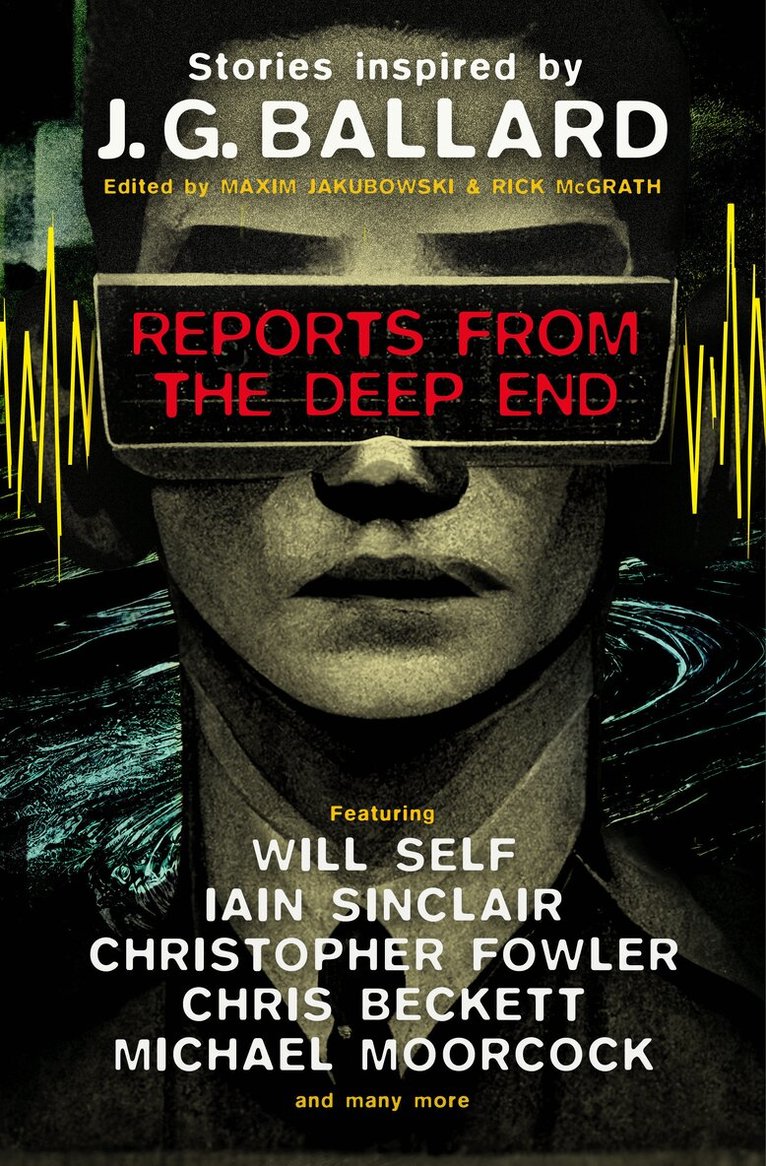
A fascinating and unsettling anthology of 32 science fiction short stories in tribute to the prophetic dystopias of New Wave sci-fi pioneer, and literary titan of the twentieth century, J. G. Ballard-featuring Will Self, Iain Sinclair, Christopher Fowler, Chris Beckett, and a new Jerry Cornelius story from Michael Moorcock.Few authors are so iconic that their name is an adjective - Ballard is one of them.Master of both literary and science fiction, his novels such as Empire of the Sun, Crash and Cocaine Nights show a world out of joint - a bewildering, alienating and yet enthralling place. From his rapturously weird takes on contemporary reality to his classic dystopias like The Drowned World and High Rise, Ballard's legacy shaped the future of literature. This first-of-its-kind anthology, featuring our greatest literary and science fiction authors, including the pioneering Will Self, pays tribute to the unique visions of humanity's uncanny and uneasy clash with the future - our empires of concrete - seen through the warped lens of J. G. Ballard.Edited by renowned editors Maxim Jakubowski and Rick McGrath, this collection includes stories by:Will SelfIain SinclairChristopher FowlerChris BeckettMichael MoorcockJeff NoonPreston GrassmannToby LittChristine PoulsonDavid GordonHanna JamesonJames LovegroveRamsey CampbellBarry N. MalzbergPaul Di FilippoSamathan Lee HoweNick MamatasAdrian McKintyRhys HughesAdrian ColePat CadiganAdam RobertsGeorge SandisonGeoff NicholsonA.K. BenedictAndrew HookDavid QuantickLavie TidharJames Grady
E-bok
Engelska, 202678 kr
Läs direkt efter köp
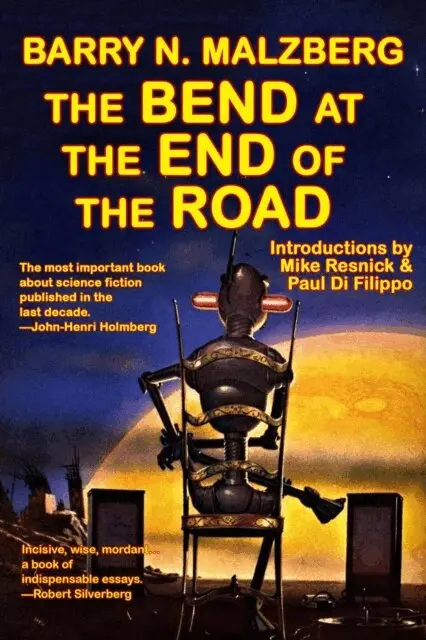
Barry N. Malzberg's fiction earned him the 1973 John W. Campbell Memorial Award, nominations for the Philip K. Dick and Theodore Sturgeon Awards, as well as two Hugo and six Nebula Award nominations. Born in 1939, he earned a degree from Syracuse University, worked for the New York City government, and made his first professional fiction sale in 1966. He wrote in a variety of genres under several pseudonyms, and also worked as an agent, editor, and reviewer. As he says in his own afterword to this volume, "e;Very few writers of fiction are able to produce personal essays at the level of their best (or even worst) fiction; Mailer is an exception, but it could be argued that he was always a polemicist; Nabokov was usually an exception but VN conformed to no ordinary standard as we know. I did get better, and somewhere in the course of that improvement I found that my interest in fiction was steadily diminishing. The bibliographers can prove that I wrote it to some standard, but ever more as the polity and its politics crawled toward disaster, I found that I was losing patience and faith in the form. In 1960, Phillip Roth had published a subsequently famous essay arguing that in the United States, technology and its disastrous consequences had utterly overwhelmed fiction's feebler ability to invent, influence, sway a wide audience. Evident 58 years ago, that declaration seems now to be inarguable. There was not a novelist in town unshaken by 9-11, the catastrophic event seemed to mock the authors' necessary belief in the importance of the form itself. And now we have encountered a spectacle of power so cruel, remote, distanced, and self-serving that recognizing one's helplessness seems the only logical default. Non-fiction, the personal essay, has at least the possibility of testimony, an unshielded immediacy."e; Collected here are nearly fifty of Malzberg's latest essays. They may upset you, may depress you, may shock you, but they will make you think, and lead you to a different view of the world. Also included are introductions by Mike Resnick and Paul Di Filippo. Reviews: "e;The impressions and insights that abound in these columns make this book indispensable for any fan of science fiction."e; —Publishers Weekly "e;Readers familiar with the genre's history will find his accounts of some of the giants of the 1950s, such as Alfred Bester, Robert Sheckley, and H. Beam Piper, illuminating. Malzberg also casts his eye beyond the borders of SF, with interesting comments on the likes of Raymond Carver and Marilyn Monroe, to pick a couple.… As one expects of Malzberg, the collection is idiosyncratic, often provocative, occasionally repetitious, but never dull. If you're at all interested in the history of the field, give this one a read."e; —Peter Heck in Asimov's Science Fiction "e;Elegies and rants, a prose that Mencken might envy, seemingly eidetic recall for everything that has ever happened in science fiction's garish, slightly down-at-the-heels cabaret, plus an outlook on life as clear-eyed and weary-hearted as Edward Hopper's—you'll find them all in The Bend at the End of the Road. Barry Malzberg is sf's institutional memory, and in these pages he transports us back to those thrilling days of yesteryear, when the stars were our destination and every story seemed a door into summer. But he also casts a cold eye on the fiction and fandom de nos jours. Here, then, is a full house of wise, provocative, and plangent essays—read 'em and weep."e; —Michael Dirda, Pulitzer Prize-winning literary journalist