Barry R. Clarke – författare
Visar alla böcker från författaren Barry R. Clarke. Handla med fri frakt och snabb leverans.
18 produkter
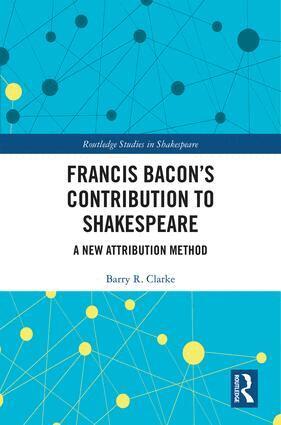
Francis Bacon’s Contribution to Shakespeare
A New Attribution Method
Inbunden, 2019
2879 kr
Lägg i varukorg
Francis Bacon's Contribution to Shakespeare advocates a paradigm shift away from a single-author theory of the Shakespeare work towards a many-hands theory. Here, the middle ground is adopted between competing so-called Stratfordian and alternative single-author conspiracy theories. In the process, …
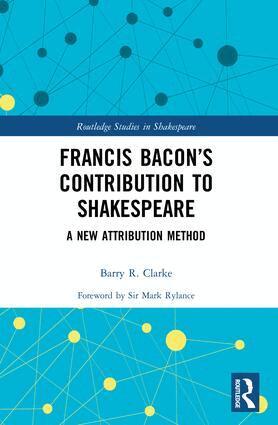
Francis Bacon’s Contribution to Shakespeare
A New Attribution Method
Häftad, 2019
809 kr
Lägg i varukorg
Francis Bacon's Contribution to Shakespeare advocates a paradigm shift away from a single-author theory of the Shakespeare work towards a many-hands theory. Here, the middle ground is adopted between competing so-called Stratfordian and alternative single-author conspiracy theories. In the process, …
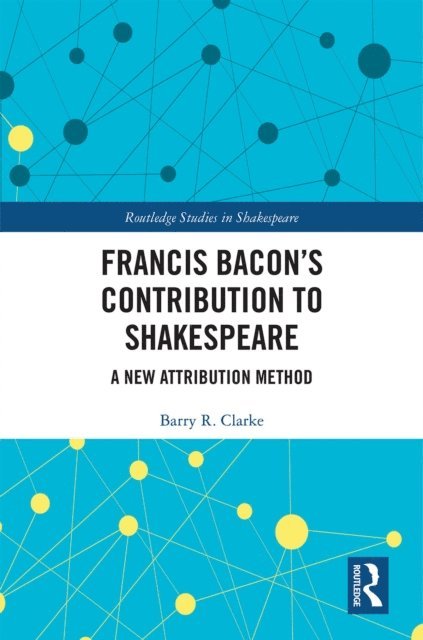
Francis Bacon's Contribution to Shakespeare
A New Attribution Method
E-bok, 2019
956 kr
Lägg i varukorg
Francis Bacon''s Contribution to Shakespeare advocates a paradigm shift away from a single-author theory of the Shakespeare work towards a many-hands theory. Here, the middle ground is adopted between competing so-called Stratfordian and alternative single-author conspiracy theories. In the …
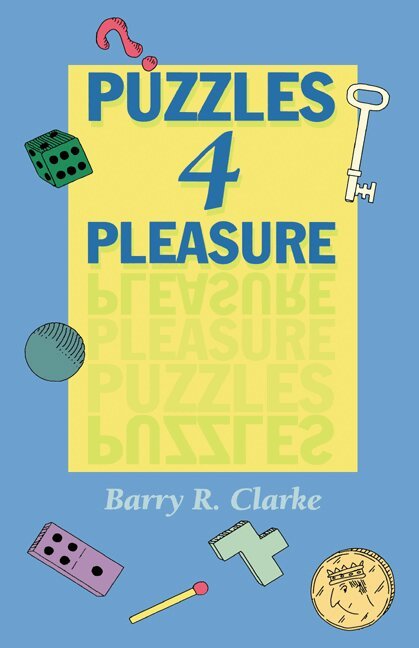
Puzzles for Pleasure
Häftad, 1994
292 kr
Lägg i varukorg
Are you one of the millions of people throughout the world that are fascinated by puzzles, conundrums and brain teasers? If so then you will want this collection of amusing twisters from Barry Clarke. Based on his extensive experience of writing for the Daily Telegraph, Sunday Times and New …
Mathematical Conundrums
E-bok, 2023
502 kr
Lägg i varukorg
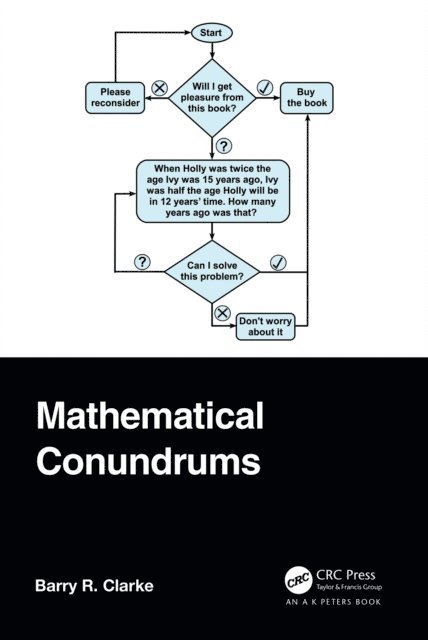
Want to sharpen your mathematical wits? If so, then Mathematical Conundrums is for you. Daily Telegraph enigmatologist, Barry R. Clarke, presents over 120 fiendish problems that will test both your ingenuity and persistence. Between these covers are puzzles in geometry, arithmetic, and algebra …
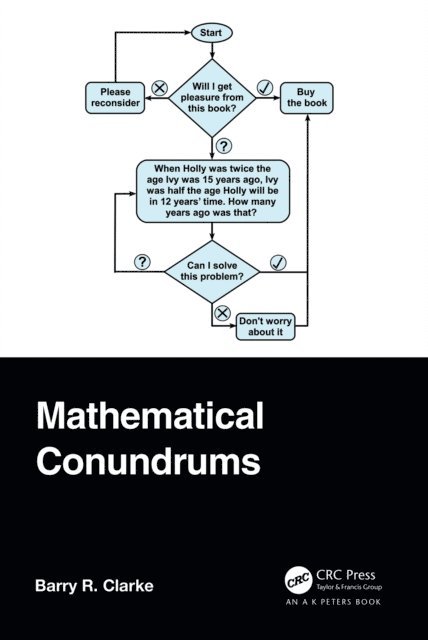
Mathematical Conundrums
E-bok, 2023
492 kr
Lägg i varukorg
Want to sharpen your mathematical wits? If so, then Mathematical Conundrums is for you. Daily Telegraph enigmatologist, Barry R. Clarke, presents over 120 fiendish problems that will test both your ingenuity and persistence. Between these covers are puzzles in geometry, arithmetic, and algebra …
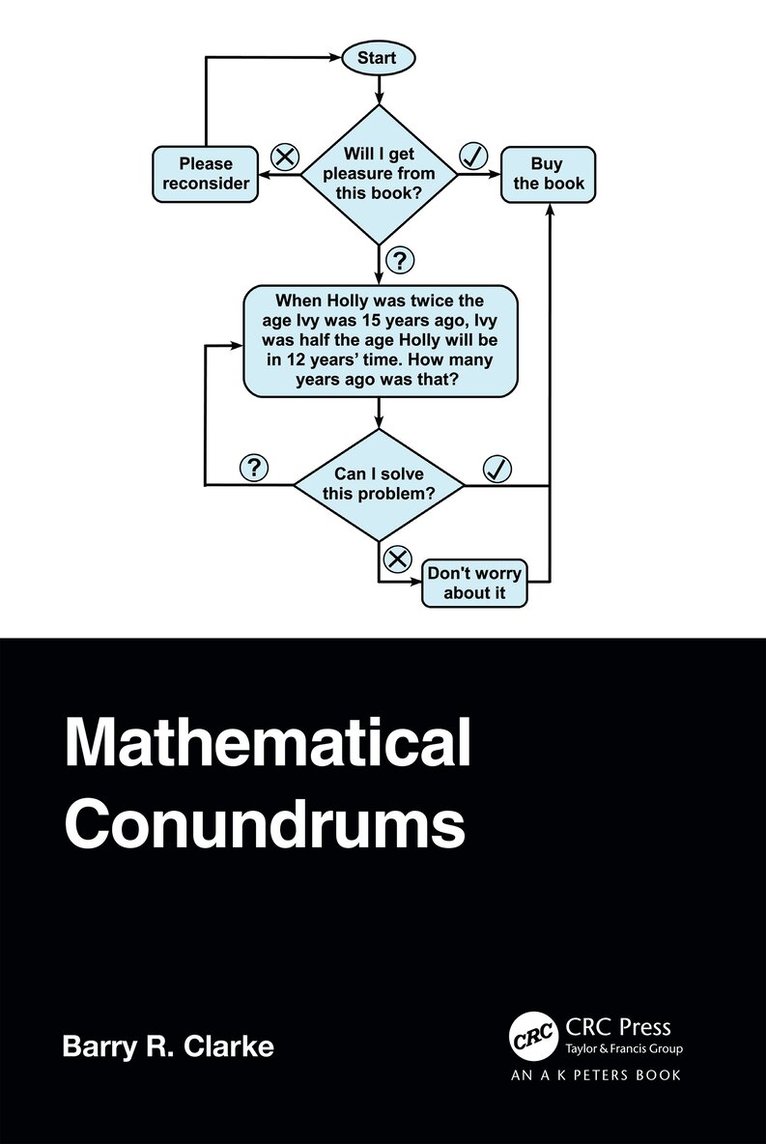
Mathematical Conundrums
Häftad, 2023
428 kr
Lägg i varukorg
Want to sharpen your mathematical wits? If so, then Mathematical Conundrums is for you. Daily Telegraph enigmatologist, Barry R. Clarke, presents over 120 fiendish problems that will test both your ingenuity and persistence. Between these covers are puzzles in geometry, arithmetic, and algebra …
Mathematical Conundrums
Inbunden, 2023
1517 kr
Lägg i varukorg
Want to sharpen your mathematical wits? If so, then Mathematical Conundrums is for you. Daily Telegraph enigmatologist, Barry R. Clarke, presents over 120 fiendish problems that will test both your ingenuity and persistence. Between these covers are puzzles in geometry, arithmetic, and algebra …
Tic Tac Test
Beat the Book at Noughts and Crosses
E-bok, 2026
297 kr
Lägg i varukorg
At last, a tic-tac-toe computer that needs no electrical power! Tic Tac Test: Beat the Book at Noughts and Crosses is an interactive book that will test your logic skills. The computer will sometimes randomize its responses so you’ll never get bored. Either you or the computer can start first, …
Tic Tac Test
Beat the Book at Noughts and Crosses
E-bok, 2026
303 kr
Lägg i varukorg
At last, a tic-tac-toe computer that needs no electrical power! Tic Tac Test: Beat the Book at Noughts and Crosses is an interactive book that will test your logic skills. The computer will sometimes randomize its responses so you’ll never get bored. Either you or the computer can start first, …
Tic Tac Test
Beat the Book at Noughts and Crosses
Häftad, 2026
254 kr
Lägg i varukorg
At last, a tic-tac-toe computer that needs no electrical power! Tic Tac Test: Beat the Book at Noughts and Crosses is an interactive book that will test your logic skills. The computer will sometimes randomise its responses so you’ll never get bored. Either you or the computer can start first but …
Tic Tac Test
Beat the Book at Noughts and Crosses
Inbunden, 2026
1517 kr
Lägg i varukorg
At last, a tic-tac-toe computer that needs no electrical power! Tic Tac Test: Beat the Book at Noughts and Crosses is an interactive book that will test your logic skills. The computer will sometimes randomize its responses so you’ll never get bored. Either you or the computer can start first, but …
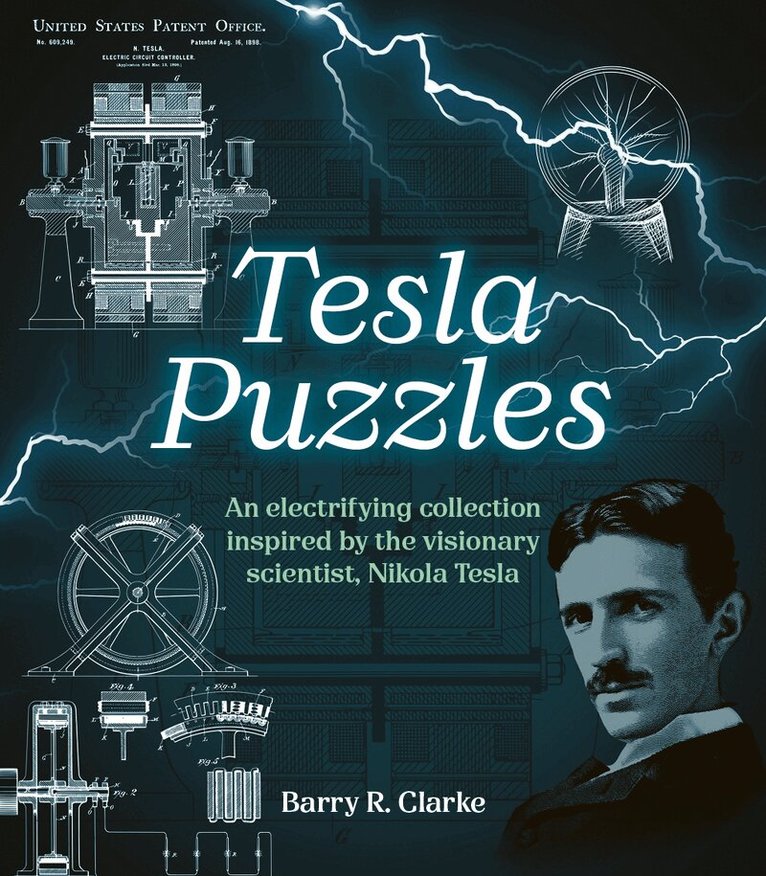
Tesla Puzzles
An electrifying collection inspired by the visionary scientist, Nikola Tesla
Häftad, 2026
120 kr
Lägg i varukorg
From magnetic riddles to circuits of logic, Tesla Puzzles includes over 100 mind-bending narrative puzzles befitting the creativity and innovation of Tesla himself. Each conundrum is themed on the locations and characters in Tesla's life and times so along the way you'll encounter Tesla during …
Tesla Puzzles
An Electrifying Collection Inspired by the Visionary Scientist, Nikola Tesla
Häftad, 2026
197 kr
Lägg i varukorg
For fans of brain-teasing logic, this beautifully illustrated puzzle collection inspired by brilliant mind of Nikola Tesla offers a timeless challenge. Step into the electrifying world of Nikola Tesla with this fantastic assortment of logic and mathematical puzzles inspired by the life and genius …
Vortex Atom
A New Paradigm
Inbunden, 2021
1433 kr
Lägg i varukorg
With clear illustrations throughout and without recourse to quantum mechanics, the reader is invited to revisit unsolved problems lying at the foundations of theoretical physics. Maxwell and his contemporaries abandoned their search for a geometrical representation of the electric and magnetic …
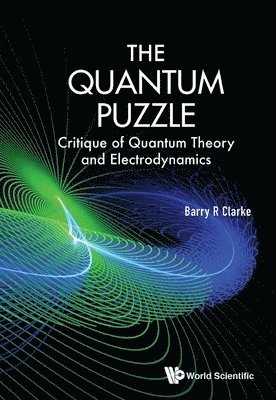
QUANTUM PUZZLE, THE: CRITIQUE OF QUANTUM THEORY AND ELECTRODYNAMICS
Inbunden, 2017
1987 kr
Lägg i varukorg
In 1861, James Clerk–Maxwell published Part II of his four-part series "On physical lines of force". In it, he attempted to construct a vortex model of the magnetic field but after much effort neither he, nor other late nineteenth century physicists who followed him, managed to produce a workable …
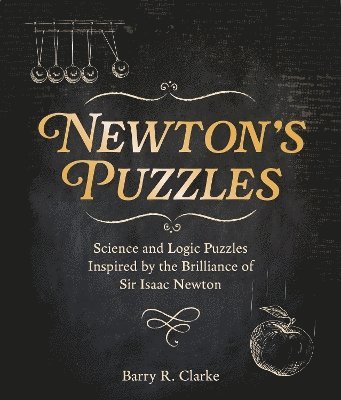
Newton's Puzzles
Science and Logic Puzzles Inspired by the Brilliance of Sir Isaac Newton
Häftad, 2024
116 kr
Tillfälligt slut
Written by renowned puzzle maker, Barry R. Clarke, this brilliant collection of 125 mathematical, physics, and logic puzzles is inspired by the life and genius of Sir Isaac Newton. This collection of intriguing narrative puzzles presents several scenarios that require Isaac Newton's talent for …
QUANTUM PUZZLE, THE: CRITIQUE OF QUANTUM THEORY AND ELECTRODYNAMICS
Häftad, 2017
921 kr
Tillfälligt slut
In 1861, James Clerk–Maxwell published Part II of his four-part series "On physical lines of force". In it, he attempted to construct a vortex model of the magnetic field but after much effort neither he, nor other late nineteenth century physicists who followed him, managed to produce a workable …