Bart A. Ellenbroek - Böcker
Visar alla böcker från författaren Bart A. Ellenbroek. Handla med fri frakt och snabb leverans.
3 produkter
3 produkter
Del 75 - Current Topics in Behavioral Neurosciences
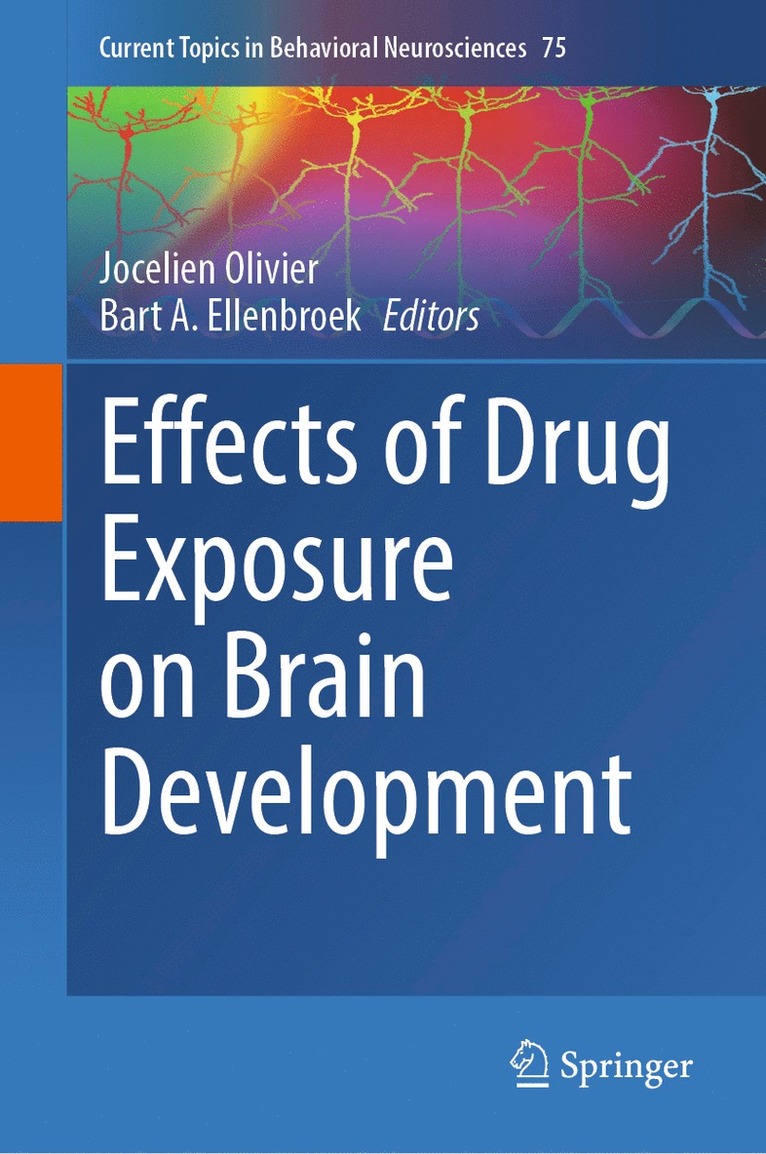
Effects of Drug Exposure on Brain Development
Inbunden, Engelska, 2025
1 733 kr
Skickas inom 7-10 vardagar
The 1950s heralded an era of unprecedented breakthroughs in psychopharmacology with the introduction of drugs such as chlorpromazine, imipramine and chlordiazepoxide. While much research has since focused on the side-effects of these drugs for the patient, more recently, a shift has occurred toward investigation of the effects on these drugs on the next generation.This volume aims to provide the most recent scientific evidence showing how perinatal drug treatment influences the development of the brain and behavior of the offspring. Authors summarize both human and animal literature. Although authors are aware of the fact that the brains (and behaviors) of animals, particularly rodents, differ in many ways from humans, animal research has been instrumental, particularly in studying the molecular and cellular changes. Moreover, animal research provides important benefits related to investigating the causal relationship between drug exposure and development. For example, psychotropic medication is used by pregnant humans because they suffer from a (mental) illness.The volume focuses both on psychotropic drugs (such as antidepressant and antipsychotic drugs) and on drugs of abuse (including psychostimulants and alcohol). It summarizes the current state of knowledge on the acute and long-term effects of psychoactive drugs on the brain and behavior of the offspring.
2 164 kr
Skickas inom 10-15 vardagar
The introduction of chlorpromazine in 1953, and haloperidol in 1958, into clinical practice dramatically altered the therapy of schizophrenic patients. Although representing by no means a cure for this severe psychiatric ill ness, it allowed, for the first time, to adequately control the severe hallu cinations and delusional beliefs which prevent these patients from leading a more or less independent life. Indeed these antipsychotics (and the many congeners that were to follow) significantly reduced the number ofchronic schizophrenic inpatients in psychiatric clinics all over the world. However soon after their introduction it became clear that, like all other available drugs, antipsychotics were by no means miracle drugs. In fact, two major problems appeared. First, the antipsychotics had very little effect on the so-called negative or defect symptoms, like social isolation, apathy and anhedonia, and secondly virtually all antipsychotics produced a number of side-effects, of which the neurological (often called extra pyramidal) side-effects were the most troublesome. Especially the tardive dyskinesia, which occurred in about 15 to 20% of the patients after pro longed treatment, represented a major problem in the treatment of schizo phrenic patients.
2 164 kr
Skickas inom 10-15 vardagar
This text deals with drugs which play an important role in the therapy of schizophrenia. It describes the introduction of the first antipsychotics on the market and the importance of clozapine, a prototype for atypical antipsychotics, for further investigation of other potentially atypical antipsychotics, which may have an important impact on the therapy and especially the well being of a schizophrenic patient.