Barton J. Blinder – författare
Visar alla böcker från författaren Barton J. Blinder. Handla med fri frakt och snabb leverans.
2 produkter
2 produkter
E-bok
PDF, Engelska, 20131 008 kr
Läs direkt efter köp
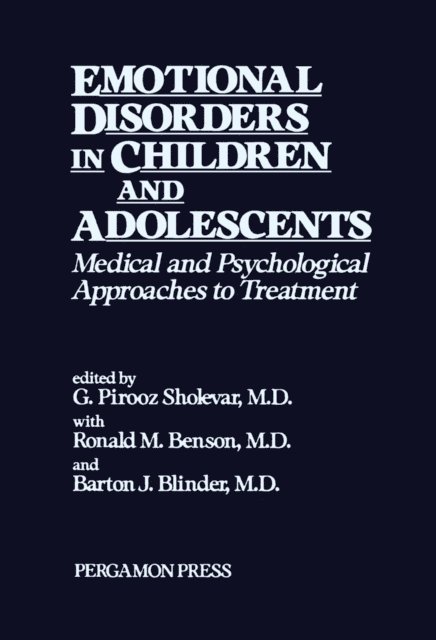
Emotional Disorders in Children and Adolescents states that individual psychotherapy is a nonspecific label. It is done when two people interact in a prolonged series of emotionally charged encounters, with the purpose of changing the behavior of the dyad. The motives and dynamics of individual psychotherapy are explained in detail as well as the history of the approach. The book discussed the concept of child psychoanalysis. This section includes its historical background, the similarities and differences between child and adult psychoanalysis, the age of the child that should be treated and frequency of treatment. The text also covers some techniques in the application of psychoanalysis. A broad section of the volume is focused on the modification of the child''s behavior as a type of treatment. This chapter is followed by a section on the behavioral approaches in adolescent psychiatry. The book will provide useful information to psychologist, psychiatrist, behavioral specialist, students and researchers in the field of psychology.
Häftad, Engelska, 2003
383 kr
Tillfälligt slut
This book invites the reader to participate in a major initiative of the 21st century: dissolving Cartesian mind-brain dualism.This book will help all mental health clinicians to dissolve their conceptual mind/brain barriers by recognizing the reciprocal influences of psychological and pharmacological interventions. This task is approached by challenging the reader to respond to thought-provoking questions and problematic case vignettes in the following subject areas: combined treatment research, pharmacotherapy during psychotherapy, psychotherapy during pharmacotherapy, the pharmacotherapy-psychotherapy triangle and integrated treatment algorithms. Each of these homework-based sections is introduced by a brief overview. Part I invites the reader to an overview of these many issues. Topics covered include: 1) research in combined treatments, 2) pharmacotherapy during psychotherapy, 3) psychotherapeutic aspects of pharmacotherapy, 4) the pharmacotherapy-psychotherapy triangle, 5) treatment algorithms for combined treatments, and 6) the neurobiology of psychotherapy. With thought-provoking questions and vignettes of problematic cases, the authors invite readers to participate in working out these complicated issues. Part II provides cutting edge information on issues of integrated and split treatment and psychodynamic neurobiology. Answers to the problems are provided at the end of the book. Two additional chapters thoroughly review the research in combined treatments and what is known about the neurobiology of psychotherapy.