Basit Bilal Koshul - Böcker
Visar alla böcker från författaren Basit Bilal Koshul. Handla med fri frakt och snabb leverans.
4 produkter
4 produkter
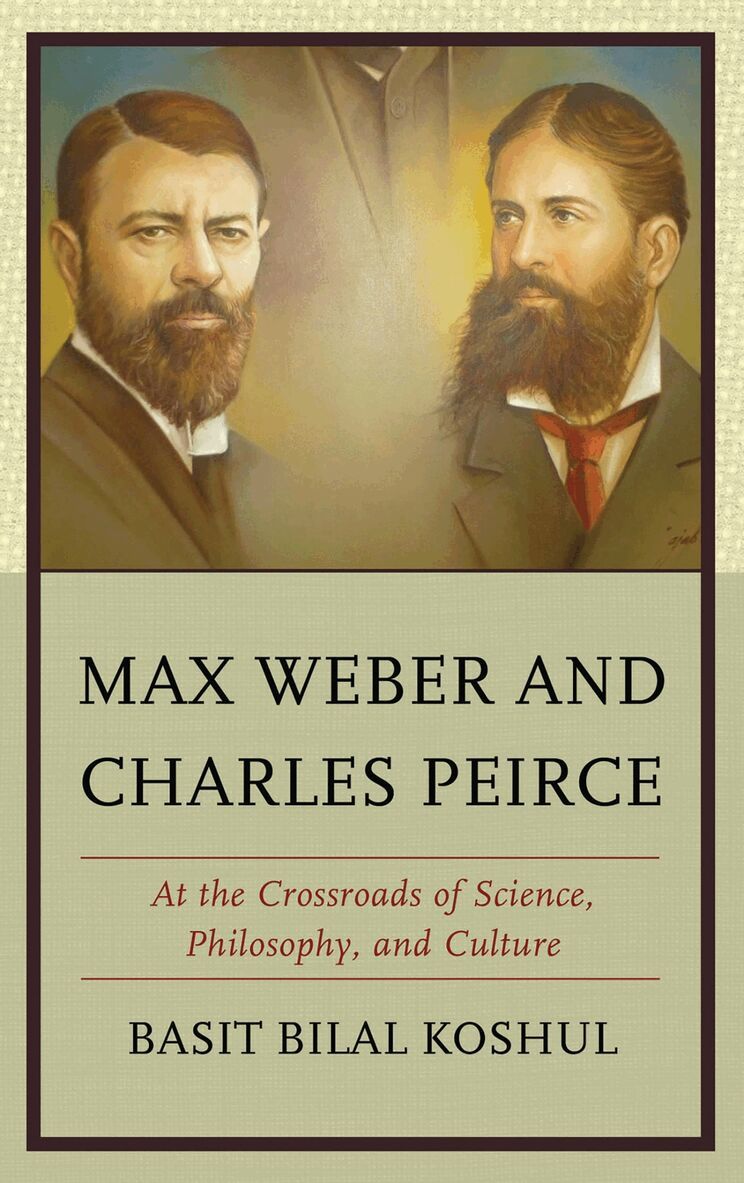
Max Weber and Charles Peirce
At the Crossroads of Science, Philosophy, and Culture
Inbunden, Engelska, 2014
1 476 kr
Skickas inom 10-15 vardagar
Max Weber and Charles Peirce: At the Crossroads of Science, Philosophy, and Culture shows that a relational conception of science is implicit in Max Weber’s reflections on scientific inquiry as a bridge between the Geisteswissenschaften (soft sciences) and Naturwissenschaften (hard sciences). Because he is not a trained philosopher, Weber does not have the precise philosophical language in which to articulate his ideas clearly. Consequently, his relational vision of science remains obscure. Basit Bilal Koshul brings clarity and precision to Weber’s insights using the pragmaticist philosophy of Charles Peirce. He makes explicit the phenomenology, semiotics, and logic that are implicit in Weber’s methodological writings and translates them into Peircean terms. Since Peirce explicitly offers his philosophy of science as a critique of the modern divide between the humanistic and natural sciences and of the divide between religion and science, this translation has a double effect. It clarifies Weber’s insights on the methodology of scientific inquiry, and it extends the reparative force of these insights into the larger culture of which science is one part. The reconstruction of Weber’s relational conception of science along the lines of Peirce’s pragmaticism, in turn, reveals that Weber’s work points toward deep affinities between religion and science. Given the fact that the same phenomenology, semiotics, and logic that underpin Peirce’s philosophy of science are also at the root of his philosophy of religion, we can begin to appreciate the fact that Weber’s work makes an important contribution to bridging the divide between religion and science. In providing models that bridge divides and move towards complementary relationships, Weber and Peirce not only help us to better understand disenchantment as the fate of our times, but also offer uniquely valuable resources to reach for cultural horizons that lie beyond it.
Scripture, Reason, and the Contemporary Islam-West Encounter
Studying the “Other,” Understanding the “Self”
Inbunden, Engelska, 2007
1 062 kr
Skickas inom 10-15 vardagar
The unique essays in this collection use the underlying allegiance to scripture in Islam, Judaism, and Christianity to underscore the deep affinities between the three monotheistic traditions while at the same time encouraging respect for the differences between the traditions to be preserved.
457 kr
Skickas inom 7-10 vardagar
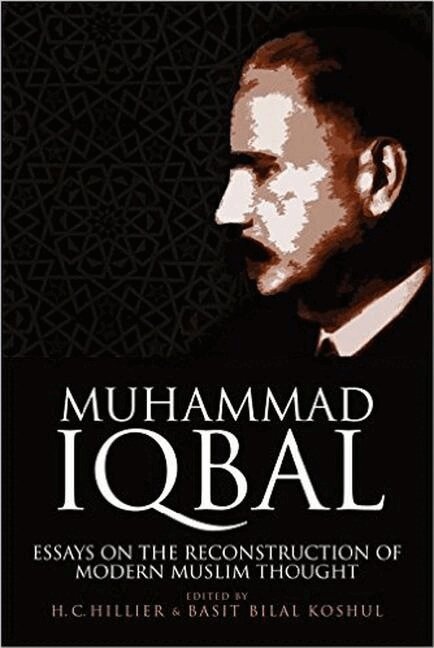
There are few moments in human history where the forces of religion, culture and politics converge to produce some of the most significant philosophical ideas in the world. India in the early 20th century was one of these moments, where we saw the rise of activist-thinkers like Nehru, Jinnah and Gandhi; individuals who not only liberated human lives but their minds as well. One of most influential members of the group was the poet-philosopher Muhammad Iqbal. Commonly known as the "spiritual father of Pakistan", the philosophical and political ideas of Iqbal not only shaped the face of Indian Muslim nationalism but also shaped the direction of modernist reformist Islam around the world. Bringing together a diverse number of prominent and emerging scholars, from backgrounds in political science, philosophy and religious studies, this book offers novel examinations of the philosophical ideas that laid at the heart of Iqbal’s own As such, by producing new developments in research on Iqbal’s thought from a diversity of prominent and emerging voices within American and European Islamic studies, this text will offer new and novel examinations of the ideas that lies at the heart of Iqbal’s own thought: religion, science, metaphysics, nationalism and religious identity. In our text, the reader will (re)discover many new connections between the "Sage of the Ummah" to the greatest thinkers and ideas of European and Islamic philosophies.
Max Weber and Charles Peirce
At the Crossroads of Science, Philosophy, and Culture
Häftad, Engelska, 2016
675 kr
Skickas inom 10-15 vardagar
Max Weber and Charles Peirce: At the Crossroads of Science, Philosophy, and Culture shows that a relational conception of science is implicit in Max Weber’s reflections on scientific inquiry as a bridge between the Geisteswissenschaften (soft sciences) and Naturwissenschaften (hard sciences). Because he is not a trained philosopher, Weber does not have the precise philosophical language in which to articulate his ideas clearly. Consequently, his relational vision of science remains obscure. Basit Bilal Koshul brings clarity and precision to Weber’s insights using the pragmaticist philosophy of Charles Peirce. He makes explicit the phenomenology, semiotics, and logic that are implicit in Weber’s methodological writings and translates them into Peircean terms. Since Peirce explicitly offers his philosophy of science as a critique of the modern divide between the humanistic and natural sciences and of the divide between religion and science, this translation has a double effect. It clarifies Weber’s insights on the methodology of scientific inquiry, and it extends the reparative force of these insights into the larger culture of which science is one part. The reconstruction of Weber’s relational conception of science along the lines of Peirce’s pragmaticism, in turn, reveals that Weber’s work points toward deep affinities between religion and science. Given the fact that the same phenomenology, semiotics, and logic that underpin Peirce’s philosophy of science are also at the root of his philosophy of religion, we can begin to appreciate the fact that Weber’s work makes an important contribution to bridging the divide between religion and science. In providing models that bridge divides and move towards complementary relationships, Weber and Peirce not only help us to better understand disenchantment as the fate of our times, but also offer uniquely valuable resources to reach for cultural horizons that lie beyond it.