Bastiaan Willems – författare
Visar alla böcker från författaren Bastiaan Willems. Handla med fri frakt och snabb leverans.
12 produkter
12 produkter
Häftad, Engelska, 2024
301 kr
Skickas inom 7-10 vardagar
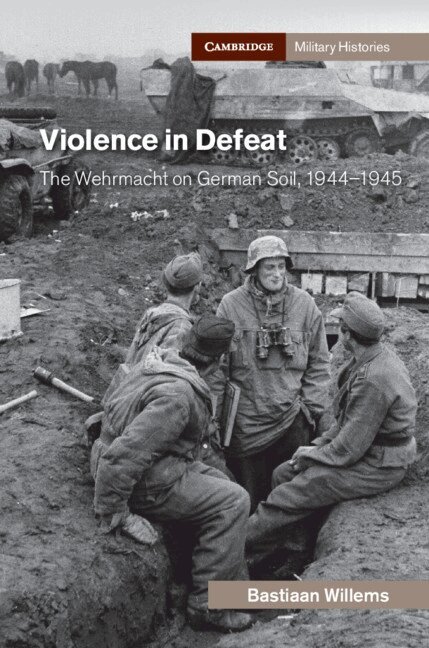
In the final year of the Second World War, as bitter defensive fighting moved to German soil, a wave of intra-ethnic violence engulfed the country. Bastiaan Willems offers the first study into the impact and behaviour of the Wehrmacht on its own territory, focusing on the German units fighting in East Prussia and its capital Königsberg. He shows that the Wehrmacht's retreat into Germany, after three years of brutal fighting on the Eastern Front, contributed significantly to the spike of violence which occurred throughout the country immediately prior to defeat. Soldiers arriving with an ingrained barbarised mindset, developed on the Eastern Front, shaped the immediate environment of the area of operations, and of Nazi Germany as a whole. Willems establishes how the norms of the Wehrmacht as a retreating army impacted behavioural patterns on the home front, arguing that its presence increased the propensity to carry out violence in Germany.
Inbunden, Engelska, 2021
493 kr
Skickas inom 7-10 vardagar
In the final year of the Second World War, as bitter defensive fighting moved to German soil, a wave of intra-ethnic violence engulfed the country. Bastiaan Willems offers the first study into the impact and behaviour of the Wehrmacht on its own territory, focusing on the German units fighting in East Prussia and its capital Königsberg. He shows that the Wehrmacht's retreat into Germany, after three years of brutal fighting on the Eastern Front, contributed significantly to the spike of violence which occurred throughout the country immediately prior to defeat. Soldiers arriving with an ingrained barbarised mindset, developed on the Eastern Front, shaped the immediate environment of the area of operations, and of Nazi Germany as a whole. Willems establishes how the norms of the Wehrmacht as a retreating army impacted behavioural patterns on the home front, arguing that its presence increased the propensity to carry out violence in Germany.
E-bok
Engelska, 2021362 kr
Läs direkt efter köp
In the final year of the Second World War, as bitter defensive fighting moved to German soil, a wave of intra-ethnic violence engulfed the country. Bastiaan Willems offers the first study into the impact and behaviour of the Wehrmacht on its own territory, focusing on the German units fighting in East Prussia and its capital Königsberg. He shows that the Wehrmacht''s retreat into Germany, after three years of brutal fighting on the Eastern Front, contributed significantly to the spike of violence which occurred throughout the country immediately prior to defeat. Soldiers arriving with an ingrained barbarised mindset, developed on the Eastern Front, shaped the immediate environment of the area of operations, and of Nazi Germany as a whole. Willems establishes how the norms of the Wehrmacht as a retreating army impacted behavioural patterns on the home front, arguing that its presence increased the propensity to carry out violence in Germany.
Inbunden, Engelska, 2022
1 339 kr
Skickas inom 10-15 vardagar
This book is a vital exploration of the harrowing stories of mass displacement that took place in the first half of the 20th century from the perspective of forced migrants themselves. The volume brings together 15 interrelated case studies which show how the deportation, evacuation and flight of millions of people as a result of the First World War intensified rather than alleviated ethnic conflicts which culminated in population transfers on an even larger scale during and immediately after the Second World War. While each chapter focuses on a different group of refugees and displaced persons, the text as a whole looks at the experience of forced migration as a complex set of evolving relationships with the receiving society, the homeland, the broader diaspora and other migrant communities living within the same host country. This innovative, four-dimensional model provides an overarching conceptual framework that binds the chapters together within the longer arc of European history.By going beyond the conventional narratives of national victimhood and (un)successful assimilation of refugees, A Transnational History of Forced Migrants in Europe reveals that identities of forced migrants in the first half of the 20th century were individualised, hybrid and constantly reconstructed in response to socioeconomic forces and political pressures. The case studies collected in this volume further suggest that age, gender, social class, educational level and the personal experiences of ‘unwilling nomads’ are more important to the understanding of forced migration history than ethnoreligious identities of victims and perpetrators.
Häftad, Engelska, 2024
428 kr
Skickas inom 10-15 vardagar
This book is a vital exploration of the harrowing stories of mass displacement that took place in the first half of the 20th century from the perspective of forced migrants themselves. The volume brings together 15 interrelated case studies which show how the deportation, evacuation and flight of millions of people as a result of the First World War intensified rather than alleviated ethnic conflicts which culminated in population transfers on an even larger scale during and immediately after the Second World War. While each chapter focuses on a different group of refugees and displaced persons, the text as a whole looks at the experience of forced migration as a complex set of evolving relationships with the receiving society, the homeland, the broader diaspora and other migrant communities living within the same host country. This innovative, four-dimensional model provides an overarching conceptual framework that binds the chapters together within the longer arc of European history.By going beyond the conventional narratives of national victimhood and (un)successful assimilation of refugees, A Transnational History of Forced Migrants in Europe reveals that identities of forced migrants in the first half of the 20th century were individualised, hybrid and constantly reconstructed in response to socioeconomic forces and political pressures. The case studies collected in this volume further suggest that age, gender, social class, educational level and the personal experiences of ‘unwilling nomads’ are more important to the understanding of forced migration history than ethnoreligious identities of victims and perpetrators.
E-bok
PDF, Engelska, 2022451 kr
Läs direkt efter köp
This book is a vital exploration of the harrowing stories of mass displacement that took place in the first half of the 20th century from the perspective of forced migrants themselves. The volume brings together 15 interrelated case studies which show how the deportation, evacuation and flight of millions of people as a result of the First World War intensified rather than alleviated ethnic conflicts which culminated in population transfers on an even larger scale during and immediately after the Second World War. While each chapter focuses on a different group of refugees and displaced persons, the text as a whole looks at the experience of forced migration as a complex set of evolving relationships with the receiving society, the homeland, the broader diaspora and other migrant communities living within the same host country. This innovative, four-dimensional model provides an overarching conceptual framework that binds the chapters together within the longer arc of European history.By going beyond the conventional narratives of national victimhood and (un)successful assimilation of refugees, A Transnational History of Forced Migrants in Europe reveals that identities of forced migrants in the first half of the 20th century were individualised, hybrid and constantly reconstructed in response to socioeconomic forces and political pressures. The case studies collected in this volume further suggest that age, gender, social class, educational level and the personal experiences of ''unwilling nomads'' are more important to the understanding of forced migration history than ethnoreligious identities of victims and perpetrators.
E-bok
Engelska, 2022451 kr
Läs direkt efter köp
This book is a vital exploration of the harrowing stories of mass displacement that took place in the first half of the 20th century from the perspective of forced migrants themselves. The volume brings together 15 interrelated case studies which show how the deportation, evacuation and flight of millions of people as a result of the First World War intensified rather than alleviated ethnic conflicts which culminated in population transfers on an even larger scale during and immediately after the Second World War. While each chapter focuses on a different group of refugees and displaced persons, the text as a whole looks at the experience of forced migration as a complex set of evolving relationships with the receiving society, the homeland, the broader diaspora and other migrant communities living within the same host country. This innovative, four-dimensional model provides an overarching conceptual framework that binds the chapters together within the longer arc of European history.By going beyond the conventional narratives of national victimhood and (un)successful assimilation of refugees, A Transnational History of Forced Migrants in Europe reveals that identities of forced migrants in the first half of the 20th century were individualised, hybrid and constantly reconstructed in response to socioeconomic forces and political pressures. The case studies collected in this volume further suggest that age, gender, social class, educational level and the personal experiences of ''unwilling nomads'' are more important to the understanding of forced migration history than ethnoreligious identities of victims and perpetrators.
Inbunden, Engelska, 2023
1 269 kr
Skickas inom 10-15 vardagar
Perpetration and Complicity under Nazism and Beyond analyses perpetration and complicity under National Socialism and beyond. Contributors based in the UK, the USA, Canada, Germany, Israel and Chile reflect on self-understandings, representations and narratives of involvement in collective violence both at the time and later – a topic that remains highly relevant today.Using the notion of ‘compromised identities’ to think about contentious questions relating to empathy and complicity, this inter-disciplinary collection addresses the complex relationships between people’s behaviours and self-understandings through and beyond periods of collective violence. Contributors explore the compromises that individuals, states and societies enter into both during and after such violence. Case studies highlight patterns of complicity and involvement in perpetration, and analyse how people’s stories evolve under changing circumstances and through social interaction, using varying strategies of justification, denial and rationalisation. Each chapter also considers the ways in which contemporary responses and scholarly practices may be affected by engagement with perpetrator representations.
E-bok
PDF, Engelska, 2023436 kr
Läs direkt efter köp
Perpetration and Complicity under Nazism and Beyond analyses perpetration and complicity under National Socialism and beyond. Contributors based in the UK, the USA, Canada, Germany, Israel and Chile reflect on self-understandings, representations and narratives of involvement in collective violence both at the time and later – a topic that remains highly relevant today.Using the notion of ''compromised identities'' to think about contentious questions relating to empathy and complicity, this inter-disciplinary collection addresses the complex relationships between people''s behaviours and self-understandings through and beyond periods of collective violence. Contributors explore the compromises that individuals, states and societies enter into both during and after such violence. Case studies highlight patterns of complicity and involvement in perpetration, and analyse how people''s stories evolve under changing circumstances and through social interaction, using varying strategies of justification, denial and rationalisation. Each chapter also considers the ways in which contemporary responses and scholarly practices may be affected by engagement with perpetrator representations.
E-bok
Engelska, 2023436 kr
Läs direkt efter köp
Perpetration and Complicity under Nazism and Beyond analyses perpetration and complicity under National Socialism and beyond. Contributors based in the UK, the USA, Canada, Germany, Israel and Chile reflect on self-understandings, representations and narratives of involvement in collective violence both at the time and later – a topic that remains highly relevant today.Using the notion of ''compromised identities'' to think about contentious questions relating to empathy and complicity, this inter-disciplinary collection addresses the complex relationships between people''s behaviours and self-understandings through and beyond periods of collective violence. Contributors explore the compromises that individuals, states and societies enter into both during and after such violence. Case studies highlight patterns of complicity and involvement in perpetration, and analyse how people''s stories evolve under changing circumstances and through social interaction, using varying strategies of justification, denial and rationalisation. Each chapter also considers the ways in which contemporary responses and scholarly practices may be affected by engagement with perpetrator representations.
Häftad, Engelska, 2025
414 kr
Skickas inom 10-15 vardagar
Perpetration and Complicity under Nazism and Beyond analyses perpetration and complicity under National Socialism and beyond. Contributors based in the UK, the USA, Canada, Germany, Israel and Chile reflect on self-understandings, representations and narratives of involvement in collective violence both at the time and later – a topic that remains highly relevant today.Using the notion of ‘compromised identities’ to think about contentious questions relating to empathy and complicity, this inter-disciplinary collection addresses the complex relationships between people’s behaviours and self-understandings through and beyond periods of collective violence. Contributors explore the compromises that individuals, states and societies enter into both during and after such violence. Case studies highlight patterns of complicity and involvement in perpetration, and analyse how people’s stories evolve under changing circumstances and through social interaction, using varying strategies of justification, denial and rationalisation. Each chapter also considers the ways in which contemporary responses and scholarly practices may be affected by engagement with perpetrator representations.
Häftad, Engelska, 2013
516 kr
Skickas inom 3-6 vardagar