Beibei Tang - Böcker
Visar alla böcker från författaren Beibei Tang. Handla med fri frakt och snabb leverans.
7 produkter
7 produkter
744 kr
Skickas inom 10-15 vardagar
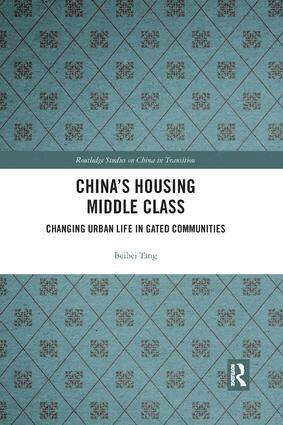
Home ownership plays a significant role in locating the middle class in most western societies, associated with market, consumerism, democracy and “people like us”, the significant features of the middle class for any society. In China, private home ownership was not the norm from 1949, when the Chinese Communist Party took power, until the 1990s. In the past three decades, however, there has been a fast growing housing consumption and private homeowners have become the most significantly changing aspect of Chinese urban life. In particular, the rise of gated communities has become a predominant feature of the urban landscape. Similar to their western counterparts, the gated communities in China exemplify “high status” symbols with enclosed and restricted residential areas, exclusive community parks and recreational facilities, and professional management and security services. But different from western societies where gated communities usually represent luxurious lifestyles only limited to a small group of people, in urban China gated communities have become one major form of supply in the housing market and one of the most popular and desirable choices for homebuyers. Private home ownership and residency in gated communities, altogether characterize the most significant aspect of comfort living and distinct lifestyles of China’s new middle classes who have successfully got ahead in the socialist market economy.This book examines the formation of “China’s housing middle class”. It develops a theoretical argument about, and provides empirical evidence of the heterogeneity of China’s new middle class, which underlines the relations between the state, market and life chances under a socialist market economy. As such it will be of huge interest to students and scholars of Chinese society, sociology and politics.
2 100 kr
Skickas inom 10-15 vardagar
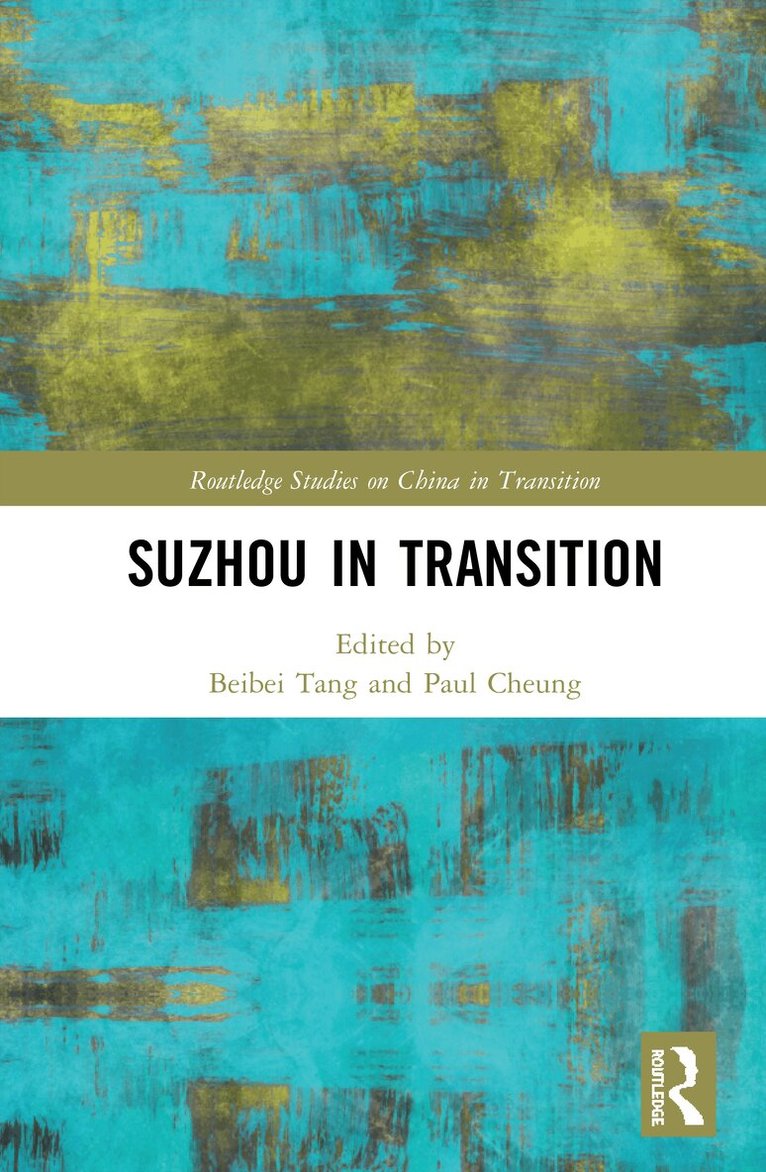
Through the lens of the city of Suzhou, this edited volume presents views on the complex interaction between the central state, market agents, local governments and individuals who have shaped the development of Chinese cities and urban life. Featuring a range of disciplinary perspectives, contributors to this volume have all undertaken research in one municipality – Suzhou – to consider how history and culture have evolved during the modernisation of Chinese cities and the transformation of urban space, as well as shifting rural–urban relations and urban life during the reform era. The volume is underscored by a complex dynamic system consisting of three interlocked mechanisms through which the central and local state interact: history and culture, social and economic life, and administration and governance. As such, chapters analyse responses both from the state and society as driving forces of local development, with an interplay between tradition and heritage on the one hand and China’s economic and social development on the other. Suzhou in Transition will appeal to students and scholars of Chinese and urban studies, as well as urban sociology and geography.
614 kr
Skickas inom 10-15 vardagar
Through the lens of the city of Suzhou, this edited volume presents views on the complex interaction between the central state, market agents, local governments and individuals who have shaped the development of Chinese cities and urban life. Featuring a range of disciplinary perspectives, contributors to this volume have all undertaken research in one municipality – Suzhou – to consider how history and culture have evolved during the modernisation of Chinese cities and the transformation of urban space, as well as shifting rural–urban relations and urban life during the reform era. The volume is underscored by a complex dynamic system consisting of three interlocked mechanisms through which the central and local state interact: history and culture, social and economic life, and administration and governance. As such, chapters analyse responses both from the state and society as driving forces of local development, with an interplay between tradition and heritage on the one hand and China’s economic and social development on the other. Suzhou in Transition will appeal to students and scholars of Chinese and urban studies, as well as urban sociology and geography.
560 kr
Skickas inom 10-15 vardagar
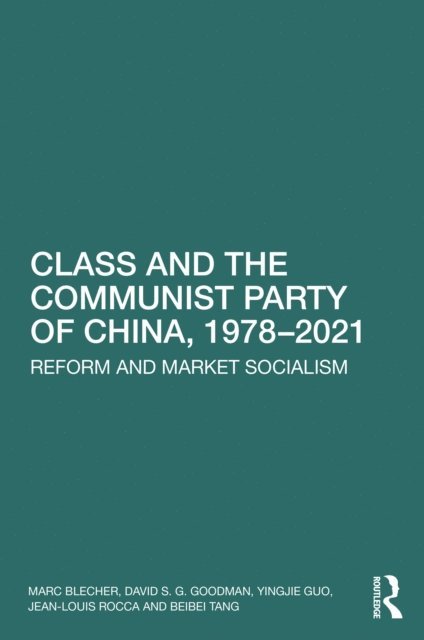
By examining the changing political economy in China through detailed studies of the peasantry, workers, middle classes, and the dominant class, this volume reveals the Communist Party of China’s (CCP’s) impact on social change in China between 1978 and 2021.This book explores in depth the CCP’s programme of reform and openness that had a dramatic impact on China’s socio-economic trajectory following the death of Mao Zedong and the end of the Cultural Revolution. It also goes on to chart the acceptance of Market Socialism, highlighting the resulting emergence of a larger middle class, while also appreciating the profound consequences this created for workers and peasants. Additionally, this volume examines the development of the dominant class which remains a defining feature of China’s political economy and the Party-state.Providing an in-depth analysis of class as understood by the CCP in conjunction with sociological interpretations of socio-economic and socio-political change, this study will be of interest to students and scholars of Chinese Politics, Chinese History, Asian Politics, and Asian studies.
Class and the Communist Party of China, 1978-2021
Reform and Market Socialism
Inbunden, Engelska, 2022
2 100 kr
Skickas inom 10-15 vardagar
By examining the changing political economy in China through detailed studies of the peasantry, workers, middle classes, and the dominant class, this volume reveals the Communist Party of China’s (CCP’s) impact on social change in China between 1978 and 2021.This book explores in depth the CCP’s programme of reform and openness that had a dramatic impact on China’s socio-economic trajectory following the death of Mao Zedong and the end of the Cultural Revolution. It also goes on to chart the acceptance of Market Socialism, highlighting the resulting emergence of a larger middle class, while also appreciating the profound consequences this created for workers and peasants. Additionally, this volume examines the development of the dominant class which remains a defining feature of China’s political economy and the Party-state.Providing an in-depth analysis of class as understood by the CCP in conjunction with sociological interpretations of socio-economic and socio-political change, this study will be of interest to students and scholars of Chinese Politics, Chinese History, Asian Politics, and Asian studies.
2 371 kr
Skickas inom 10-15 vardagar
Home ownership plays a significant role in locating the middle class in most western societies, associated with market, consumerism, democracy and “people like us”, the significant features of the middle class for any society. In China, private home ownership was not the norm from 1949, when the Chinese Communist Party took power, until the 1990s. In the past three decades, however, there has been a fast growing housing consumption and private homeowners have become the most significantly changing aspect of Chinese urban life. In particular, the rise of gated communities has become a predominant feature of the urban landscape. Similar to their western counterparts, the gated communities in China exemplify “high status” symbols with enclosed and restricted residential areas, exclusive community parks and recreational facilities, and professional management and security services. But different from western societies where gated communities usually represent luxurious lifestyles only limited to a small group of people, in urban China gated communities have become one major form of supply in the housing market and one of the most popular and desirable choices for homebuyers. Private home ownership and residency in gated communities, altogether characterize the most significant aspect of comfort living and distinct lifestyles of China’s new middle classes who have successfully got ahead in the socialist market economy.This book examines the formation of “China’s housing middle class”. It develops a theoretical argument about, and provides empirical evidence of the heterogeneity of China’s new middle class, which underlines the relations between the state, market and life chances under a socialist market economy. As such it will be of huge interest to students and scholars of Chinese society, sociology and politics.
555 kr
Skickas inom 10-15 vardagar
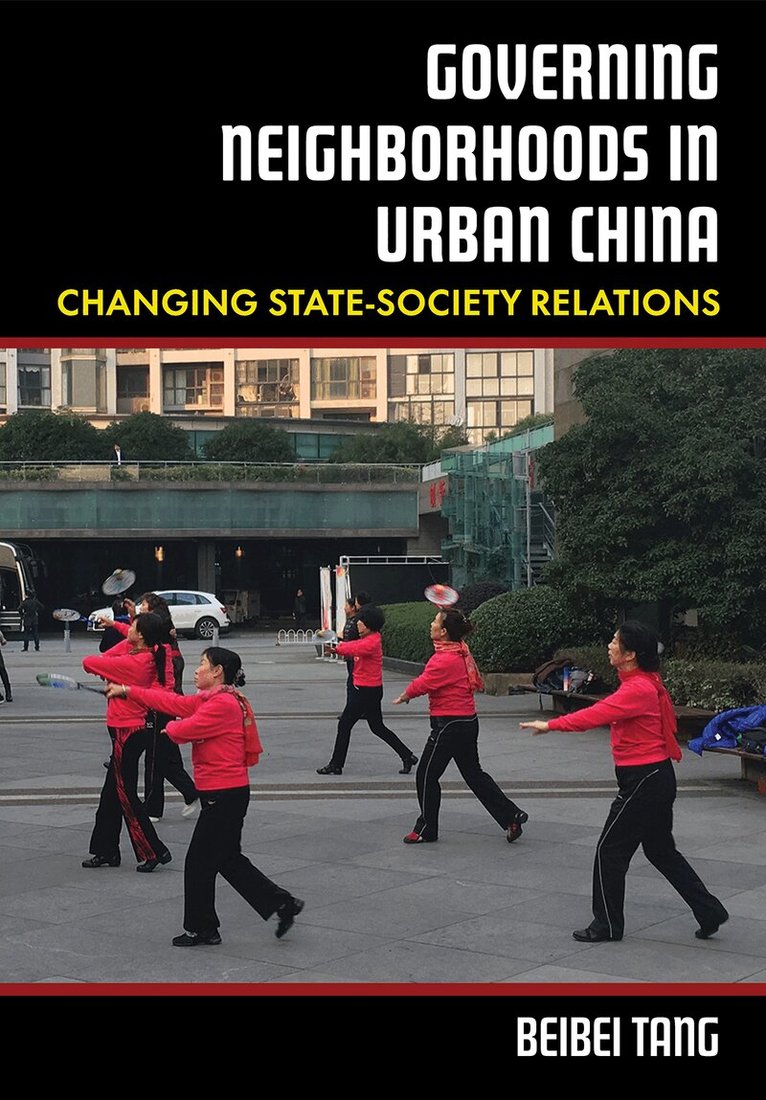
Governing Neighborhoods in Urban China examines the key mechanisms operating at the grassroots level in China that contribute to urban development and increased public support for the legitimacy and authority of the Chinese state. Beibei Tang uncovers new trends and dynamics of urban neighborhood governance since the 2000s to reveal the significant factors that contribute to regime survival. Tang introduces the concept of hybrid authoritarianism, a governance mechanism an authoritarian state employs to produce governance legitimacy, public support, and regime sustainability. Hybrid authoritarianism is situated in an intermediary governance space between state and society. It accommodates both state and non-state actors, deals with a wide range of governance issues, employs flexible governance strategies, and in this context, ultimately strengthens CCP leadership. Tang documents processes of hybrid authoritarianism through her focus on various types of urban neighborhoods, including new urban middle-class neighborhoods, and the increasing urbanization of the countryside. Governing Neighborhoods in Urban China provides a conceptual framework that avoids scholarly approaches that tend to reify either one-party autocracy or Western-centric notions of democracy.