Belaghihalli N Gnanesh - Böcker
Visar alla böcker från författaren Belaghihalli N Gnanesh. Handla med fri frakt och snabb leverans.
6 produkter
6 produkter
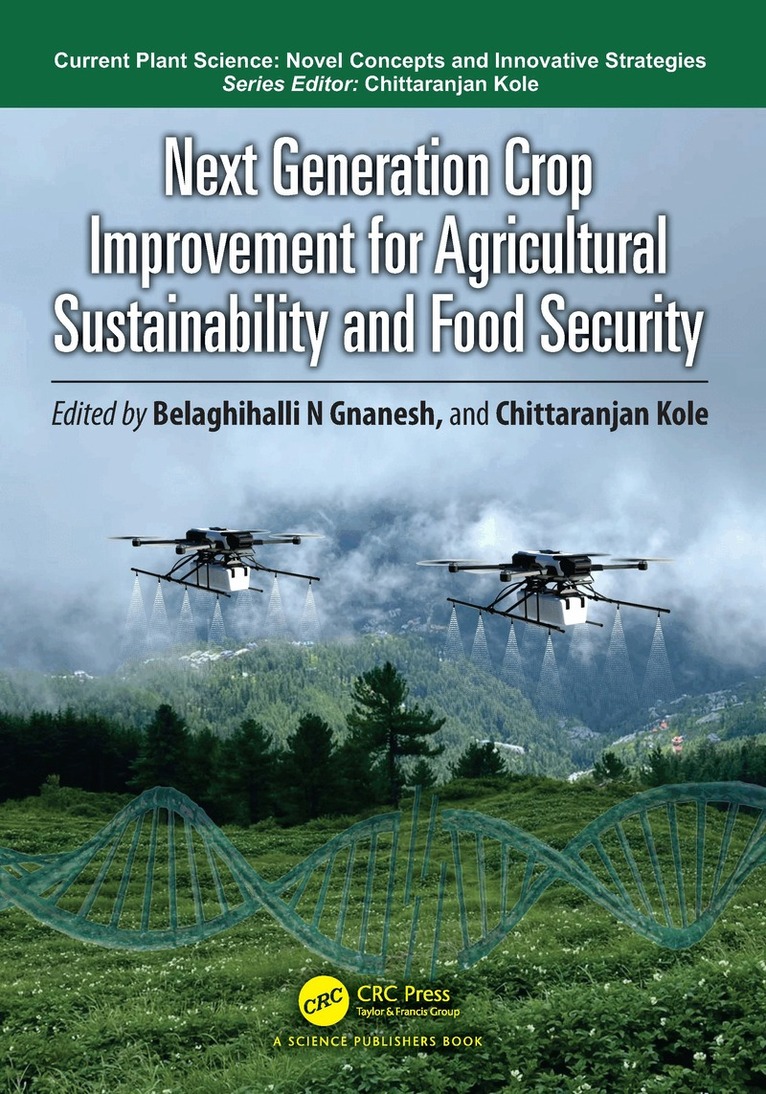
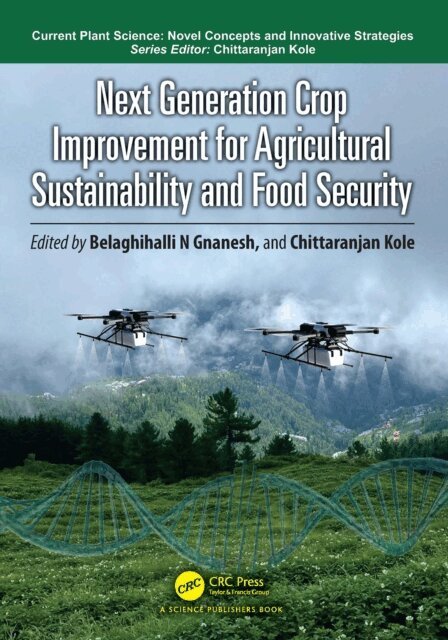
Next Generation Crop Improvement for Agricultural Sustainability and Food Security
Inbunden, Engelska, 2026
1 562 kr
Skickas inom 10-15 vardagar
This book is a comprehensive compilation of current knowledge on the integrated approaches and strategies of sustainable crop improvement. It encompasses a broad spectrum of subjects including the latest developments and understandings of diverse stress management techniques for sustainable crop enhancement, accelerated breeding, and genome editing. It also delves into the development of next-generation crop varieties through genomic selection to ensure food and nutritional security. It showcases biofortification as a solution to combat hidden hunger by increasing the iron, zinc, and vitamin content in staple crops and millets as resilient and nutritious crops, a key player in future food systems. Innovations in grafting and the enhancement of nutritional quality in vegetable crops are explored, along with novel technologies like plasma treatments and bioengineering to improve food and non-food crops. This book deliberates on the digital tools like high throughput phenotyping, bioinformatics, and machine learning, integrated with classical breeding to enhance crop nutrition, resilience, and sustainability for future food and nutritional security.Key features– Enhances researchers' cognitive framework concerning state-of-the-art technologies for cereals enhancement, thereby facilitating the advancement of scientific knowledge in this domain.– Reviews post-harvest and value addition as well as nutrition and human health.– Facilitates a comprehensive understanding of the intricate information network underlying fundamental traits in cereals, thereby enabling researchers to unravel the underlying mechanisms governing key traits.– Accentuates on the utilization of diverse omics methodologies and the implementation of potential cutting-edge techniques to enhance the understanding of cereal genetics and breeding, thus contributing to the expansion of knowledge in this field.– Provides insights into the challenges and possibilities associated with integrating multiomics data, developing models, and deepening our understanding of the biological aspects of pivotal traits in cereals.– Showcases recent breakthroughs in integrative and systems biology techniques, while illuminating prospects in this field, thus paving the way for further advancements in the study of cereals.
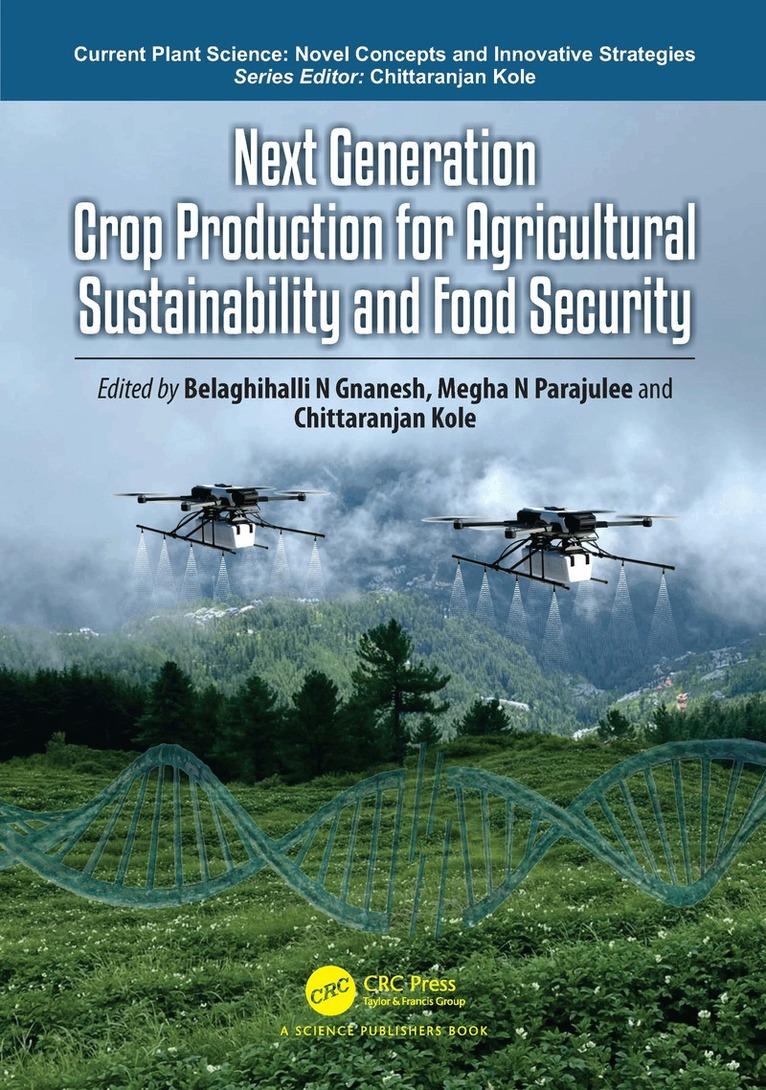
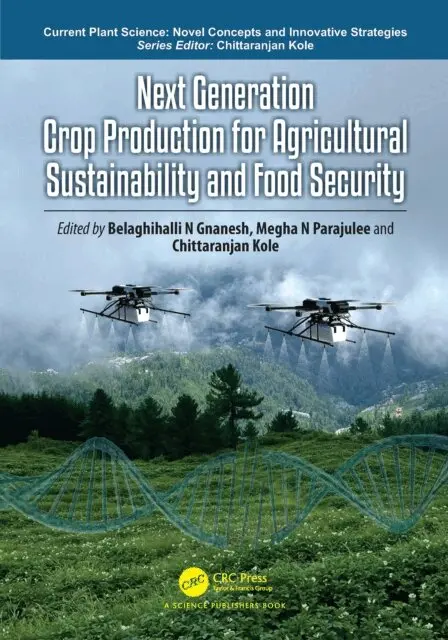
Next Generation Crop Production for Agricultural Sustainability and Food Security
Inbunden, Engelska, 2026
2 185 kr
Kommande
Sustainable agriculture and food security have become major global issues in the face of increasing world population and climate change. This book is a comprehensive compilation of current knowledge on integrated approaches and strategies of crop production for agricultural sustainability and food security. It covers a wide range of advanced topics including bioremediation, nano-technological approaches in food and agriculture, waste management, regenerative and climate-resilient agriculture, industrial intervention in agriculture, microbe augmentation for soil restoration, weed management in organic production, postharvest technology, and value addition, and revolutionizing rural agricultural industry. The book provides inclusive coverage of various holistic approaches and strategies aimed at promoting agricultural sustainability and ensuring food security. This also deliberations on sustainable farming practices, agroecology, biodiversity conservation, climate-smart agriculture, and resource management. The book aims at educating readers, whether they are policymakers, researchers, or students, about the importance of adopting holistic approaches of crop production to address the challenges facing agriculture and food security in today's world. Due to rapidly changing agricultural landscape, complex challenges, knowledge gaps and local contexts, and education and capacity building, this book should serve as a new and complementary resource to address these emerging challenges in agriculture and food security.Key features– Focuses on the concepts, technologies and success stories of crop production, sustainability and food security.– Provides an update on modern technologies in agriculture, climateresilient and regenerative agriculture– Food security is illustrated with food and industrial microbiology and novel food technologies,– Postharvest technologies as well as nutrition and human health are discussed– Covers production sustainability and technological advancement in agriculture linked to achieving food security.
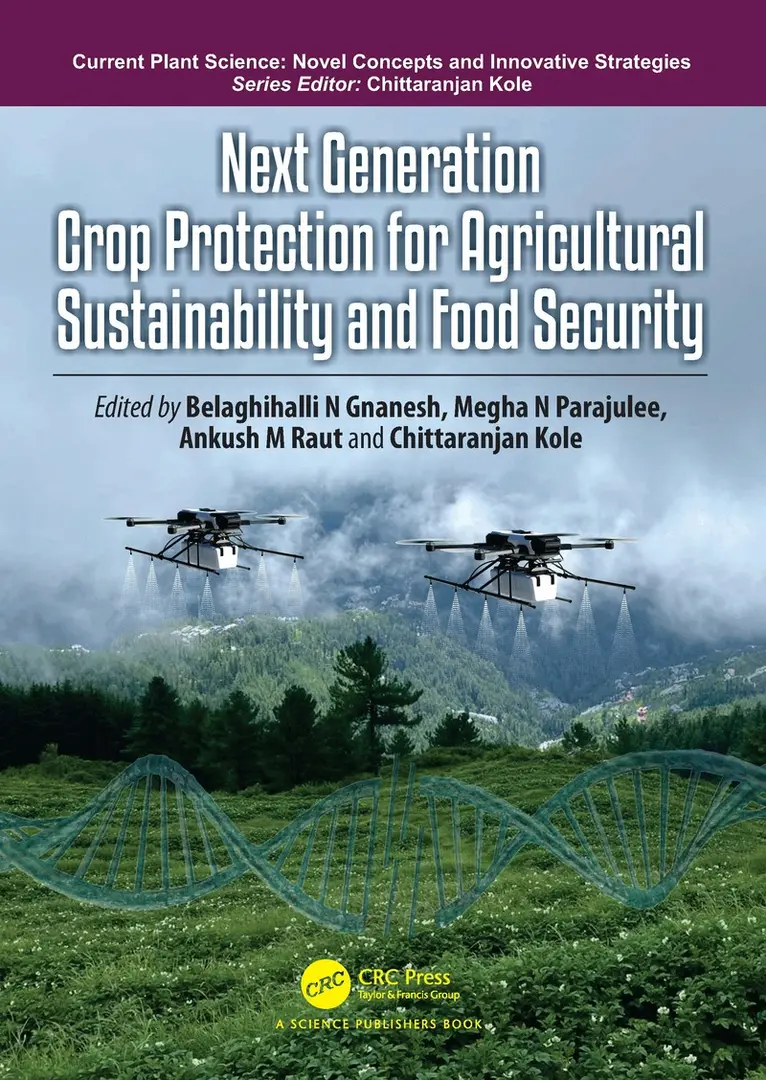
Next Generation Crop Protection for Agricultural Sustainability and Food Security
Inbunden, Engelska, 2026
2 250 kr
Kommande
This book is a comprehensive compilation on the integrated approaches and strategies for sustainable crop protection and food security. It covers a wide range of topics, which includes, the significance of insect diversity in fostering sustainable agriculture, adopting a multi-omics approach to enhance insect management practices, implementing next-generation strategies for a more environment-friendly future, harnessing genomic selection and prediction methods to protect commercial crops, employing RNAi technology for targeted insect control, integrating biological control systems into the agricultural industry, assessing the impact of invasive alien insect species and devising effective strategies to mitigate them, and leveraging green chemistry methods for sustainable pest and insect management. The purpose of this volume is to provide inclusive coverage of various holistic approaches and strategies aimed at promoting agricultural sustainability and ensuring food security through crop protection. It aims to educate readers, whether they are policymakers, researchers, or students, about the importance of adopting holistic approaches of crop protection to address the challenges facing agriculture and food security in today's world.Key Features:Highlights the latest crop protection technologies and next-generation strategies for a greener future Reviews the management of major diseases under changing climatic scenario for sustainable food and nutritional security Proposes a multi-omics approach for sustainable insect management practices Reviews the utilization of genomic selection and prediction methods for safeguarding commercial crops Discusses the impact of invasive alien insect species and strategies for their management
2 101 kr
Skickas inom 10-15 vardagar
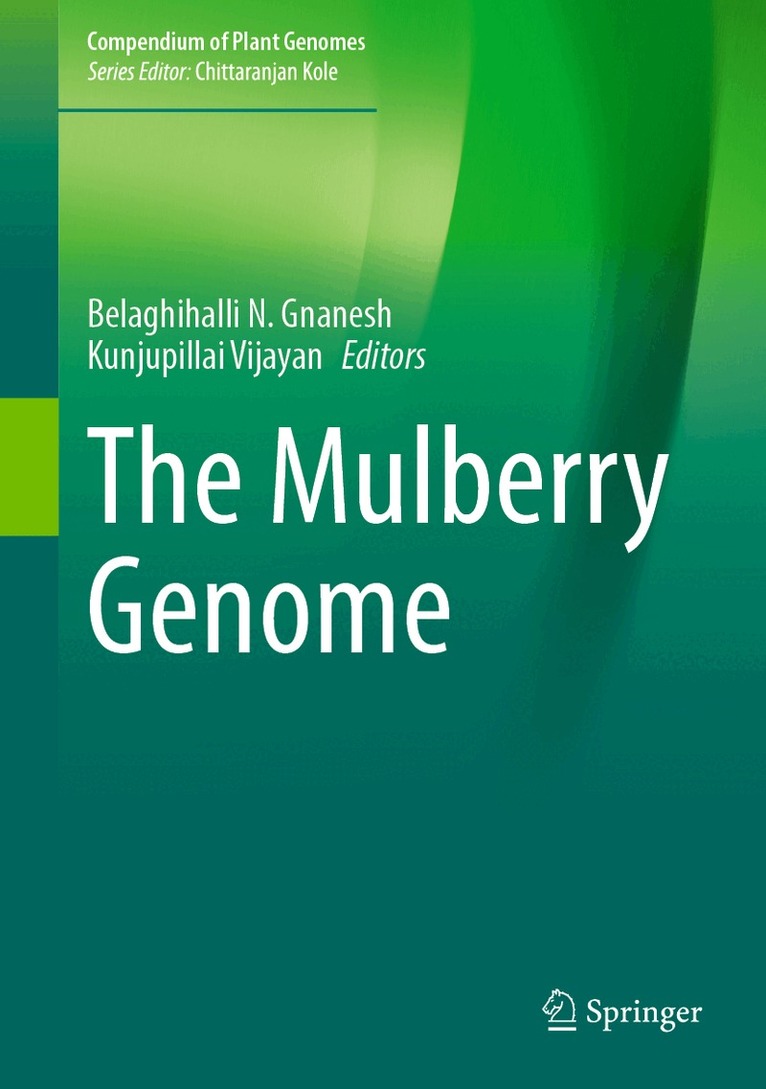
This book is the first comprehensive compilation of current knowledge on mulberry (Morus L.) covering botany, cytogenetics, biodiversity, genetics and breeding, tissue culture and genetic transformation, biotic and abiotic stresses, molecular mapping, QTL identification, whole genome sequencing and elucidation on functional genomics. As mulberry is one of the most economically important trees in Asian countries, it has attracted the attention of both academicians as well as industrialists. Being highly heterozygous due to long juvenile life coupled cross pollination among species, the genetics of this important crop species is yet to be unravelled. Nonetheless, the recent success of sequencing the genomes of haploid and diploid domesticated species has ushered in an era of intense molecular and genetic research to understand this crop well for its better utilization for mankind.In this book, efforts have been made to bring together key information on origin and distribution, taxonomy, morphological features, economic importance, abiotic stress responses, disease and pest resilience, current breeding strategies and their constraints, progress and prospects of gene mapping, elucidation of genes controlling metabolic and physiological pathways, and their utilization in crop improvement which are elaborated in about 250 pages over 13 chapters authored by globally leading experts on the species presented.This book is useful to the sericulture community in the world in general and students, teachers, and scientists in the academia for forage and fruit production, genetics, breeding, pathology, entomology, physiology, molecular genetics, in vitro culture and genetic engineering, and structural and functional genomics. This book is also useful to seed and biofuel industries.
634 kr
Skickas inom 5-8 vardagar
2 101 kr
Skickas inom 10-15 vardagar
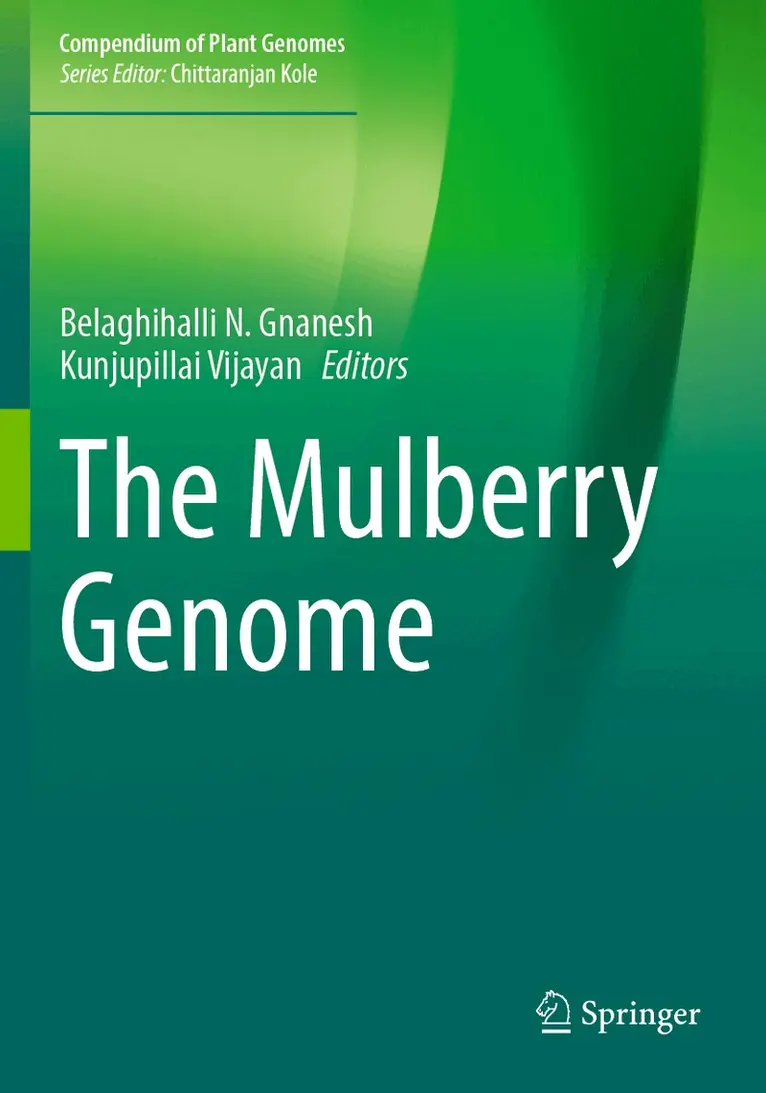
This book is the first comprehensive compilation of current knowledge on mulberry (Morus L.) covering botany, cytogenetics, biodiversity, genetics and breeding, tissue culture and genetic transformation, biotic and abiotic stresses, molecular mapping, QTL identification, whole genome sequencing and elucidation on functional genomics. As mulberry is one of the most economically important trees in Asian countries, it has attracted the attention of both academicians as well as industrialists. Being highly heterozygous due to long juvenile life coupled cross pollination among species, the genetics of this important crop species is yet to be unravelled. Nonetheless, the recent success of sequencing the genomes of haploid and diploid domesticated species has ushered in an era of intense molecular and genetic research to understand this crop well for its better utilization for mankind.In this book, efforts have been made to bring together key information on origin and distribution, taxonomy, morphological features, economic importance, abiotic stress responses, disease and pest resilience, current breeding strategies and their constraints, progress and prospects of gene mapping, elucidation of genes controlling metabolic and physiological pathways, and their utilization in crop improvement which are elaborated in about 250 pages over 13 chapters authored by globally leading experts on the species presented.This book is useful to the sericulture community in the world in general and students, teachers, and scientists in the academia for forage and fruit production, genetics, breeding, pathology, entomology, physiology, molecular genetics, in vitro culture and genetic engineering, and structural and functional genomics. This book is also useful to seed and biofuel industries.