Béligh Elbalti – författare
Visar alla böcker från författaren . Handla med fri frakt och snabb leverans.
2 produkter
2 produkter
Inbunden, Engelska, 2027
1 535 kr
Kommande
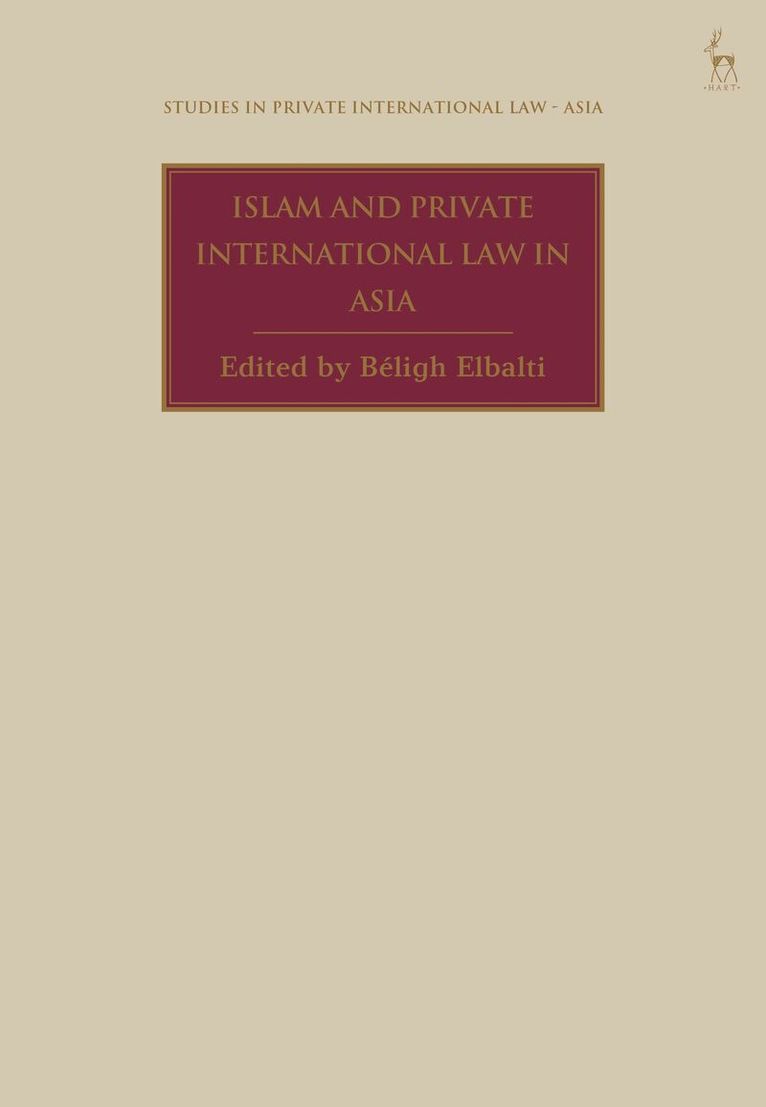
This book examines the interaction between Islam and private international law in Asia.The analysis distinguishes between Muslim-majority and non-Muslim jurisdictions. Among the former, a further distinction can be drawn between Muslim-majority jurisdictions where Islamic law continues to exert a strong influence on both substantive and procedural law (including Pakistan, Bangladesh, Indonesia, and Brunei), and those where the law has been largely secularized (such as Kazakhstan, and Uzbekistan). Among the latter, non-Muslim jurisdictions can likewise be divided into two groups: those with a significant Muslim minority, often granted a certain degree of judicial or legal autonomy (such as India, the Philippines, and Thailand); and those where Muslims constitute only a small minority and where no special legal or judicial framework exists (including Japan, South Korea, Taiwan, and China).In Muslim-majority jurisdictions, the main question concerns the influence of Islamic law on the private international law treatment of cross-border cases. In non-Muslim jurisdictions, the main question concerns the acceptance of foreign law based on or influenced by Islamic law or judgments rendered in application of such laws.The chapters put the question of the interrelation between Islam and private international law in its broader theoretical context, examining the differences and similarities between the various approaches and proposing suggestions that bridge the gap between sometimes opposing approaches.The book sheds light on the multifaceted interrelation between Islam and private international law in Asia from both a theoretical and practical angle. It offers a unique perspective in which cultural and religious diversity meets private international law.This invaluable book provides judges, practitioners, decision-makers, and scholars with a practical guide and an indispensable reference to understanding this complex issue within the Asian context.
Inbunden, Engelska, 2027
2 166 kr
Kommande
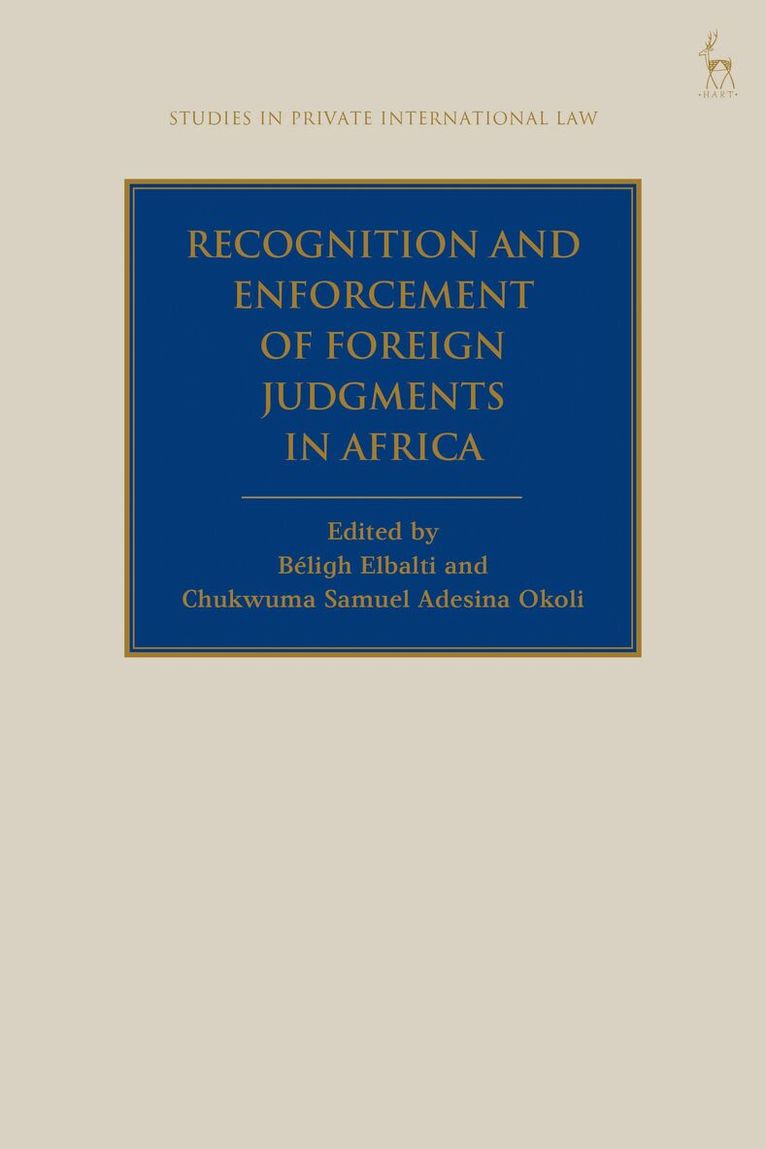
This groundbreaking book offers an in-depth exploration of the complex and evolving landscape of the recognition and enforcement of foreign judgments across Africa.Covering more than 26 jurisdictions, it spans a remarkable diversity of linguistic traditions (including English, French, Arabic, and Portuguese), religious contexts (such as Christian-majority and Muslim-majority countries), and legal systems (ranging from common law and civil law to mixed jurisdictions).As the first comprehensive study of its kind, the book examines national procedures, legal regimes, and institutional frameworks, combining theoretical insights with practical analysis. It sheds light on the multifaceted challenges that arise in cross-border civil and commercial litigation and reflects on the prospects for legal harmonization and reform within the continent. Drawing on the most up-to-date case law and legislative developments, both domestic and regional, the book offers a unique and timely contribution to understanding the mechanisms—current and emerging—that govern the movement of judgments across African borders.A practical guide and indispensable reference for practitioners, academics, judges, students, and policy makers alike, this invaluable book provides a comprehensive overview of the current state of foreign judgments recognition and enforcement in Africa, with all its intricacies and complexities.