Belinda J. Davis – författare
Visar alla böcker från författaren Belinda J. Davis. Handla med fri frakt och snabb leverans.
6 produkter
6 produkter
Häftad, Engelska, 2000
534 kr
Skickas inom 10-15 vardagar
Challenging assumptions about the separation of high politics and everyday life, this book uncovers the important influence of the broad civilian populace, particularly poorer women, on German domestic and even military policy during World War I. As Britain's wartime blockade of goods to Central Europe increasingly squeezed the German food supply, public protests led by ""women of little means"" broke out in the streets of Berlin and other German cities. These ""street scenes"" riveted public attention and drew urban populations together across class lines to make formidable, apparently unified demands on the German state. Imperial authorities responded in unprecedented fashion in the interests of beleaguered consumers, interceding actively in food distribution and production. But offcials' actions were much more effective in legitimating popular demands than in defending the state's right to rule. In the end, argues Davis, this dynamic fundamentally reformulated relations between state and society and contributed to the state's downfall in 1918.
E-bok
Engelska, 2003520 kr
Läs direkt efter köp
Challenging assumptions about the separation of high politics and everyday life, Belinda Davis uncovers the important influence of the broad civilian populace — particularly poorer women — on German domestic and even military policy during World War I.As Britain’s wartime blockade of goods to Central Europe increasingly squeezed the German food supply, public protests led by “women of little means” broke out in the streets of Berlin and other German cities. These “street scenes” riveted public attention and drew urban populations together across class lines to make formidable, apparently unified demands on the German state. Imperial authorities responded in unprecedented fashion in the interests of beleaguered consumers, interceding actively in food distribution and production. But officials'' actions were far more effective in legitimating popular demands than in defending the state’s right to rule. In the end, says Davis, this dynamic fundamentally reformulated relations between state and society and contributed to the state’s downfall in 1918. Shedding new light on the Wilhelmine government, German subjects'' role as political actors, and the influence of the war on the home front on the Weimar state and society, Home Fires Burning helps rewrite the political history of World War I Germany.
Häftad, Engelska, 2026
378 kr
Kommande
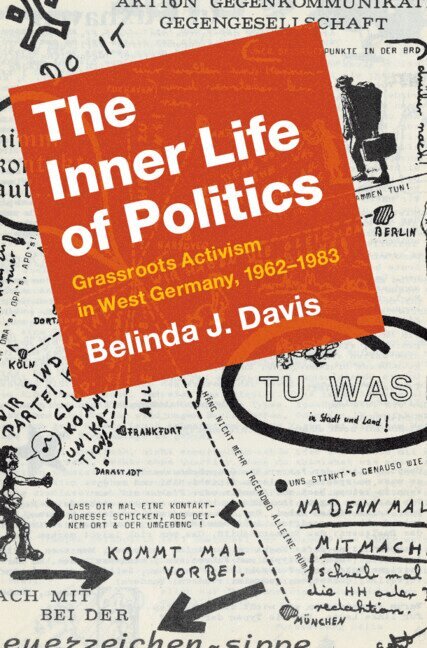
What is the nature and timeline of political change and how should its success be assessed? And why do stories matter in grassroots politics? Reading oral histories against the grain of conventional narratives, this history of grassroots activism in West Germany considers these questions in the context of that country's ''68ers.' Drawing together what are often perceived as discrete elements, such as the student and peace movements, Belinda Davis offers new understandings of political transformation, as activists sought to radically transform themselves as well as societal relations, through a politics that was profoundly personal. While recent studies have challenged the achievements of these activists, this book argues that their efforts made some forms of popular democracy mainstream, in the process redefining politics and rethinking the nature of representation, political organization, and notions of what is radical. This work contributes to a fresh take on West German politics and society in this post-fascist state, offering new understandings of where and how change takes place and how to enact it from the bottom up, with significant implications for our present.
Inbunden, Engelska, 2026
1 254 kr
Kommande
What is the nature and timeline of political change and how should its success be assessed? And why do stories matter in grassroots politics? Reading oral histories against the grain of conventional narratives, this history of grassroots activism in West Germany considers these questions in the context of that country's ''68ers.' Drawing together what are often perceived as discrete elements, such as the student and peace movements, Belinda Davis offers new understandings of political transformation, as activists sought to radically transform themselves as well as societal relations, through a politics that was profoundly personal. While recent studies have challenged the achievements of these activists, this book argues that their efforts made some forms of popular democracy mainstream, in the process redefining politics and rethinking the nature of representation, political organization, and notions of what is radical. This work contributes to a fresh take on West German politics and society in this post-fascist state, offering new understandings of where and how change takes place and how to enact it from the bottom up, with significant implications for our present.
Inbunden, Engelska, 2010
1 960 kr
Skickas inom 3-6 vardagar
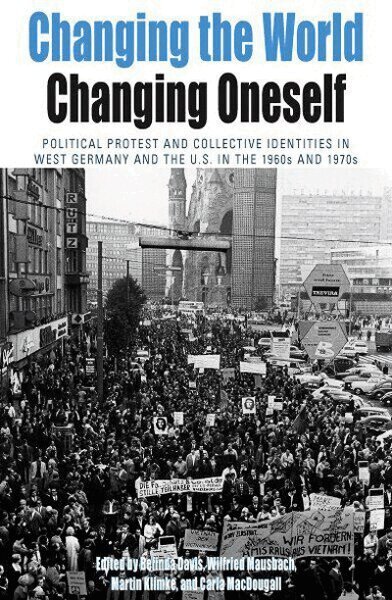
"The collection addresses several issues that are currently very important growth areas in scholarship: protest movements, their transnational connections, the question of Americanization/Westernization in Europe, and the 1960s/1970s in general as an important watershed in postwar history...There have been other recent works that have focused on these issues, but this collection has the advantage of being truly transatlantic in its approach and in the inclusion of some of the most interesting younger scholars working in the field." * Ronald Granieri, University of Pennsylvania "This tantalizing volume explores the neglected impact of intercultural exchanges during the 1968 generational rebellion by focusing on German-American transfers of critical ideas, protest practices and feelings of solidarity. It especially emphasizes the close connection between freeing personal life-styles and liberating politics at home and abroad."* Konrad Jarausch, University of North Carolina at Chapel Hill and the Zentrum fuer Zeithistorische Forschung in Potsdam "This wonderfully innovative compilation of scholarly articles and participant recollections tackles the multifaceted transfer of ideas and people between West Germany and the United States to shed new light on 1960s protests and their long afterlife." * Uta G. Poiger, University of Washington A captivating time, the 60s and 70s now draw more attention than ever. The first substantial work by historians has appeared only in the last few years, and this volume offers an important contribution. These meticulously researched essays offer new perspectives on the Cold War and global relations in the 1960s and 70s through the perspective of the youth movements that shook the U.S., Western Europe, and beyond. These movements led to the transformation of diplomatic relations and domestic political cultures, as well as ideas about democracy and who best understood and promoted it. Bringing together scholars of several countries and many disciplines, this volume also uniquely features the reflections of former activists.Belinda Davis is Associate Professor of History at Rutgers University. Wilfried Mausbach is the Executive Director of the Heidelberg Center for American Studies (HCA) at the University of Heidelberg. Martin Klimke is a postdoctoral fellow at the German Historical Institute in Washington, D.C. Carla MacDougall is a doctoral student at Rutgers University.
E-bok
PDF, Engelska, 2003520 kr
Läs direkt efter köp
Challenging assumptions about the separation of high politics and everyday life, Belinda Davis uncovers the important influence of the broad civilian populace — particularly poorer women — on German domestic and even military policy during World War I.As Britain’s wartime blockade of goods to Central Europe increasingly squeezed the German food supply, public protests led by “women of little means” broke out in the streets of Berlin and other German cities. These “street scenes” riveted public attention and drew urban populations together across class lines to make formidable, apparently unified demands on the German state. Imperial authorities responded in unprecedented fashion in the interests of beleaguered consumers, interceding actively in food distribution and production. But officials'' actions were far more effective in legitimating popular demands than in defending the state’s right to rule. In the end, says Davis, this dynamic fundamentally reformulated relations between state and society and contributed to the state’s downfall in 1918. Shedding new light on the Wilhelmine government, German subjects'' role as political actors, and the influence of the war on the home front on the Weimar state and society, Home Fires Burning helps rewrite the political history of World War I Germany.