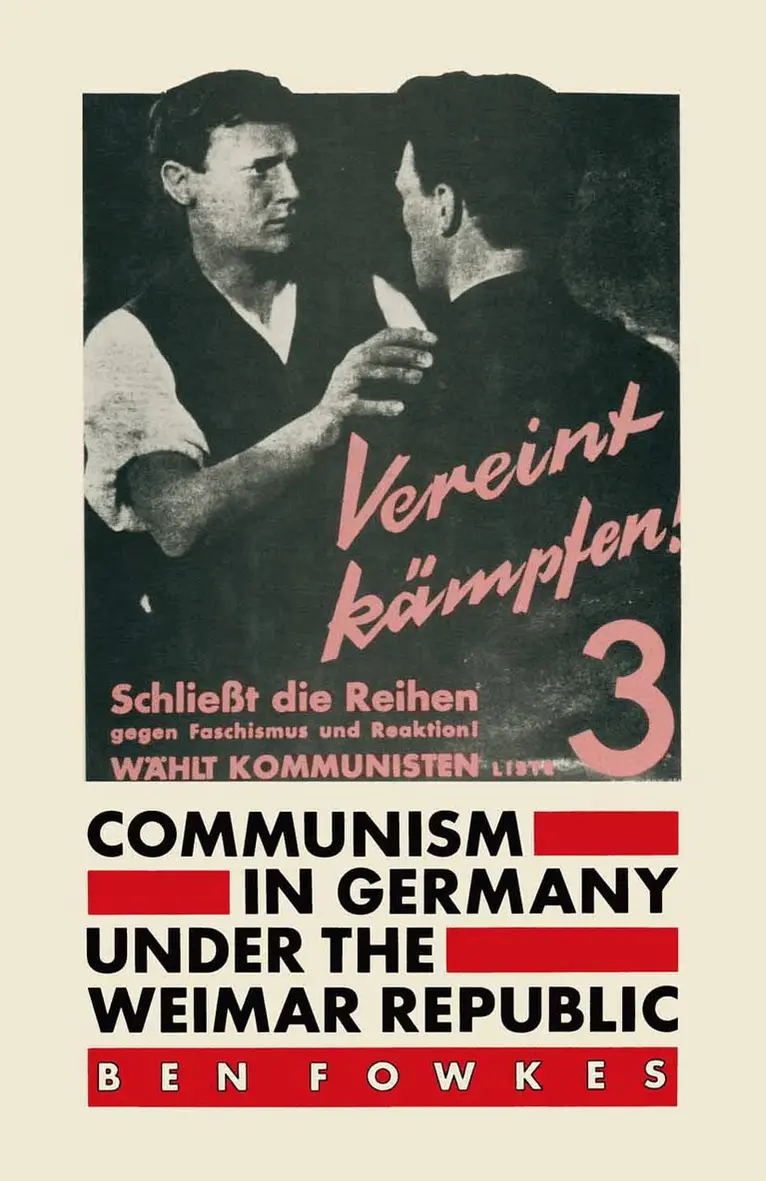
Ben Fowkes – författare
Visar alla böcker från författaren Ben Fowkes. Handla med fri frakt och snabb leverans.
18 produkter
German Left And The Weimar Republic: A Selection Of Documents
Historical Materialism, Volume 75
Av Ben Fowkes, Ben Fowkes
Häftad, 2015
356 kr
Lägg i varukorg
The German Left and the Weimar Republic illuminates the history of the political left by presenting a wide range of documents on various aspects of socialist and communist activity in Germany. Separate chapters deal with the policy of Social Democracy and the attempts of the Communist Party to …
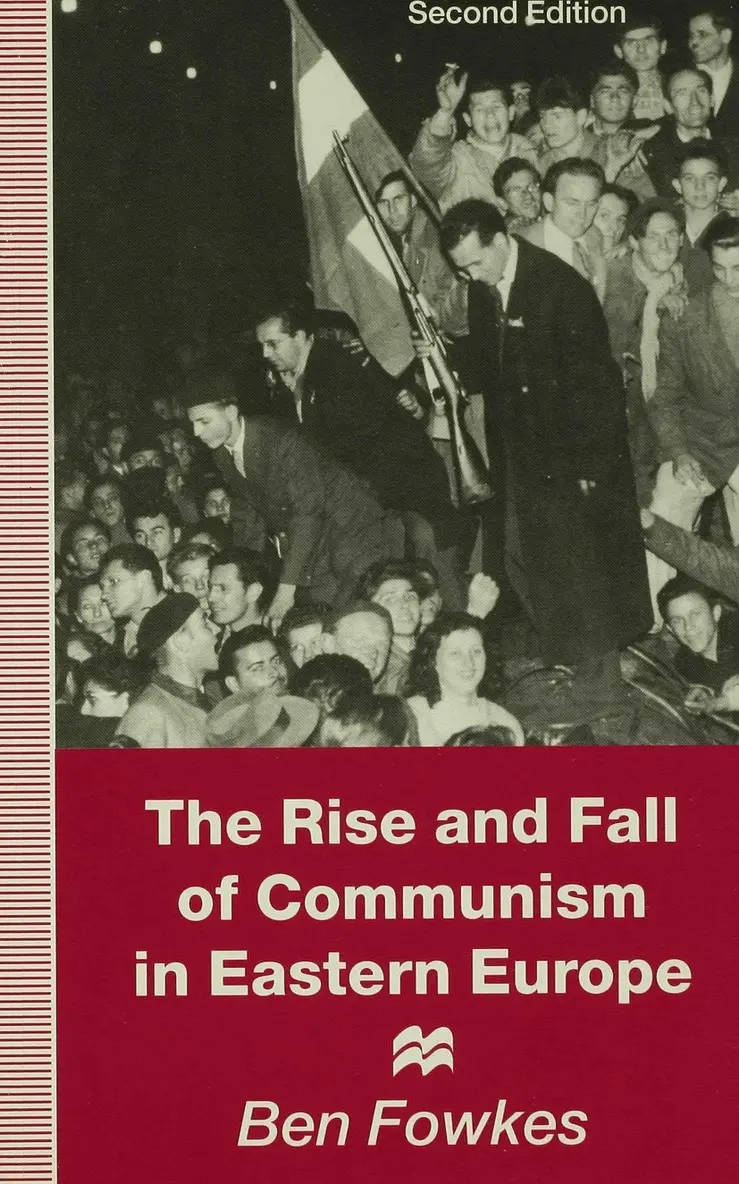
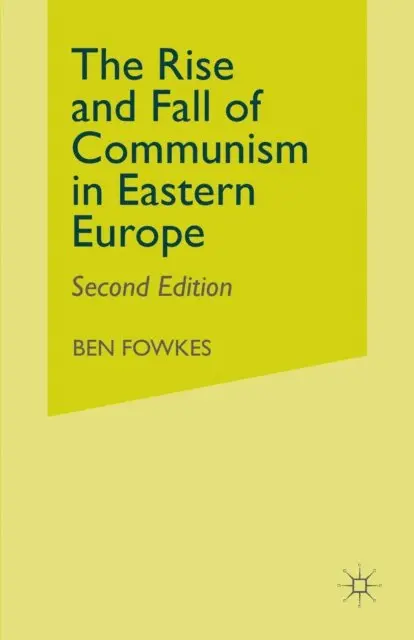
Rise and Fall of Communism in Eastern Europe
Av Ben Fowkes
Häftad, 1995
602 kr
Lägg i varukorg
Communist parties came to power in a variety of ways, usually by force, often with the acquiescence of people who hoped for a better future. Then came the imposition of Stalinism. The book examines this, and subsequent crises in Hungary, Poland and Czechoslovakia.
Russia and Chechnia: The Permanent Crisis
Essays on Russo-Chechen Relations
Av Fowkes, Ben Fowkes
Inbunden, 1998
1089 kr
Lägg i varukorg
This collection of essays explores the relationship between the Chechens and their Russian conquerors, tracing the growth of mistrust and hostility, the rise of Chechen national feeling, and the culmination of this process in the war of 1994-1996. Each contributor seeks to illuminate the …
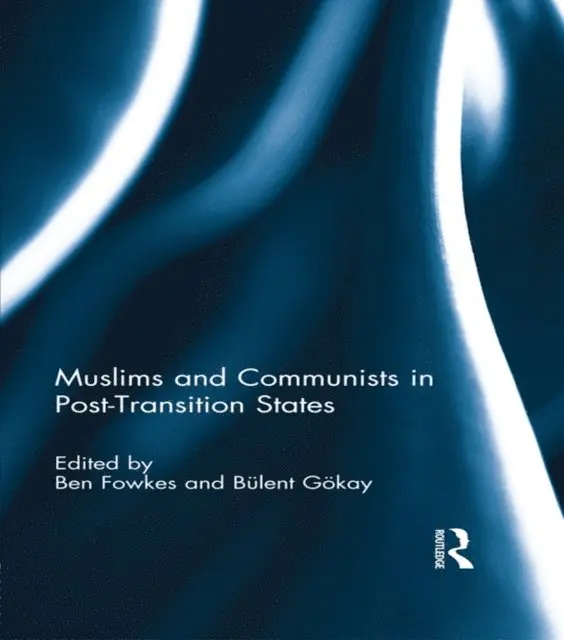
Muslims and Communists in Post-Transition States
Inbunden, 2011
762 kr
Lägg i varukorg
Popular uprisings have taken many different forms in the last hundred or so years since Muslims first began to grapple with modernity and to confront various systems of domination both European and indigenous.The relevance of studies of popular uprising and revolt in the Muslim world has recently …
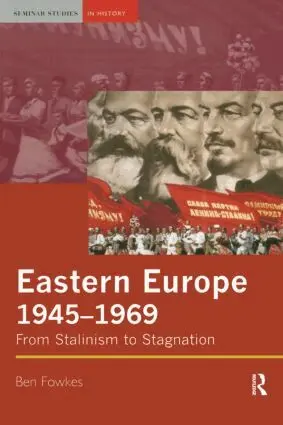
Eastern Europe 1945-1969
From Stalinism to Stagnation
Av Ben Fowkes
Häftad, 2000
546 kr
Lägg i varukorg
Here is an essential short guide to the history of Eastern Europe under the early decades of communist rule. The study explores the communists attempt to transpose a uniform economic and social system across the region copied from the Soviet model. Dr Fowkes shows how this did not always succeed …
Muslims and Communists in Post-Transition States
Häftad, 2024
647 kr
Lägg i varukorg
Popular uprisings have taken many different forms in the last hundred or so years since Muslims first began to grapple with modernity and to confront various systems of domination both European and indigenous.The relevance of studies of popular uprising and revolt in the Muslim world has recently …
Eastern Europe 1945-1969
From Stalinism to Stagnation
Av Ben Fowkes
Inbunden, 2015
2581 kr
Lägg i varukorg
Here is an essential short guide to the history of Eastern Europe under the early decades of communist rule. The study explores the communists attempt to transpose a uniform economic and social system across the region copied from the Soviet model. Dr Fowkes shows how this did not always succeed …
Eastern Europe 1945-1969
From Stalinism to Stagnation
Av Ben Fowkes
E-bok, 2014
571 kr
Lägg i varukorg
Here is an essential short guide to the history of Eastern Europe under the early decades of communist rule. The study explores the communists attempt to transpose a uniform economic and social system across the region copied from the Soviet model. Dr Fowkes shows how this did not always succeed …
Eastern Europe 1945-1969
From Stalinism to Stagnation
Av Ben Fowkes
E-bok, 2014
571 kr
Lägg i varukorg
Here is an essential short guide to the history of Eastern Europe under the early decades of communist rule. The study explores the communists attempt to transpose a uniform economic and social system across the region copied from the Soviet model. Dr Fowkes shows how this did not always succeed …
Muslims and Communists in Post-Transition States
E-bok, 2014
762 kr
Lägg i varukorg
Popular uprisings have taken many different forms in the last hundred or so years since Muslims first began to grapple with modernity and to confront various systems of domination both European and indigenous.The relevance of studies of popular uprising and revolt in the Muslim world has recently …
Muslims and Communists in Post-Transition States
E-bok, 2014
762 kr
Lägg i varukorg
Popular uprisings have taken many different forms in the last hundred or so years since Muslims first began to grapple with modernity and to confront various systems of domination both European and indigenous.The relevance of studies of popular uprising and revolt in the Muslim world has recently …
Rise and Fall of Communism in Eastern Europe
Av Ben Fowkes
E-bok, 2016
873 kr
Lägg i varukorg
Communist parties came to power in a variety of ways, usually by force, often with the acquiescence of people who hoped for a better future. Then came the imposition of Stalinism. The book examines this, and subsequent crises in Hungary, Poland and Czechoslovakia.
Russia and Chechnia: The Permanent Crisis
Essays on Russo-Chechen Relations
Av Ben Fowkes
E-bok, 2016
1516 kr
Lägg i varukorg
This collection of essays explores the relationship between the Chechens and their Russian conquerors, tracing the growth of mistrust and hostility, the rise of Chechen national feeling, and the culmination of this process in the war of 1994-1996. Each contributor seeks to illuminate the …
German Left and the Weimar Republic
A Selection of Documents
Av Ben Fowkes
Inbunden, 2014
2818 kr
Lägg i varukorg
The German Left and the Weimar Republic illuminates the history of the political left by presenting a wide range of documents on various aspects of socialist and communist activity in Germany. Separate chapters deal with the policy of Social Democracy in and out of government, the attempts of the …
Communism and the Avant-Garde in Weimar Germany
A Selection of Documents
Av Ben Fowkes
Häftad, 2023
494 kr
Lägg i varukorg
How did the revolutionary Left view cultural modernists? Their uneasy relationship is illustrated in this book with quotations ranging from Alexander’s ‘Dada is merely an impertinence’ through Trotsky’s ‘There cannot be a proletarian culture’ to Averbakh’s ‘Tear off the masks!’ and Becher’s ‘There …