Bengt Linderoth – författare
Visar alla böcker från författaren Bengt Linderoth. Handla med fri frakt och snabb leverans.
4 produkter
4 produkter
Häftad, Svenska, 2024
1 018 kr
Skickas
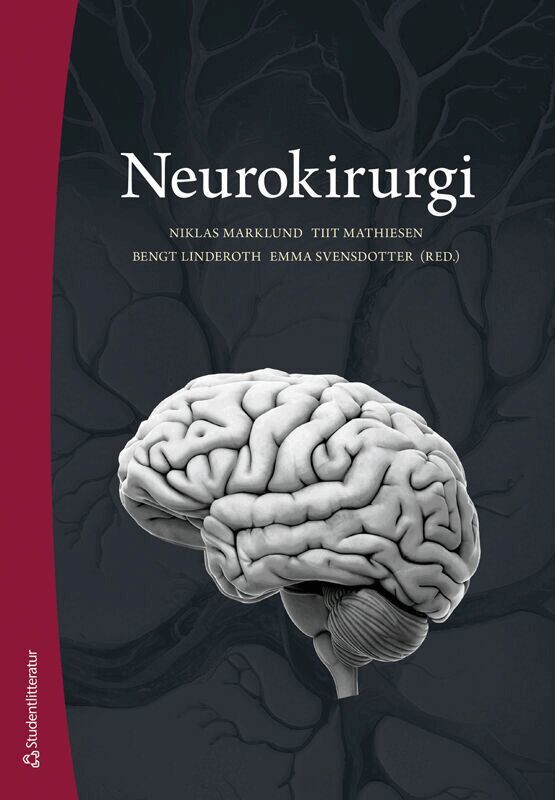
Neurokirurgi omfattar handläggning och operation av sjukdomstillstånd i centrala och perifera nervsystemet. Neurokirurgiska frågeställningar förekommer inom nästan alla medicinska specialiteter.Denna bok sammanfattar neurokirurgiska sjukdomar och de behandlingar som bedrivs i Sverige i dag. I boken läggs stor vikt vid hantering av akuta tillstånd som trauma, blödningar och infektioner i hjärna, rygg och perifera nerver. Läsaren introduceras till neurokirurgisk operationsteknik och grundläggande neurokirurgisk anatomi. I boken beskrivs aktuell evidens, praktisk tillämpning och indikation för neurokirurgiska behandlingsmetoder, inklusive funktionell neurokirurgi med sina speciella indikationer och specifika metoder.Neurokirurgi riktar sig brett till läkare och andra personalgrupper, som specialistsjuksköterskor, samt till studenter med intresse för neurokirurgin. Boken ger en bred översikt av neurokirurgiska tillstånd och är rikligt illustrerad. För att underlätta inlärningen används fallbeskrivningar, tabeller och faktarutor.
Inbunden, Engelska, 1997
1 680 kr
Skickas inom 10-15 vardagar
The proceedings of the 12th Congress of the European Society for Stereotactic and Functional Neurosurgery in Milan contain selected contributions on surgery of Parkinson's disease, pain, psychosurgery, epilepsy, frameless stereotaxy, functional imaging, gene therapy and radiosurgery. The selection reflects the current status and progress in the field. The book is an update of the current methods and controversies and should serve those specialized in the field as a source of information and judgement. The foreword by Jens Haase unifies the views of both stereotactic and general neurosurgeons with great enthusiasm.
E-bok
PDF, Engelska, 20122 036 kr
Läs direkt efter köp
Neurosurgery o/the Future: Computers and Robots in Clinical Neurosurgical Practice and in Training - a Philosophical Journey into the Future Many present day neurosurgeons believe that they already obtain good results in operative surgery with the benefit of the operating microscope and other aids which have become available in the last three decades and that the introduction of computers and robots to the operating theatre is superfluous. However, it is clear from analogy with the function of the airline pilot, another profession where there are great demands on manual skill and on spatial awareness, that these devices do have much to offer neurosurgery. Classical neurosurgery, in the time of Cushing, Dandy and Scarff, was based on a three dimensional picture of the patient''s brain formed in the surgeon''s mind and often illustrated in elegant drawings. Such pictures were based on neuroradiological studies by pneumoencephalography, ventriculography or by angiography. Generally these stud ies showed the presence and position of a lesion by displacement of normal brain structures and the picture was built up by interference. This was then converted by the experienced neurosurgeon into a plan for the craniotomy site and the trajectory of the surgical approach. Once the brain was exposed further pre-operative information was obtained by visual inspection and by palpation with the brain needle. These classical forms ofneuroradiology have largely been superseded by computerised tomography and by magnetic resonance imaging.
Häftad, Engelska, 2012
1 680 kr
Skickas inom 10-15 vardagar
Neurosurgery o/the Future: Computers and Robots in Clinical Neurosurgical Practice and in Training - a Philosophical Journey into the Future Many present day neurosurgeons believe that they already obtain good results in operative surgery with the benefit of the operating microscope and other aids which have become available in the last three decades and that the introduction of computers and robots to the operating theatre is superfluous. However, it is clear from analogy with the function of the airline pilot, another profession where there are great demands on manual skill and on spatial awareness, that these devices do have much to offer neurosurgery. Classical neurosurgery, in the time of Cushing, Dandy and Scarff, was based on a three dimensional picture of the patient's brain formed in the surgeon's mind and often illustrated in elegant drawings. Such pictures were based on neuroradiological studies by pneumoencephalography, ventriculography or by angiography. Generally these stud ies showed the presence and position of a lesion by displacement of normal brain structures and the picture was built up by interference. This was then converted by the experienced neurosurgeon into a plan for the craniotomy site and the trajectory of the surgical approach. Once the brain was exposed further pre-operative information was obtained by visual inspection and by palpation with the brain needle. These classical forms ofneuroradiology have largely been superseded by computerised tomography and by magnetic resonance imaging.