Benjamin Vogel – författare
Visar alla böcker från författaren Benjamin Vogel. Handla med fri frakt och snabb leverans.
6 produkter
6 produkter
Inbunden, Engelska, 2018
1 455 kr
Skickas inom 5-8 vardagar
The Limits of Criminal Law shines light from the outer edges of the criminal law in to better understand its core. From a framework of core principles, different borders are explored to test out where criminal law's normative or performative limits are, in particular, the borders of crime with tort, non-criminal enforcement, medical law, business regulation, administrative sanctions, counter-terrorism and intelligence law.The volume carefully juxtaposes and compares English and German law on each of these borders, drawing out underlying concepts and key comparative lessons. Each country offers insights beyond their own laws. This double perspective sharpens readers' critical understanding of the criminal law, and at the same time produces insights that go beyond the perspective of one legal tradition.The book does not promote a single normative view of the limits of criminal law, but builds a detailed picture of the limits that exist now and why they exist now. This evidence-led approach is particularly important in an ever more interconnected world in which different perceptions of criminal law can lead to profound misunderstandings between countries. The Limits of Criminal Law builds picture of what shapes the criminal law, where those limits come from, and what might motivate legal systems to strain, ignore or strengthen those limits. Some of the most interesting insights come out of the comparison between German systematic approach and doctrinal limits with English law's focus on process and judgment on individual questions.
Häftad, Engelska, 2018
1 470 kr
Skickas inom 5-8 vardagar
The Limits of Criminal Law shines light from the outer edges of the criminal law in to better understand its core. From a framework of core principles, different borders are explored to test out where criminal law's normative or performative limits are, in particular, the borders of crime with tort, non-criminal enforcement, medical law, business regulation, administrative sanctions, counter-terrorism and intelligence law.The volume carefully juxtaposes and compares English and German law on each of these borders, drawing out underlying concepts and key comparative lessons. Each country offers insights beyond their own laws. This double perspective sharpens readers critical understanding of the criminal law, and at the same time produces insights that go beyond the perspective of one legal tradition.The book does not promote a single normative view of the limits of criminal law, but builds a detailed picture of the limits that exist now and why they exist now. This evidence-led approach is particularly important in an ever more interconnected world in which different perceptions of criminal law can lead to profound misunderstandings between countries. The Limits of Criminal Law builds picture of what shapes the criminal law, where those limits come from, and what might motivate legal systems to strain, ignore or strengthen those limits. Some of the most interesting insights come out of the comparison between German systematic approach and doctrinal limits with English laws focus on process and judgment on individual questions.
Häftad, Engelska, 2020
1 035 kr
Skickas inom 5-8 vardagar
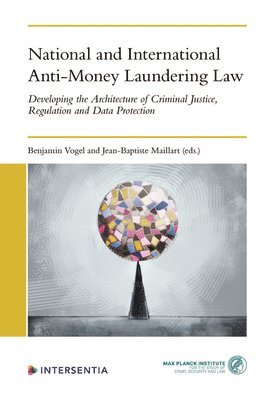
While Anti-Money Laundering instruments are ever increasing in scope and complexity, policymakers have often lost sight of the objectives pursued. As a consequence, legislation is, in many cases, shaped by unrealistic political expectations and inconsistent design. Against this backdrop, this book explains key deficiencies of existing law and develops policy proposals to enhance both effectiveness and respect for fundamental rights. To this end, it thoroughly examines the interplay between criminal justice, regulatory law and data protection rules in Germany, Italy, Spain, Switzerland and the United Kingdom, and contrasts these findings with the frameworks of the Financial Action Task Force and of the European Union. The results of this collaborative research project emphasise the need to approach Anti-Money Laundering as a complex architecture that consists of numerous diverse but highly interdependent areas of law. Reform debates must therefore overcome a fragmented vision, in particular as regards the shape of criminal proceedings, the function of Financial Intelligence Units and supervisory authorities, the aims of private sector involvement and the scope of public-private information sharing. Only then does one learn from past mistakes and avoid ill-conceived remedies that ultimately fail to adapt supranational standards to the institutional and constitutional reality of countries' domestic legal order.
E-bok
PDF, Tyska, 2017285 kr
Läs direkt efter köp
Nach dem Gesetzbuch der katholischen Kirche ist die Ehe nicht nur auf Nachkommenschaft hingeordnet, sondern auch auf das bonum coniugum, das Wohl der Gatten: Damit ist die erneuerte Ehelehre des II. Vatikanischen Konzils rechtlich umgesetzt; der personalen Dimension der Paarbeziehung wird eine wesentliche und eigenständige Rolle zugewiesen. In Ehenichtigkeitsverfahren spielt der Ausschluss dieser Hinordnung auf das Gattenwohl bislang jedoch kaum eine Rolle. Das Gattenwohl gilt vielen Gerichten als schwer fassbare und daher kaum justiziable Größe.Die vorliegende Studie zeigt auf, wie der Begriff des bonum coniugum inhaltlich gefüllt werden kann. Auf der Grundlage der bisherigen Rechtsprechung kirchlicher Gerichte und anhand von Überlegungen zur Partnergewalt, zur Gestaltung der ehelichen Sexualität und zur partnerschaftlichen Ko-Evolution werden verschiedene Varianten dieses Ehenichtigkeitsgrundes vorgestellt und Anknüpfungspunkte für die Praxis markiert.
E-bok
Tyska, 2017277 kr
Läs direkt efter köp
Nach dem Gesetzbuch der katholischen Kirche ist die Ehe nicht nur auf Nachkommenschaft hingeordnet, sondern auch auf das bonum coniugum, das Wohl der Gatten: Damit ist die erneuerte Ehelehre des II. Vatikanischen Konzils rechtlich umgesetzt; der personalen Dimension der Paarbeziehung wird eine wesentliche und eigenständige Rolle zugewiesen. In Ehenichtigkeitsverfahren spielt der Ausschluss dieser Hinordnung auf das Gattenwohl bislang jedoch kaum eine Rolle. Das Gattenwohl gilt vielen Gerichten als schwer fassbare und daher kaum justiziable Größe.Die vorliegende Studie zeigt auf, wie der Begriff des bonum coniugum inhaltlich gefüllt werden kann. Auf der Grundlage der bisherigen Rechtsprechung kirchlicher Gerichte und anhand von Überlegungen zur Partnergewalt, zur Gestaltung der ehelichen Sexualität und zur partnerschaftlichen Ko-Evolution werden verschiedene Varianten dieses Ehenichtigkeitsgrundes vorgestellt und Anknüpfungspunkte für die Praxis markiert.
Häftad, Tyska, 2008
494 kr
Skickas inom 5-8 vardagar