Benno Boer – författare
Visar alla böcker från författaren Benno Boer. Handla med fri frakt och snabb leverans.
10 produkter
Sabkha Ecosystems
Volume II: West and Central Asia
Av Hans-Jorg Barth, German S. Kust m. fl.
E-bok, 2008
2111 kr
Lägg i varukorg
Sabkha Ecosystems Volume I: The Arabian Peninsula and Adjacent Countries was published in 2002. It was the first comprehensive volume dealing with the subject of sabkha research, and sabkha environmental management. Valuable new information was provided for the sabkha of numerous countries on and …
Sabkha Ecosystems
Volume VI: Asia/Pacific
Av Abdul Hameed, Miguel Clusener-Godt m. fl.
E-bok, 2019
2065 kr
Lägg i varukorg
This book is the sixth and final volume in the Tasks for Vegetation Science book series, and it concludes the most comprehensive scientific documentation dealing with hypersaline ecosystems of the world.
Blue Carbon Mangrove Ecosystems
A Concept-Based Approach
Av Ronald A. Loughland, Benno Boer m. fl.
E-bok, 2024
2862 kr
Lägg i varukorg
Blue carbon ecosystems are of tremendous value toward the utilization of high-salinity water, such as seawater, as well as hyper-saline soils, and salt-tolerant biota for the production of biomass, for food, feed, fiber, fuel, other economic purposes, and carbon sequestration. In order to achieve …
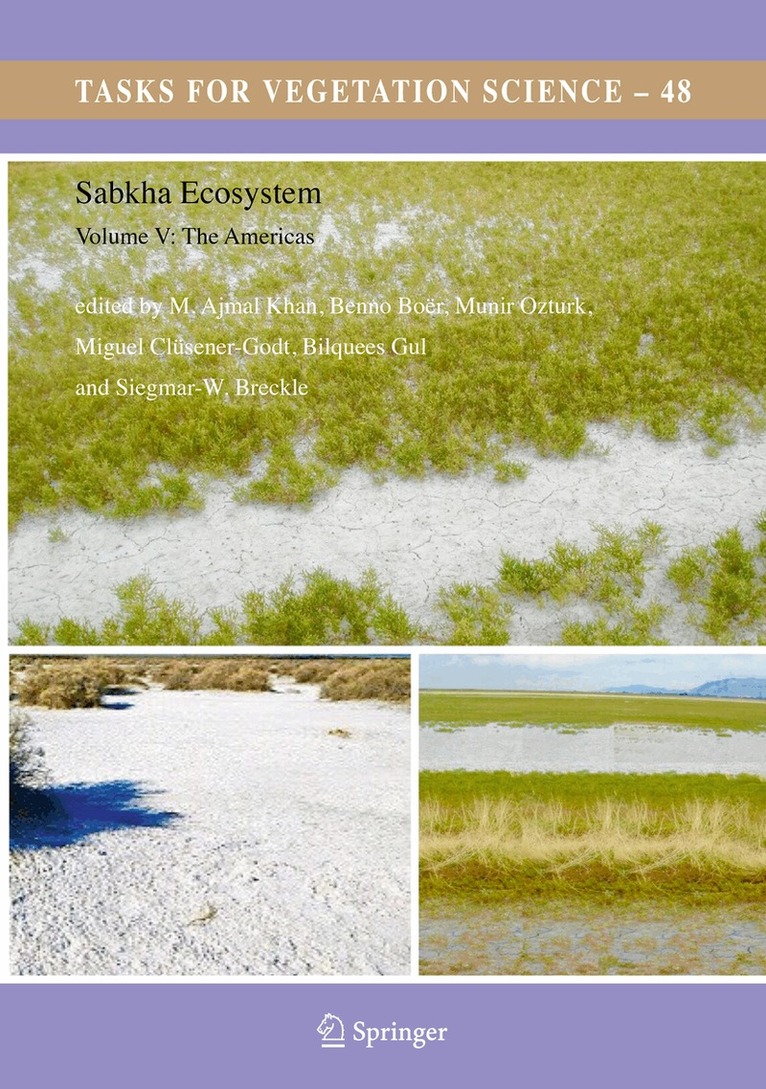
Sabkha Ecosystems
Volume V: The Americas
Av M. Ajmal Khan, Benno Boër m. fl.
Inbunden, 2016
1637 kr
Lägg i varukorg
This book is a part of the Sabkha Ecosystems series which was designed to provide information on sabkha ecosystems of different regions and to add to the collective knowledge available about saline ecosystems. The comprehensive coverage assists the reader gaining a thorough understanding of sabkha …
Sabkha Ecosystems
Volume V: The Americas
Av Siegmar-W. Breckle, Bilquees Gul m. fl.
E-bok, 2016
2065 kr
Lägg i varukorg
This book is a part of the Sabkha Ecosystems series which was designed to provide information on sabkha ecosystems of different regions and to add to the collective knowledge available about saline ecosystems. The comprehensive coverage assists the reader gaining a thorough understanding of sabkha …
Water, Energy, and Food Security Nexus in the Arab Region
Av Walid Saleh, Benno Boer m. fl.
E-bok, 2016
1427 kr
Lägg i varukorg
This book investigates the need for a more open and interdisciplinary dialogue on the nexus of food, water and energy security in the Arab region. It argues that achieving sustainable economic development is irretrievably tied to the security of the water–energy–food nexus, which is in turn …
Sabkha Ecosystems
Volume V: The Americas
Av M. Ajmal Khan, Benno Boër m. fl.
Häftad, 2018
1637 kr
Lägg i varukorg
This book is a part of the Sabkha Ecosystems series which was designed to provide information on sabkha ecosystems of different regions and to add to the collective knowledge available about saline ecosystems. The comprehensive coverage assists the reader gaining a thorough understanding of sabkha …
Protecting the Gulf's Marine Ecosystems from Pollution
Av Thabit Zahran Al Abdessalaam, Benno Boer m. fl.
E-bok, 2008
1427 kr
Lägg i varukorg
The countries of the Arabian Peninsula have undergone a remarkable process of development and social transformation. This has led to increased rates of transport, industrial development, and consumption of water, food, and goods, which in turn, led to significantly increased rates of environmental …
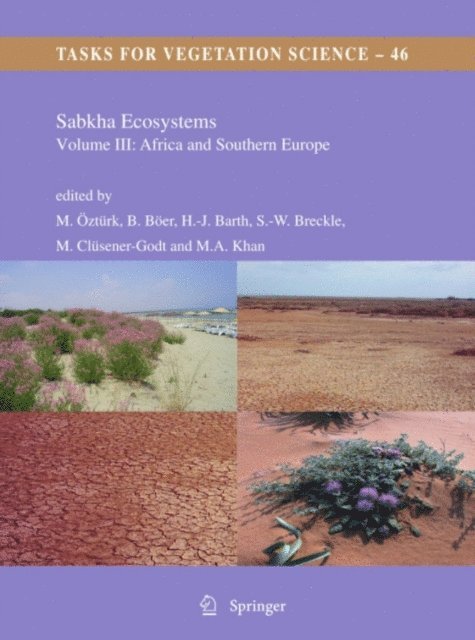
Sabkha Ecosystems
Volume III: Africa and Southern Europe
Av M. Ajmal Khan, Miguel Clusener-Godt m. fl.
E-bok, 2010
2111 kr
Lägg i varukorg
This book is part of the Sabkha Ecosystems series. The series is designed to provide information on sabkha ecosystems of different regions. It will add to the collective knowledge available about saline ecosystems and also focuses on the African region where only limited information is currently …
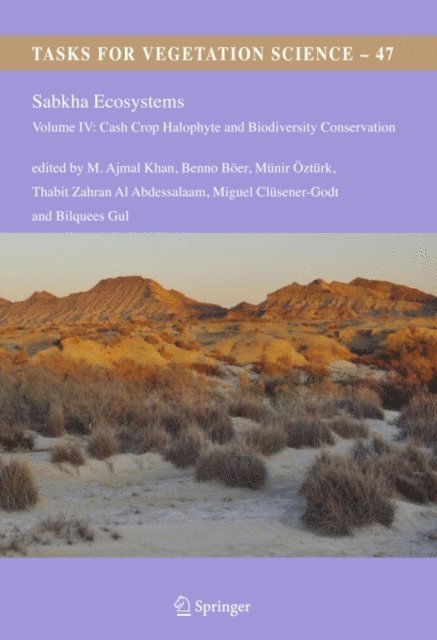
Sabkha Ecosystems
Volume IV: Cash Crop Halophyte and Biodiversity Conservation
Av Bilquees Gul, Miguel Clusener-Godt m. fl.
E-bok, 2014
1459 kr
Lägg i varukorg
Sustainable development is the key for the survival in 21st century. The natural resources are finite and cannot be used with impunity because we are the custodian of these resources and have responsibility to pass these to the next generation. This monumental task requires several major …