Benny Raphael - Böcker
Visar alla böcker från författaren Benny Raphael. Handla med fri frakt och snabb leverans.
3 produkter
3 produkter
725 kr
Skickas inom 10-15 vardagar
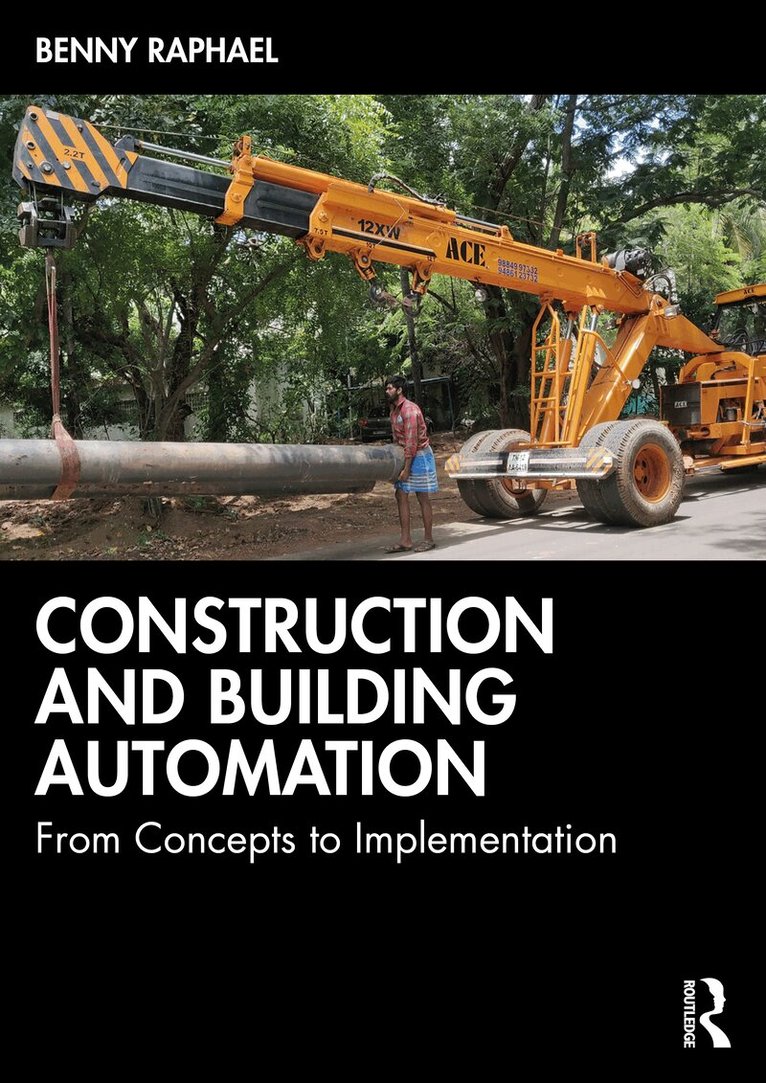
This book is intended to be used as a textbook in undergraduate civil engineering and construction courses to introduce cutting edge mechanical, electrical, and computer science topics that are needed for civil and construction engineers to collaborate in inter-disciplinary automation projects. Part I introduces the basics of hardware and software technologies that are needed for implementing automation in buildings and construction. The content begins with the fundamental concepts and uses practical examples to bring out the benefits of automation through case studies that are easy to understand. No other book uniformly treats the subject of automation within the context of buildings and construction activities. While the technology needed for these two application domains are similar, the unifying principles are not well recognized. This book will bring out the fundamental principles that could form the basis of application to these two domains. For example, it will become clear that sensors, actuators, and controllers, along with smart control strategies could be used for automating tasks within buildings and on construction sites.Part II of the book will introduce key advances in the areas of machine learning and artificial intelligence that are significant for the intelligent control of buildings and construction equipment. Control algorithms and techniques for data analytics are explained in a form that is appropriate for non-computer science students. Each chapter contains several hands-on exercises meant to apply the principles that are covered. These include numerical problems as well as design and analysis examples. This new textbook:• Introduces hardware and software needed for automating engineering tasks• Presents examples of applications in the control of building systems• Illustrates of the use of automation for improving construction processes• Provides a lucid introduction to advanced computing concepts, machine learning, artificial intelligence, and control algorithms to construction and engineering students.It is sure to be essential reading for a growing number of courses in smart construction, building automation, robotics, intelligent buildings, and construction 4.0.Supplementary material including answers to exercises in the book will be provided on the author’s website: https://bennyraphael.com/book2022/
2 088 kr
Skickas inom 10-15 vardagar
This book is intended to be used as a textbook in undergraduate civil engineering and construction courses to introduce cutting edge mechanical, electrical, and computer science topics that are needed for civil and construction engineers to collaborate in inter-disciplinary automation projects. Part I introduces the basics of hardware and software technologies that are needed for implementing automation in buildings and construction. The content begins with the fundamental concepts and uses practical examples to bring out the benefits of automation through case studies that are easy to understand. No other book uniformly treats the subject of automation within the context of buildings and construction activities. While the technology needed for these two application domains are similar, the unifying principles are not well recognized. This book will bring out the fundamental principles that could form the basis of application to these two domains. For example, it will become clear that sensors, actuators, and controllers, along with smart control strategies could be used for automating tasks within buildings and on construction sites.Part II of the book will introduce key advances in the areas of machine learning and artificial intelligence that are significant for the intelligent control of buildings and construction equipment. Control algorithms and techniques for data analytics are explained in a form that is appropriate for non-computer science students. Each chapter contains several hands-on exercises meant to apply the principles that are covered. These include numerical problems as well as design and analysis examples. This new textbook:• Introduces hardware and software needed for automating engineering tasks• Presents examples of applications in the control of building systems• Illustrates of the use of automation for improving construction processes• Provides a lucid introduction to advanced computing concepts, machine learning, artificial intelligence, and control algorithms to construction and engineering students.It is sure to be essential reading for a growing number of courses in smart construction, building automation, robotics, intelligent buildings, and construction 4.0.Supplementary material including answers to exercises in the book will be provided on the author’s website: https://bennyraphael.com/book2022/
1 098 kr
Skickas inom 7-10 vardagar
Computers are ubiquitous throughout all life-cycle stages of engineering, from conceptual design to manufacturing maintenance, repair and replacement. It is essential for all engineers to be aware of the knowledge behind computer-based tools and techniques they are likely to encounter. The computational technology, which allows engineers to carry out design, modelling, visualisation, manufacturing, construction and management of products and infrastructure is known as Computer-Aided Engineering (CAE).Engineering Informatics: Fundamentals of Computer-Aided Engineering, 2nd Edition provides the foundation knowledge of computing that is essential for all engineers. This knowledge is independent of hardware and software characteristics and thus, it is expected to remain valid throughout an engineering career. This Second Edition is enhanced with treatment of new areas such as network science and the computational complexity of distributed systems.Key features: Provides extensive coverage of almost all aspects of Computer-Aided Engineering, outlining general concepts such as fundamental logic, definition of engineering tasks and computational complexityEvery chapter revised and expanded following more than ten years of experience teaching courses on the basis of the first editionCovers numerous representation frameworks and reasoning strategiesConsiders the benefits of increased computational power, parallel computing and cloud computingOffers many practical engineering examples and exercises, with lecture notes available for many of the topics/chapters from the ASCE Technical Council on Computing and Information Technology, Global Centre of Excellence in Computing (www.asceglobalcenter.org), providing a valuable resource for lecturers.Accompanied by a website hosting updates and solutionsEngineering Informatics: Fundamentals of Computer-Aided Engineering, 2nd Edition provides essential knowledge on computing theory in engineering contexts for students, researchers and practising engineers.