Benoit Roux – författare
Visar alla böcker från författaren Benoit Roux. Handla med fri frakt och snabb leverans.
9 produkter
Computational Biochemistry and Biophysics
Av Oren M. Becker, Alexander D. MacKerell Jr. m. fl.
Häftad, 2019
1038 kr
Lägg i varukorg
Covering theoretical methods and computational techniques in biomolecular research, this book focuses on approaches for the treatment of macromolecules, including proteins, nucleic acids, and bilayer membranes. It uses concepts in free energy calculations, conformational analysis, reaction rates, …
Computational Biochemistry and Biophysics
Av Oren M. Becker, Alexander D. MacKerell Jr. m. fl.
Inbunden, 2001
7781 kr
Lägg i varukorg
Covering theoretical methods and computational techniques in biomolecular research, this book focuses on approaches for the treatment of macromolecules, including proteins, nucleic acids, and bilayer membranes. It uses concepts in free energy calculations, conformational analysis, reaction rates, …
Computational Biochemistry and Biophysics
Av Oren M. Becker, Alexander D. MacKerell Jr. m. fl.
E-bok, 2001
1203 kr
Lägg i varukorg
Covering theoretical methods and computational techniques in biomolecular research, this book focuses on approaches for the treatment of macromolecules, including proteins, nucleic acids, and bilayer membranes. It uses concepts in free energy calculations, conformational analysis, reaction rates, …
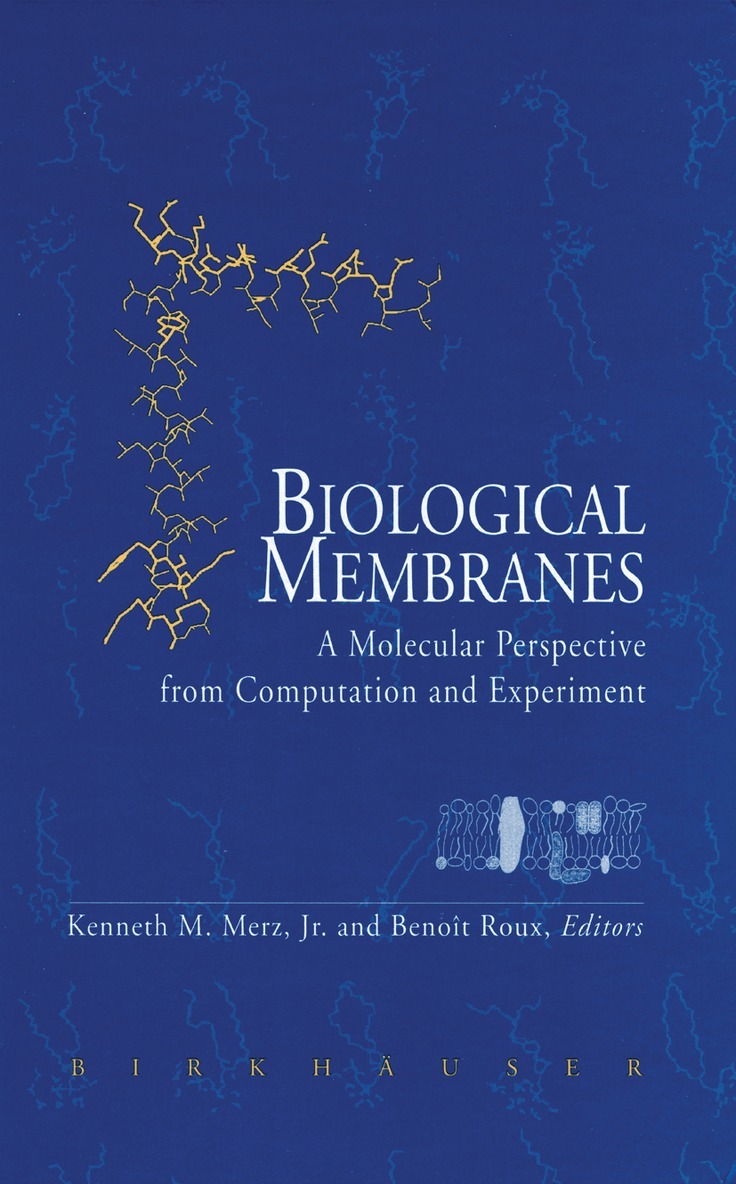
Biological Membranes
A Molecular Perspective from Computation and Experiment
Av Benoit Roux, Kenneth M. Merz
E-bok, 2012
1470 kr
Lägg i varukorg
The interface between a living cell and the surrounding world plays a critical role in numerous complex biological processes. Sperm/egg fusion, virus/cell fusion, exocytosis, endocytosis, and ion permeation are a few examples of processes involving membranes. In recent years, powerful tools such as …
Biological Membranes
A Molecular Perspective from Computation and Experiment
Av Kenneth M. Merz, Benoit Roux
Häftad, 2012
1128 kr
Lägg i varukorg
The interface between a living cell and the surrounding world plays a critical role in numerous complex biological processes. Sperm/egg fusion, virus/cell fusion, exocytosis, endocytosis, and ion permeation are a few examples of processes involving membranes. In recent years, powerful tools such as …
Regards étrangers sur les Caraïbes
Av Bernard Grunberg, Benoît Roux m. fl.
Häftad, 2025
377 kr
Lägg i varukorg
Missionnaires dominicains vol. 2
Av Bernard Grunberg, Benoît Roux m. fl.
Häftad, 2021
293 kr
Lägg i varukorg
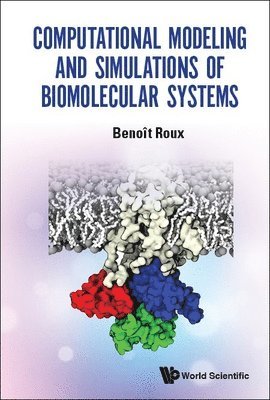
COMPUTATIONAL MODELING AND SIMULATIONS OF BIOMOLECULAR SYSTEMS
Av Benoît Roux
Inbunden, 2021
1114 kr
Lägg i varukorg
This textbook originated from the course "Simulation, Modeling, and Computations in Biophysics" that I have taught at the University of Chicago since 2011. The students typically came from a wide range of backgrounds, including biology, physics, chemistry, biochemistry, and mathematics, and the …
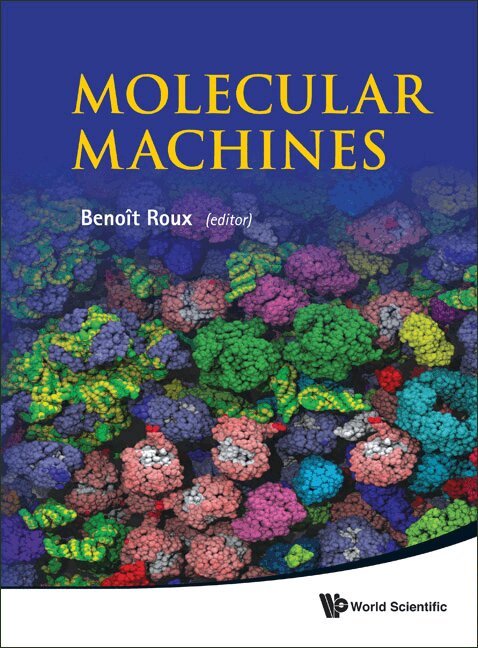
MOLECULAR MACHINES
Inbunden, 2011
1918 kr
Tillfälligt slut
Molecular machines are complex biomolecules, proteins, nucleic acids, and carbohydrates that consume energy in order to perform specific functions. The concerted action of all those machines underlies all the activities of the living cell. To understand how such molecular machines are able to …