Benson Bobrick – författare
Visar alla böcker från författaren Benson Bobrick. Handla med fri frakt och snabb leverans.
16 produkter
16 produkter
Häftad, Engelska, 2007
245 kr
Skickas inom 3-6 vardagar
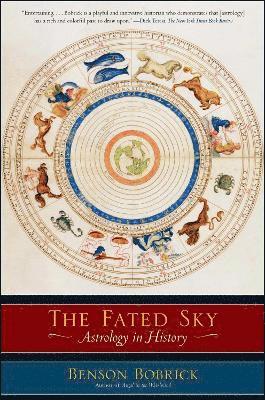
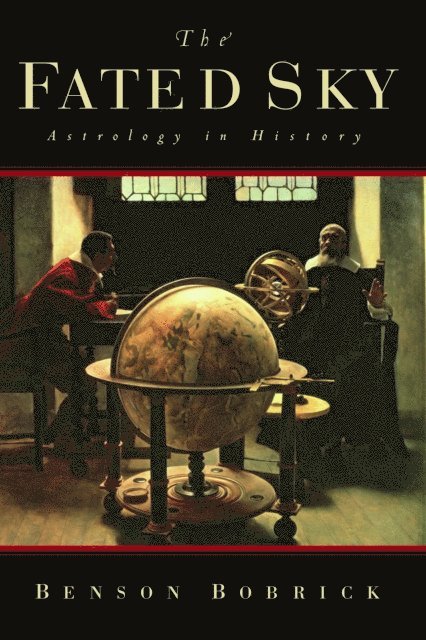
Astrology is the oldest of the occult sciences, and it has had an unshakeable hold on the human mind for centuries. Universities, such as Oxford and the Sorbonne, offer courses on it. In THE FATED SKY Benson Bobrick gives us a fascinating history of the discipline that Ralph Waldo Emerson called 'astronomy brought down to earth and applied to the affairs of men.' Notable Greeks and Romans fervently believed in astrology. St. Augustine condemned it, but St. Thomas Aquinas thought astrology not incompatible with Christian faith. Shakespeare accepted it, and when Edmund Halley disparaged astrology, Isaac Newton said to him, 'I, sir, have studied the subject, and you have not.' All the great Renaissance astronomers believed in the influence of the stars and planets over human affairs. In more recent times, Winston Churchill, Charles de Gaulle and Ronald Reagan consulted astrologers. As Carl Jung predicted, astrology is again a subject of serious study, and now Benson Bobrick has written the first complete history of the world's oldest subject.
E-bok
Engelska, 200599 kr
Läs direkt efter köp
In a horoscope he cast in 1647 for Charles I, William Lilly, a noted English astrologer, made the following judgment: "Luna is with Antares, a violent fixed star, which is said to denote violent death, and Mars is approaching Caput Algol, which is said to denote beheading." Two years later the king''s head fell on the block. "Astrology must be right," wrote the American astrologer Evangeline Adams, a claimed descendant of President John Quincy Adams, in a challenge to skeptics in 1929. "There can be no appeal from the Infinite." The Fated Sky explores both the history of astrology and the controversial subject of its influence in history. It is the first serious book to fully engage astrology in this way. Astrology is the oldest of the occult sciences. It is also the origin of science itself. Astronomy, mathematics, and other disciplines arose in part to make possible the calculations necessary in casting horoscopes. For five thousand years, from the ancient Near East to the modern world, the influence of the stars has been viewed as shaping the course and destiny of human affairs. According to recent polls, at least 30 percent of the American public believes in astrology, though, as Bobrick reveals, modern astrology is also utterly different from the doctrine of the stars that won the respect and allegiance of the greatest thinkers, scientists, and writers -- Greek, Roman, Egyptian, Arab, and Persian -- of an earlier day. Statesmen, popes, and kings once embraced it, and no less a figure than St. Thomas Aquinas, the medieval theologian, thought it not incompatible with Christian faith. There are some two hundred astrological allusions in Shakespeare''s plays, and not one of their astrological predictions goes unfulfilled. The great astronomers of the scientific revolution -- Copernicus, Tycho Brahe, Kepler -- were adherents. Isaac Newton''s appetite for mathematics was first whetted by an astrological text. In more recent times, prominent figures such as Churchill, de Gaulle, and Reagan have consulted astrologers and sometimes heeded their advice. Today universities as diverse as Oxford in England and the University of Zaragoza in Spain offer courses in the subject, fulfilling Carl Jung''s prediction decades ago that astrology would again become the subject of serious discourse. Whether astrology actually has the powers that have been ascribed to it is, of course, open to debate. But there is no doubt that it maintains an unshakeable hold on the human mind. In The Fated Sky, Benson Bobrick has written an absolutely captivating and comprehensive account of this engrossing subject and its enduring influence on history and the history of ideas.
Häftad, Engelska, 2010
327 kr
Skickas inom 3-6 vardagar
E-bok
Engelska, 2012142 kr
Läs direkt efter köp
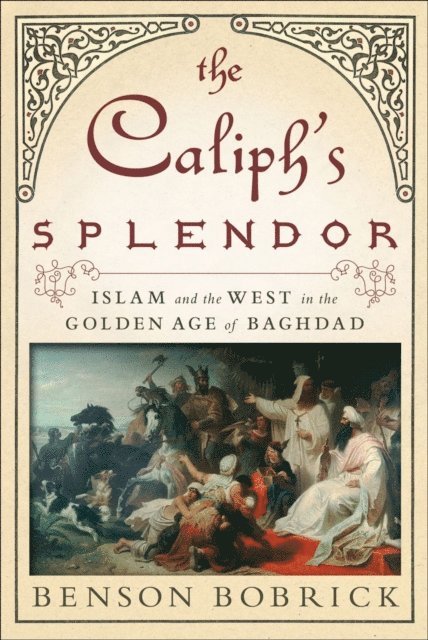
The Caliph’s Splendor is a revelation: a history of a civilization we barely know that had a profound effect on our own culture. While the West declined following the collapse of the Roman Empire, a new Arab civilization arose to the east, reaching an early peak in Baghdad under the caliph Harun al-Rashid. Harun is the legendary caliph of The Thousand and One Nights, but his actual court was nearly as magnificent as the fictional one. In The Caliph’s Splendor, Benson Bobrick eloquently tells the little-known and remarkable story of Harun’s rise to power and his rivalries with the neighboring Byzantines and the new Frankish kingdom under the leadership of Charlemagne. When Harun came to power, Islam stretched from the Atlantic to India. The Islamic empire was the mightiest on earth and the largest ever seen. Although Islam spread largely through war, its cultural achievements were immense. Harun’s court at Baghdad outshone the independent Islamic emirate in Spain and all the courts of Europe, for that matter. In Baghdad, great works from Greece and Rome were preserved and studied, and new learning enhanced civilization. Over the following centuries Arab and Persian civilizations made a lasting impact on the West in astronomy, geometry, algebra (an Arabic word), medicine, and chemistry, among other fields of science. The alchemy (another Arabic word) of the Middle Ages originated with the Arabs. From engineering to jewelry to fashion to weaponry, Arab influences would shape life in the West, as they did in the fields of law, music, and literature. But for centuries Arabs and Byzantines contended fiercely on land and sea. Bobrick tells how Harun defeated attempts by the Byzantines to advance into Asia at his expense. He contemplated an alliance with the much weaker Charlemagne in order to contain the Byzantines, and in time Arabs and Byzantines reached an accommodation that permitted both to prosper. Harun’s caliphate would weaken from within as his two sons quarreled and formed factions; eventually Arabs would give way to Turks in the Islamic empire. Empires rise, weaken, and fall, but during its golden age, the caliphate of Baghdad made a permanent contribution to civilization, as Benson Bobrick so splendidly reminds us.
E-bok
Engelska, 2008139 kr
Läs direkt efter köp
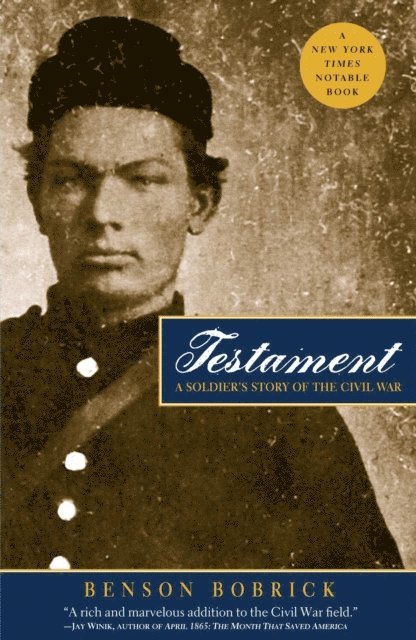
The story of the author''s great-grandfather''s Civil War experience, based on a remarkable set of newly discoverd letters—a powerful, moving addition to the firsthand soldiers'' accounts of the Civil War.Dear Mother, I was very glad to hear from home this morning. It is the first time since I left Otterville. We marched from Sedalia 120 miles....I almost feel anxious to be in a battle & yet I am almost afraid. I feel very brave sometimes & think if I should be in an engagement, I never would leave the field alive unless the stars & stripes floated triumphant. I do not know how it may be. If there is a battle & I should fall, tell with pride & not with grief that I fell in defense of liberty. Pray that I may be a true soldier. Not since Stephen Crane''s The Red Badge of Courage have the trials and tribulations of a private soldier of the Civil War been told with such beguiling force. The Red Badge of Courage, however, was fiction. This story is true. In Testament, Benson Bobrick draws upon an extraordinarily rich but hitherto untapped archive of material to create a continuous narrative of how that war was fought and lived. Here is virtually the whole theater of conflict in the West, from its beginnings in Missouri, through Kentucky and Tennessee, to the siege of Atlanta under Sherman, as experienced by Bobrick''s great-grandfather, Benjamin W. ("Webb") Baker, an articulate young Illinois recruit. Born and raised not far from the Lincoln homestead in Coles County, Webb had stood in the audience of one of the Lincoln-Douglas debates, become a staunch Unionist, and answered one of Abraham Lincoln''s first calls for volunteers. The ninety-odd letters on which his story is based are fully equal to the best letters the war produced, especially by a common soldier; but their wry intelligence, fortitude, and patriotic fervor also set them apart with a singular and still-undying voice. In the end, that voice blends with the author''s own, as the book becomes a poignant tribute to his great-grandfather''s life -- and to all the common soldiers of the nation''s bloodiest war.
E-bok
Engelska, 2009202 kr
Läs direkt efter köp
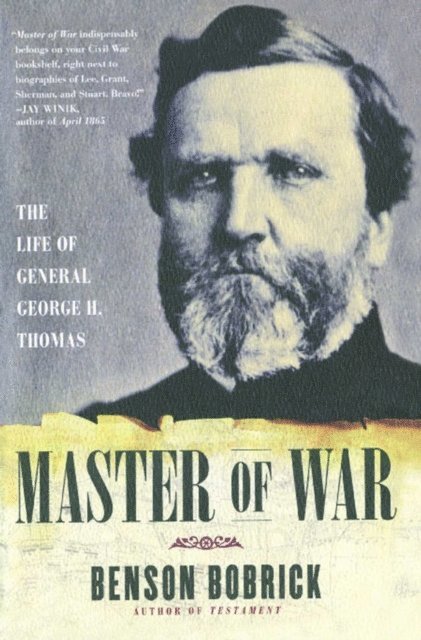
In this revelatory, dynamic biography, one of our finest historians, Benson Bobrick, profiles George H. Thomas, arguing that he was the greatest and most successful general of the Civil War. Because Thomas didn''t live to write his memoirs, his reputation has been largely shaped by others, most notably Ulysses S. Grant and William Tecumseh Sherman, two generals with whom Thomas served and who, Bobrick says, diminished his successes in their favor in their own memoirs. Born in Virginia, Thomas survived Nat Turner''s rebellion as a boy, then studied at West Point, where Sherman was a classmate. Thomas distinguished himself in the Mexican War and then returned to West Point as an instructor. When the Civil War broke out, Thomas remained loyal to the Union, unlike fellow Virginia-born officer Robert E. Lee (among others). He compiled an outstanding record as an officer in battles at Mill Springs, Perryville, and Stones River. At the Battle of Chickamauga, Thomas, at the time a corps commander, held the center of the Union line under a ferocious assault, then rallied the troops on Horseshoe Ridge to prevent a Confederate rout of the Union army. His extraordinary performance there earned him the nickname "The Rock of Chickamauga." Promoted to command of the Army of the Cumberland, he led his army in a stunning Union victory at the Battle of Chattanooga. Thomas supported Sherman on his march through Georgia in the spring of 1864, winning an important victory at the Battle of Peachtree Creek. As Sherman continued on his March to the Sea, Thomas returned to Tennessee and in the battle of Nashville destroyed the army of Confederate General John Bell Hood. It was one of the most decisive victories of the war, and Thomas won it even as Grant was on his way to remove Thomas from his command. (When Grant discovered the magnitude of Thomas''s victory, he quickly changed his mind.) Thomas died of a stroke in 1870 while still on active duty. In the entire Civil War, he never lost a battle or a movement. Throughout his career, Thomas was methodical and careful, and always prepared. Unlike Grant at Shiloh, he was never surprised by an enemy. Unlike Sherman, he never panicked in battle but always remained calm and focused. He was derided by both men as "Slow Trot Thomas," but as Bobrick shows in this brilliant biography, he was quick to analyze every situation and always knew what to do and when to do it. He was not colorful like Grant and Sherman, but he was widely admired by his peers, and some, such as Grant''s favorite cavalry commander, General James H. Wilson, thought Thomas the peer of any general in either army. He was the only Union commander to destroy two Confederate armies in the field. Although historians of the Civil War have always regarded Thomas highly, he has never captured the public imagination, perhaps because he has lacked an outstanding biographer -- until now. This informed, judicious, and lucid biography at last gives Thomas his due.
Häftad, Engelska, 2010
299 kr
Skickas inom 3-6 vardagar
Häftad, Engelska, 2011
392 kr
Skickas inom 3-6 vardagar
E-bok
Engelska, 2011202 kr
Läs direkt efter köp
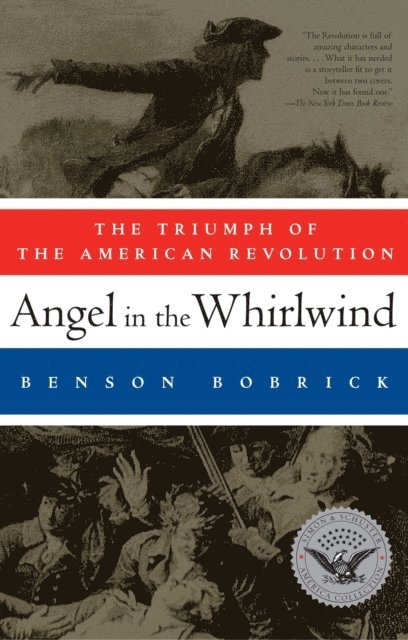
Angel in the Whirlwind is the epic tale of the American Revolution, from its roots among tax-weary colonists to the triumphant Declaration of Independence and eventual victory and liberty, recounted by Benson Bobrick, lauded by The New York Times as “perhaps the most interesting historian writing in America today.” Overwhelmed with debt following its victory in the French and Indian Wars, England began imposing harsh new tariffs and taxes on its colonists in the 1760s. Rebellion against these measures soon erupted into war. Bobrick thrillingly describes all the major battles, from Lexington and Concord to the dramatic siege of Yorktown, when the British flag was finally lowered before patriot guns. At the same time he weaves together social and political history along with the military history, bringing to life not only the charismatic leaders of the independence movement, but also their lesser-known compatriots, both patriot and loyalist, English and American, whose voices vividly convey the urgency of war. Illuminated by fresh insight, Angel in the Whirlwind is a dramatic narrative of our nation’s birth, in all its passion and glory.
E-bok
Engelska, 2011202 kr
Läs direkt efter köp
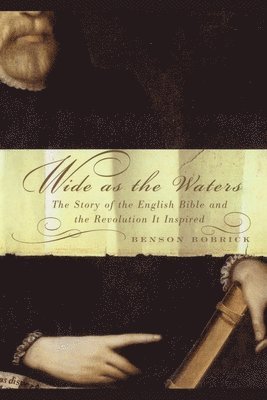
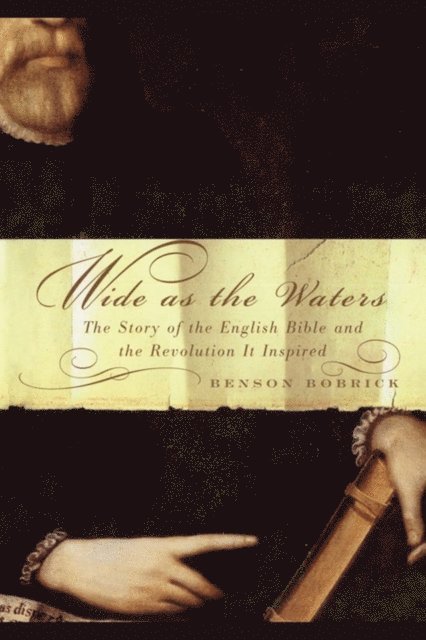
This gripping and accessible work of history, religion, and literary criticism chronicles the first English translation of the King James version of the bible—through the tumultuous reigns of Henry VIII, Edward VI, Mary Tudor, and Elizabeth I, a time of fierce contest between Catholics and Protestants in England—which took centuries to complete.Next to the Bible itself, the English Bible was -- and is -- the most influential book ever published. The most famous of all English Bibles, the King James Version, was the culmination of centuries of work by various translators, from John Wycliffe, the fourteenth-century catalyst of English Bible translation, to the committee of scholars who collaborated on the King James translation. Wide as the Waters examines the life and work of Wycliffe and recounts the tribulations of his successors, including William Tyndale, who was martyred, Miles Coverdale, and others who came to bitter ends, as the struggle to establish a vernacular Bible was fought among competing factions. In the course of that struggle, Sir Thomas More, later made a Catholic saint, helped orchestrate the assault on the English Bible, only to find his own true faith the plaything of his king. In 1604, a committee of fifty-four scholars, the flower of Oxford and Cambridge, collaborated on the new translation for King James. Their collective expertise in biblical languages and related fields has probably never been matched, and the translation they produced -- substantially based on the earlier work of Wycliffe, Tyndale, and others -- would shape English literature and speech for centuries. As the great English historian Macaulay wrote of their version, "If everything else in our language should perish, it alone would suffice to show the extent of its beauty and power." To this day its common expressions, such as "labor of love," "lick the dust," "a thorn in the flesh," "the root of all evil," "the fat of the land," "the sweat of thy brow," "to cast pearls before swine," and "the shadow of death," are heard in everyday speech. The impact of the English Bible on law and society was profound. It gave every literate person access to the sacred text, which helped to foster the spirit of inquiry through reading and reflection. This, in turn, accelerated the growth of commercial printing and the proliferation of books. Once people were free to interpret the word of God according to the light of their own understanding, they began to question the authority of their inherited institutions, both religious and secular. This led to reformation within the Church, and to the rise of constitutional government in England and the end of the divine right of kings. England fought a Civil War in the light (and shadow) of such concepts, and by them confirmed the Glorious Revolution of 1688. In time, the new world of ideas that the English Bible helped inspire spread across the Atlantic to America, and eventually, like Wycliffe''s sea-borne scattered ashes, all the world over, "as wide as the waters be." Wide as the Waters is a story about a crucial epoch in the history of Christianity, about the English language and society, and about a book that changed the course of human events.
Häftad, Engelska, 2015
233 kr
Skickas inom 3-6 vardagar
Häftad, Engelska, 2026
187 kr
Skickas inom 5-8 vardagar
E-bok
Engelska, 201482 kr
Läs direkt efter köp
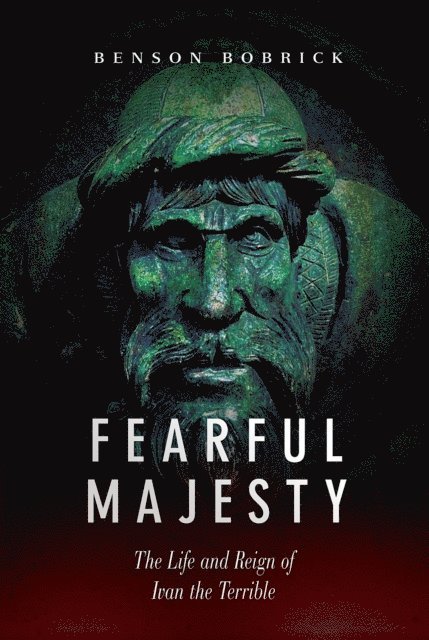
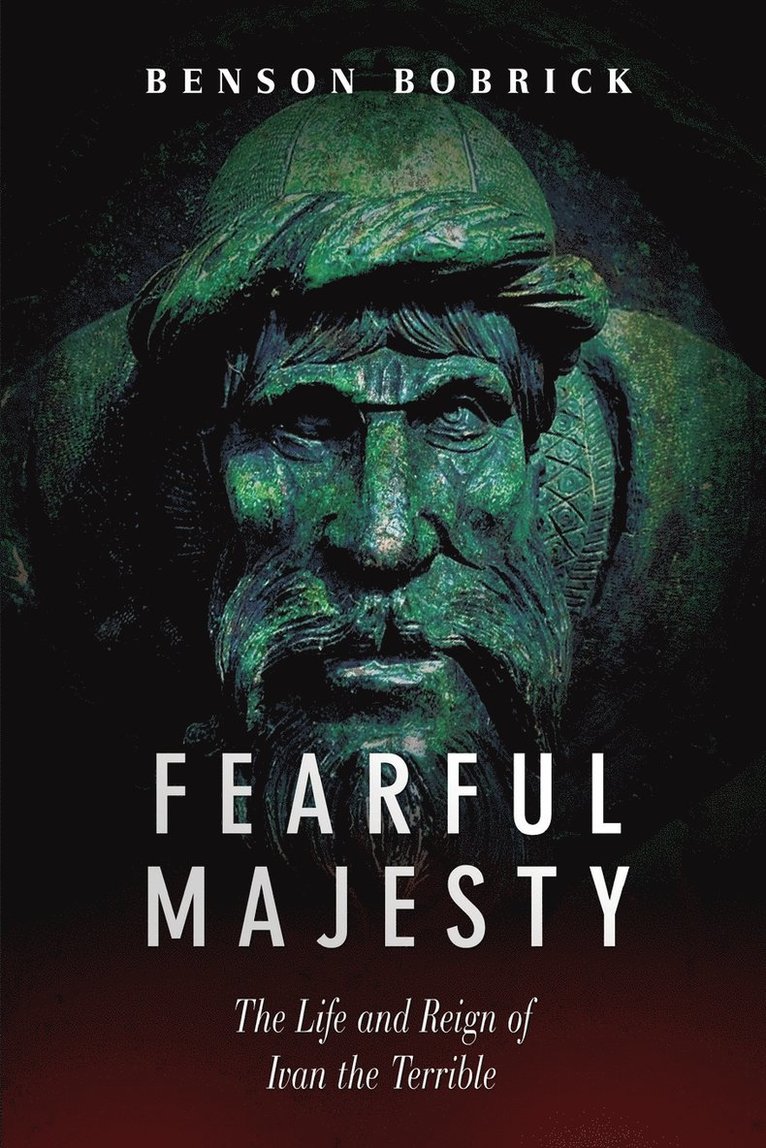
Ivan the Terrible - the name evokes the legend of a cruel and dangerously insane tyrant. Fearful Majesty explores that legend and exposes the man, his nature, and his time.This acclaimed biography of one of Russia''s most important and tyrannical rulers is not only a rich, readable biography, it is also surprisingly timely, revealing how many of the issues Russia faces today have their roots in Ivan''s reign.Ivan IV oversaw huge conquests of neighboring lands, the creation of a national church, and Russia''s emergence as a world power.Arrogant, handsome, a gifted orator and theologian, Ivan was well educated but cruel, profoundly egotistical yet cowardly, scarred by childhood terrors. He was also the Russian ruler whose policies first cast Russia in the role of "Evil Empire" to the West.Throughout his reign, Ivan''s unbalanced genius erupted in a tyranny so violent that it threatened to destroy his bloodline, his court, his church, his country.
Häftad, Engelska, 2014
284 kr
Skickas inom 5-8 vardagar
Häftad, Engelska, 2014
283 kr
Skickas inom 5-8 vardagar
E-bok
Engelska, 201479 kr
Läs direkt efter köp
The very word Siberia evokes a history and reputation as awesome as it is enthralling. In this acclaimed book on Russia''s conquest of its eastern realms, Benson Bobrick offers a story that is both rich and subtle, broad and deep. From its conquest by Cossacks and its exploration and settlement in the sixteenth and seventeenth centuries, through its terrifying Gulag history, to its modern place in a world hungry for natural resources, Siberia -covering a sixth of the world''s surface - has a history unlike any other land. East of the Sun captures all of Siberia''s history with a depth and flavor that will satisfy both well-informed historians and newly-cast Russophiles alike.