Bernard Fried - Böcker
Visar alla böcker från författaren Bernard Fried. Handla med fri frakt och snabb leverans.
17 produkter
17 produkter
1 625 kr
Skickas inom 10-15 vardagar
Echinostomes are medically- and veterinary-important parasitic flatworms that invade humans, domestic animals and wildlife and also parasitize in their larval stages numerous invertebrate and cold-blooded vertebrate hosts. The interest in echinostomes in parasitology and general biology comes from several areas: (1) Human infections; (2) Experimental models; (3) Animal infections; (4) Systematics.The application of novel techniques is moving the echinostomes to the frontline of parasitology in fields such as systematics, immunobiology in vertebrate and invertebrate organisms and proteomics among others. The Biology of Echinostomes demonstrates the application of new techniques to a group of trematodes that may serve to obtain information of great value in parasitology and general biology. The book includes basic topics, such as biology and systematics, as well as more novel topics, such as immunobiology, proteomics, and genomics of echinostomes. The authors of each chapter emphasize their content with: (i) the most novel information obtained; (ii) analysis of this information in a more general context (i.e. general parasitology); and (iii) future perspectives in view of the information presented. The subjects are analyzed from a modern point of view, considering aspects such as applications of novel techniques and an analysis of host-parasite interactions.
2 164 kr
Skickas inom 10-15 vardagar
Humans suffer from numerous parasitic foodborne zoonoses, many of which are caused by helminths. The helminth zoonoses of concern in this book are normally limited to diseases of animals which have now become transmissible to humans. In the past these diseases were limited to populations living in low- and middle-income countries, but the geographical limits and populations at risk are expanding and changing because of growing international markets , improved transportation systems, and demographic changes (such as population movements). The World Health Organization (WHO) has estimated that the number of people currently infected with food borne trematodes alone exceeds 41 million, but worldwide the number of people at risk, including those in developed countries, is 750 million. The increasing recognition of the public health significance of these zoonoses, especially their complicated epidemiologies, and their links to poverty, intensification of agriculture, environmental degradation, and lack of tools for control- has been welcome. However, the development of priorities for a national public health system is often a competitive exercise, and the argument for devoting appropriate attention and resources to foodborne parasitic zoonoses is generally handicapped by the lack of good health and economic impact data. The genesis of this book was a desire to draw attention to the problem of these zoonoses and to hopefully, inspire greater efforts to acquire a reliable global impact assessment and therefore a basis for improved prevention and control actions for these zoonoses. This book reviews not only the prevalence and distribution of these zoonoses, including available health and economic impact data, but will highlight gaps in knowledge that must be filled in order to gain the assessment needed to depict the overall importance of a particular zoonosis. This is critical for comparisons to other pressing public health and development needs in resource allocations. The topics on epidemiology, diagnosis, and clinical aspects emphasize the knowledge gaps that limit a full understanding of these zoonoses, and target where greater research investments on these parasitic diseases should be focused.
1 578 kr
Skickas inom 10-15 vardagar
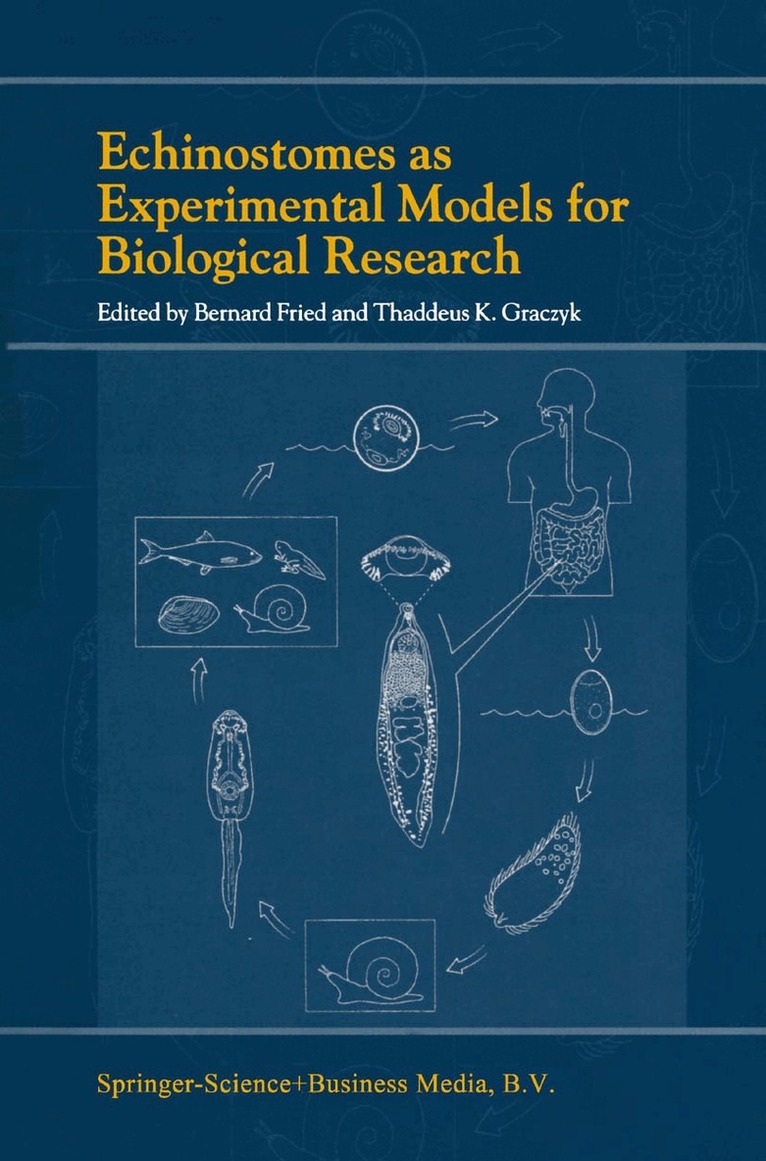
Echinostomes are ubiquitous intestinal flatworm parasites of vertebrates and are of importance in human and veterinary medicine and wildlife diseases. Echinostomes can be maintained easily and inexpensively in the laboratory and provide good models for biological research ranging from the molecular to the organismal. Considerable but scattered literature has been published on the subject of echinostomes and a synthesis of this wide range of topics has now been achieved with the publication of this book, which presents a wide range of topics in experimental biology related to the use of echinostomes as laboratory models.
4 593 kr
Skickas inom 10-15 vardagar
The fourth edition of this work emphasizes the general practices and instrumentation involving TLC and HPTLC, as well as their applications based on compound types, while providing an understanding of the underlying theory necessary for optimizing these techniques. The book details up-to-date qualitative and quantitative densitometric experiments on organic dyes, lipids, antibiotics, pharmaceuticals, organic acids, insecticides, and more.
4 926 kr
Skickas inom 10-15 vardagar
In this third edition, more than 40 renowned authorities introduce and update chapters on the theory, fundamentals, techniques, and instrumentation of thin-layer chromatography (TLC) and high-performance thin-layer chromatography (HPTLC), highlighting the latest procedures and applications of TLC to 19 important compound classes and coverage of TLC applications by compound type. Easily adaptable to industrial scenarios , the Handbook of Thin-Layer Chromatography, Third Edition supports practical research strategies with extensive tables of data, offers numerous figures that illustrate techniques and chromatograms, and includes a glossary as well as a directory of equipment suppliers.
4 593 kr
Skickas inom 10-15 vardagar
Trematodology - the study of a class of medically important parasitic, flat-bodied worms - has made significant advances over the past ten years. The tremendous amount of information accumulated from research discoveries and technical developments related to trematode biology makes this book a timely and necessary part of the literature. Advances in Trematode Biology presents a thorough treatment of modern trematodology, including principles and practices. With coverage of background material as well as modern methods, Advances in Trematode Biology updates researchers, practitioners, and students with new information in immunology, biochemistry, physiology, and molecular biology.Advances in Trematode Biology includes practical information on parasitological techniques, emphasizing species of medical and veterinary importance - a key reference for parasitologists, biologists, medical, and veterinary personnel. The excellent presentation of material, including well-organized tables and chapters, make Advances in Trematode Biology easy to use both as a textbook and as a reference.
1 685 kr
Skickas inom 10-15 vardagar
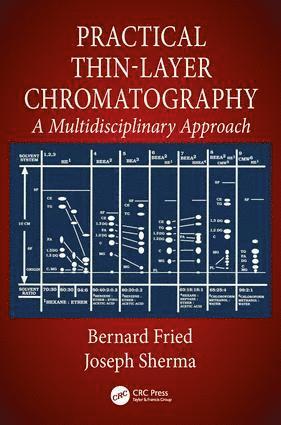
Practical Thin-Layer Chromatography provides thorough coverage of the principles, practices, and applications of thin-layer chromatography (TLC) for important sample and compound types. This information is directed specifically at workers in the most active scientific fields.
1 752 kr
Skickas inom 10-15 vardagar
Practical Thin-Layer Chromatography provides thorough coverage of the principles, practices, and applications of thin-layer chromatography (TLC) for important sample and compound types. This information is directed specifically at workers in the most active scientific fields.
1 625 kr
Skickas inom 10-15 vardagar
Echinostomes are medically- and veterinary-important parasitic flatworms that invade humans, domestic animals and wildlife and also parasitize in their larval stages numerous invertebrate and cold-blooded vertebrate hosts. The interest in echinostomes in parasitology and general biology comes from several areas: (1) Human infections; (2) Experimental models; (3) Animal infections; (4) Systematics.The application of novel techniques is moving the echinostomes to the frontline of parasitology in fields such as systematics, immunobiology in vertebrate and invertebrate organisms and proteomics among others. The Biology of Echinostomes demonstrates the application of new techniques to a group of trematodes that may serve to obtain information of great value in parasitology and general biology. The book includes basic topics, such as biology and systematics, as well as more novel topics, such as immunobiology, proteomics, and genomics of echinostomes. The authors of each chapter emphasize their content with: (i) the most novel information obtained; (ii) analysis of this information in a more general context (i.e. general parasitology); and (iii) future perspectives in view of the information presented. The subjects are analyzed from a modern point of view, considering aspects such as applications of novel techniques and an analysis of host-parasite interactions.
2 164 kr
Skickas inom 10-15 vardagar
Humans suffer from numerous parasitic foodborne zoonoses, many of which are caused by helminths. The helminth zoonoses of concern in this book are normally limited to diseases of animals which have now become transmissible to humans. In the past these diseases were limited to populations living in low- and middle-income countries, but the geographical limits and populations at risk are expanding and changing because of growing international markets , improved transportation systems, and demographic changes (such as population movements). The World Health Organization (WHO) has estimated that the number of people currently infected with food borne trematodes alone exceeds 41 million, but worldwide the number of people at risk, including those in developed countries, is 750 million. The increasing recognition of the public health significance of these zoonoses, especially their complicated epidemiologies, and their links to poverty, intensification of agriculture, environmental degradation, and lack of tools for control- has been welcome. However, the development of priorities for a national public health system is often a competitive exercise, and the argument for devoting appropriate attention and resources to foodborne parasitic zoonoses is generally handicapped by the lack of good health and economic impact data. The genesis of this book was a desire to draw attention to the problem of these zoonoses and to hopefully, inspire greater efforts to acquire a reliable global impact assessment and therefore a basis for improved prevention and control actions for these zoonoses. This book reviews not only the prevalence and distribution of these zoonoses, including available health and economic impact data, but will highlight gaps in knowledge that must be filled in order to gain the assessment needed to depict the overall importance of a particular zoonosis. This is critical for comparisons to other pressing public health and development needs in resource allocations. The topics on epidemiology, diagnosis, and clinical aspects emphasize the knowledge gaps that limit a full understanding of these zoonoses, and target where greater research investments on these parasitic diseases should be focused.
2 164 kr
Skickas inom 10-15 vardagar
The purpose of this book is to provide an overview of the biology of the planorbid snail Biomphalaria glabrata mainly as related to the snail’s role as a host of larval trematodes . This snail is of great importance in medical and economic zoology as a vector of important trematode (fluke) diseases in human and veterinary medicine and in wildlife biology. Moreover, this snail is a useful model for numerous basic studies in biology and chemistry. A book that provides modern coverage of diverse topics from the molecule to the community of this snail as related to larval trematode parasitism is not available. This book should appeal to a wide audience of biologists, ecologists, biochemists, malacologists, parasitologists, public health workers, epidemiologists, and graduate and advanced undergraduate students in biomedical and allied health sciences.
2 164 kr
Skickas inom 10-15 vardagar
The purpose of this book is to provide an overview of the biology of the planorbid snail Biomphalaria glabrata mainly as related to the snail’s role as a host of larval trematodes . This snail is of great importance in medical and economic zoology as a vector of important trematode (fluke) diseases in human and veterinary medicine and in wildlife biology. Moreover, this snail is a useful model for numerous basic studies in biology and chemistry. A book that provides modern coverage of diverse topics from the molecule to the community of this snail as related to larval trematode parasitism is not available. This book should appeal to a wide audience of biologists, ecologists, biochemists, malacologists, parasitologists, public health workers, epidemiologists, and graduate and advanced undergraduate students in biomedical and allied health sciences.
1 821 kr
Skickas inom 10-15 vardagar
Digenetic trematodes constitute a major helminth group that parasitize humans and animals, and are a major cause of morbidity and mortality. The diseases caused by trematodes have been neglected for years, especially as compared with other parasitic diseases. However, the geographical limits and the populations at risk are currently expanding and changing in relation to factors such as growing international markets, improved transportation systems, and demographic changes. This has led to a growing international interest in trematode infections, although factors such as the difficulties entailed in the diagnosis, the complexity of human and agricultural practices, the lack of assessments of the economic costs or the limited number of effective drugs are preventing the development of control measures of these diseases in humans and livestock. In-depth studies are needed to clarify the current epidemiology of these helminth infections and to identify new and specific targets for both effective diagnosis and treatments. The main goal of this book is to present the major trematodes and their corresponding diseases in the framework of modern parasitology, considering matters such as the application of novel techniques and analysis of data in the context of host-parasite interactions and to show applications of new techniques and concepts for the studies on digenetic trematodes. This is an ideal book for parasitologists, microbiologists, zoologists, immunologists, professional of public health workers, clinicians and graduate and post-graduate students.
Del 1454 - Advances in Experimental Medicine and Biology
Digenetic Trematodes
Inbunden, Engelska, 2024
3 243 kr
Skickas inom 10-15 vardagar
Although digenetic trematodes have been largely neglected, they constitute a major group of helminths that parasitize human and animals causing significant morbidity and mortality. This is of special importance today, since the geographical limits and the populations at risk, traditionally limited to developing or low-income countries, are currently expanding and changing in relation to factors such as growing international markets, improved transportation systems, and demographic changes. This has led to a growing international interest in trematode infections, although factors such as the difficulties entailed in the diagnosis, the complexity of human and agricultural practices, the lack of assessments of economic costs, or the limited number of effective drugs are preventing the development of control measures of these diseases in humans and livestock. In-depth studies are needed to clarify the current epidemiology of these helminth infections and to identify new and specific targets for both effective diagnosis and treatments. The main goal of the third edition of this book is to present the major trematodes and their corresponding diseases in the framework of modern parasitology, considering matters such as the application of novel techniques and analysis of data in the context of host-parasite interactions and also with the resident microbiota, showing the application of modern techniques and concepts to the studies on digenetic trematodes. This is an ideal book for parasitologists, microbiologists, zoologists, immunologists, public health professionals, clinicians and graduate and post-graduate students.
3 243 kr
Skickas inom 10-15 vardagar
Although digenetic trematodes have been largely neglected, they constitute a major group of helminths that parasitize human and animals causing significant morbidity and mortality. This is of special importance today, since the geographical limits and the populations at risk, traditionally limited to developing or low-income countries, are currently expanding and changing in relation to factors such as growing international markets, improved transportation systems, and demographic changes. This has led to a growing international interest in trematode infections, although factors such as the difficulties entailed in the diagnosis, the complexity of human and agricultural practices, the lack of assessments of economic costs, or the limited number of effective drugs are preventing the development of control measures of these diseases in humans and livestock. In-depth studies are needed to clarify the current epidemiology of these helminth infections and to identify new and specific targets for both effective diagnosis and treatments. The main goal of the third edition of this book is to present the major trematodes and their corresponding diseases in the framework of modern parasitology, considering matters such as the application of novel techniques and analysis of data in the context of host-parasite interactions and also with the resident microbiota, showing the application of modern techniques and concepts to the studies on digenetic trematodes. This is an ideal book for parasitologists, microbiologists, zoologists, immunologists, public health professionals, clinicians and graduate and post-graduate students.
1 625 kr
Skickas inom 10-15 vardagar
Echinostomes are ubiquitous intestinal flatworm parasites of vertebrates and are of importance in human and veterinary medicine and wildlife diseases. Echinostomes can be maintained easily and inexpensively in the laboratory and provide good models for biological research ranging from the molecular to the organismal. Considerable but scattered literature has been published on the subject of echinostomes and a synthesis of this wide range of topics has now been achieved with the publication of this book, which presents a wide range of topics in experimental biology related to the use of echinostomes as laboratory models. It will have a special appeal to advanced undergraduates and graduate students in parasitology and should also appeal to professional parasitologists, physicians, veterinarians, wildlife disease biologists, and any biomedical scientists interested in new model systems for studies in experimental biology.