
Inbunden, Engelska, 2006
3 243 kr
Skickas inom 3-6 vardagar
3 243 kr
Skickas inom 3-6 vardagar

1 509 kr
Skickas inom 3-6 vardagar
1 342 kr
Läs direkt efter köp
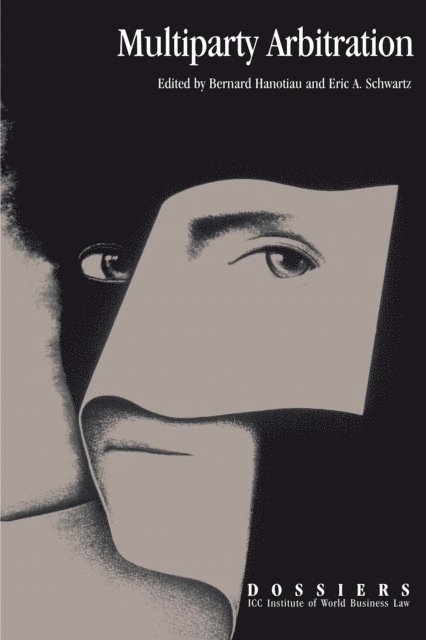
One third of ICC international arbitrations involve complex multiparty - multi-contract issues.
Given the increasing number and complexity of commercial transactions, more and more international arbitrations involve disputes arising from, or connected with, more than one contract and more than two parties. Such disputes involve many complex issues relating in particular to jurisdiction and merits: Mayan arbitration clause be extended to non-signatory party or parties? To what extent can one bring to a single arbitration proceeding the various parties who have participated in a single economic transaction through several contracts? If separate arbitration proceedings need to be started, can they be consolidated and under what conditions? Can a respondent join another party or parties, be they privy to the arbitration agreement or third parties? Can a respondent in the arbitration proceedings bring a claim against another respondent? What are the consequences of the answers to the above questions and others for the enforceability of the award? Is class wide arbitration possible and desirable? How does it work?
Dossier VII of the ICC Institute, Multiparty Arbitration, seeks to encourage reflection on these issues and many others recurrent in complex multiparty - multi-contracts arbitrations.
The contributors to this Dossier include:
Gerald AksenChristian AlbanesiSebastien BessonStephen R. BondKristof CoxYves DerainsJose Ricardo FerisSimon GreenbergFernando Mantilla SerranoPierre MayerGeorgios PetrochilosS.I StrongJohn M. TownsendKarim YoussefThis Dossier VII, Multiparty Arbitration, is published under the auspices of the ICC Institute of World Business Law, chaired by Serge Lazareff, distinguished Member of the Paris Bar. With this publication, the ICC Institute of World Business Law fulfils its dual mission: training and acting as a think-tank for the International Chamber of Commerce particularly in the field of arbitration.
The International Chamber of Commerce, the World Business Organization, based in Paris, is the global leader in the development of standards, rules and reference guides for international trade.
1 388 kr
Skickas inom 3-6 vardagar
1 229 kr
Läs direkt efter köp
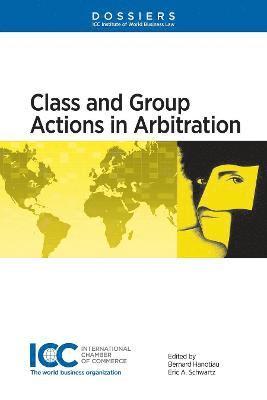
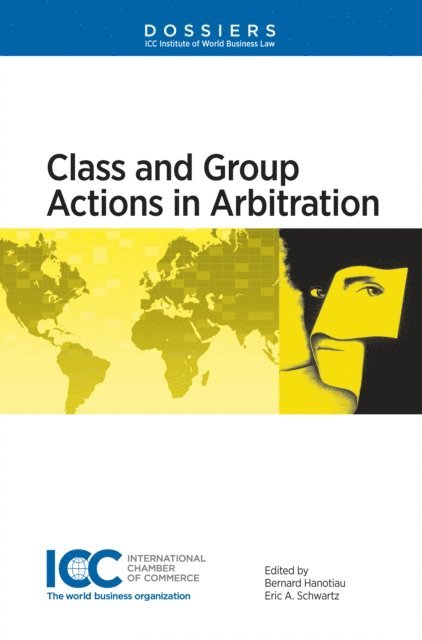
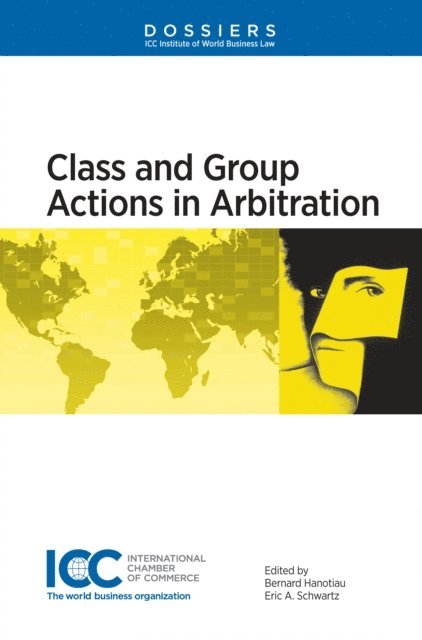
Several decades ago, a typical arbitration would involve one claimant against one respondent. Over the years, more and more cases involve several claimants against several respondents. Today, one third of all international ICC arbitrations seem to involve multiparty cases, multi-contract cases involving multiple contracts, multiple parties. The evolution has continued and the debate today is whether it would be possible for a class of people in the same situation or a group of citizens having the same interest to start one single arbitration procedure as a group or as a class.
This publication examines the complex issues involved in class or group arbitration on a comparative law basis. Is there a place for such proceedings within the framework of the arbitration process? Class action procedures, as developed in the United States court system and more recently in Canada, are almost nonexistent in Europe. The European Commission has advocated collective redress as an important means of access to justice but class actions have found little enthusiasm in the Members States. The book highlights the lessons which have been learned from the experience of cases in the US and in Europe.
What does the future hold for class, collective and mass arbitrations? Are they a marginal phenomenon or has their potential yet to be realized? What are possible solutions to the issues that have been encountered? Can we expect to see more of such arbitrations in the future? Written by arbitrators, academics and practitioners, this Dossier will provide the answers to these questions and many more.
1 229 kr
Läs direkt efter köp
Several decades ago, a typical arbitration would involve one claimant against one respondent. Over the years, more and more cases involve several claimants against several respondents. Today, one third of all international ICC arbitrations seem to involve multiparty cases, multi-contract cases involving multiple contracts, multiple parties. The evolution has continued and the debate today is whether it would be possible for a class of people in the same situation or a group of citizens having the same interest to start one single arbitration procedure as a group or as a class.
This publication examines the complex issues involved in class or group arbitration on a comparative law basis. Is there a place for such proceedings within the framework of the arbitration process? Class action procedures, as developed in the United States court system and more recently in Canada, are almost nonexistent in Europe. The European Commission has advocated collective redress as an important means of access to justice but class actions have found little enthusiasm in the Members States. The book highlights the lessons which have been learned from the experience of cases in the US and in Europe.
What does the future hold for class, collective and mass arbitrations? Are they a marginal phenomenon or has their potential yet to be realized? What are possible solutions to the issues that have been encountered? Can we expect to see more of such arbitrations in the future? Written by arbitrators, academics and practitioners, this Dossier will provide the answers to these questions and many more.

2 901 kr
Skickas inom 5-8 vardagar
2 316 kr
Läs direkt efter köp
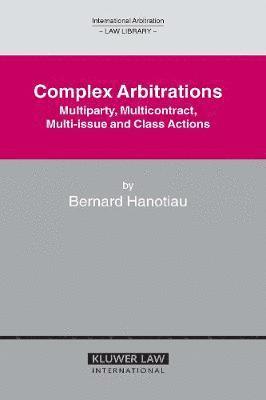
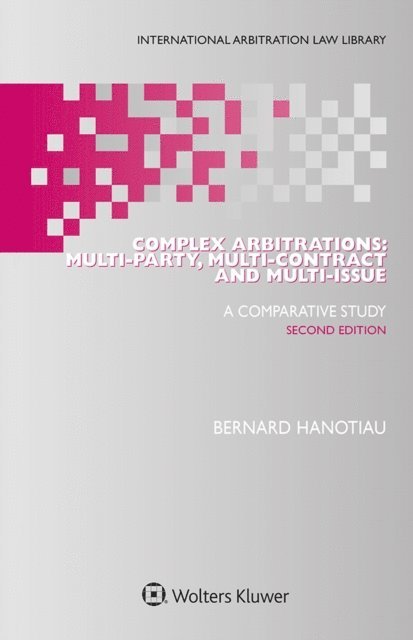
Complex Arbitrations: Multi-party, Multi-contract and Multi-issue
A Comparative Study
Second Edition
Bernard Hanotiau
Arbitrations involving more than two parties and complex multi-contractual issues are becoming more and more prevalent every year in every major jurisdiction worldwide. This fully updated, extensively revised edition of a far-seeing 2006 book that has been greatly valued and widely used remains the only comprehensive analysis of all the issues arising from multi-party–multi-contract arbitrations, including those involving States and groups of companies.
The numerous factors and problems analysed in depth include the following:
theories on the basis of which various courts and tribunals determine who are parties to the arbitration clause and whether a non-signatory may be part of the proceedings; to what extent one can bring to a single arbitration proceeding the various parties who have participated in a single economic transaction through several contracts; reasoning to follow when it comes to deciding whether another company of the group can be joined to the arbitration; whether a party to a complex contractual structure can intervene voluntarily in the proceedings; under what conditions arbitrations may be consolidated; to what extent res judicata applies when a second arbitration is initiated between the same parties on different legal grounds; how and to what extent one can overcome the inconveniences that arise from having several parallel proceedings; and enforcement of multi-party–multi-contract awards.Features of particular value to the practitioner include in-depth analysis of ad hoc and institutional awards rendered under the auspices of numerous arbitral institutions; analysis of relevant national case law based on hundreds of court decisions from all over the world; and appendices specifying multi-party–multi-contract arbitration clauses, provisions of international conventions and relevant national legislative and institutional rules.
The first edition has been used all over the world, frequently referred to by courts and tribunals when one of its topics is addressed. The second edition, with its increased volume of arbitral awards and cases from many more jurisdictions, its new scenarios, its updates on new legislation and rules, and its newly researched jurisprudence will help lawyers and corporate counsel solve the increasingly complex procedural issues confronting them in dealing with multi-party–multi-contract disputes. Law professors and students of dispute resolution have here a powerfully authoritative consideration of one of the most salient aspects of current international practice.
2 316 kr
Läs direkt efter köp
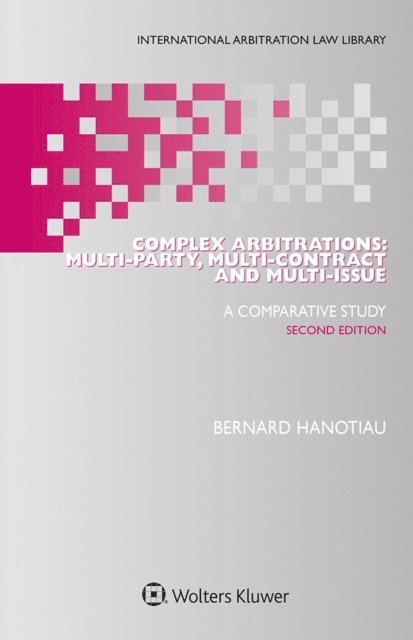
Complex Arbitrations: Multi-party, Multi-contract and Multi-issue
A Comparative Study
Second Edition
Bernard Hanotiau
Arbitrations involving more than two parties and complex multi-contractual issues are becoming more and more prevalent every year in every major jurisdiction worldwide. This fully updated, extensively revised edition of a far-seeing 2006 book that has been greatly valued and widely used remains the only comprehensive analysis of all the issues arising from multi-party–multi-contract arbitrations, including those involving States and groups of companies.
The numerous factors and problems analysed in depth include the following:
theories on the basis of which various courts and tribunals determine who are parties to the arbitration clause and whether a non-signatory may be part of the proceedings; to what extent one can bring to a single arbitration proceeding the various parties who have participated in a single economic transaction through several contracts; reasoning to follow when it comes to deciding whether another company of the group can be joined to the arbitration; whether a party to a complex contractual structure can intervene voluntarily in the proceedings; under what conditions arbitrations may be consolidated; to what extent res judicata applies when a second arbitration is initiated between the same parties on different legal grounds; how and to what extent one can overcome the inconveniences that arise from having several parallel proceedings; and enforcement of multi-party–multi-contract awards.Features of particular value to the practitioner include in-depth analysis of ad hoc and institutional awards rendered under the auspices of numerous arbitral institutions; analysis of relevant national case law based on hundreds of court decisions from all over the world; and appendices specifying multi-party–multi-contract arbitration clauses, provisions of international conventions and relevant national legislative and institutional rules.
The first edition has been used all over the world, frequently referred to by courts and tribunals when one of its topics is addressed. The second edition, with its increased volume of arbitral awards and cases from many more jurisdictions, its new scenarios, its updates on new legislation and rules, and its newly researched jurisprudence will help lawyers and corporate counsel solve the increasingly complex procedural issues confronting them in dealing with multi-party–multi-contract disputes. Law professors and students of dispute resolution have here a powerfully authoritative consideration of one of the most salient aspects of current international practice.

2 626 kr
Läs direkt efter köp

2 626 kr
Läs direkt efter köp