Bernard Lovell - Böcker
Visar alla böcker från författaren Bernard Lovell. Handla med fri frakt och snabb leverans.
5 produkter
5 produkter
1 177 kr
Skickas inom 3-6 vardagar
518 kr
Skickas inom 10-15 vardagar
In this volume the creator and director of Jodrell Bank, the world's largest radio telescope, tells the fascinating story behind the building of this huge telescope. Though the telescope is popularly known for tracking and communicating with man-made satellites, its prime function is the study of the universe by means of radio waves emitted by distatant stars. The radiation received from meteors, the moon, the Andromeda Galaxy, and the Milky Way offers new information daily about the origins of life on this planet and the possibilities of life on other worlds. The building of the telescope was fraught with mishaps and frustrations-financial, political, and otherwise; yet, through his perseverance, Sir Bernard Lovell made its creation a reality. His story, drawn largely from personal diaries, documents the complex conflicts among scientists, bureaucrats, and politicians which arose out of this monumental endeavor.
980 kr
Skickas inom 10-15 vardagar
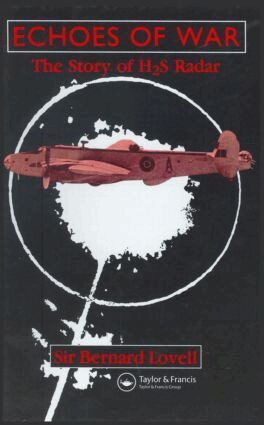
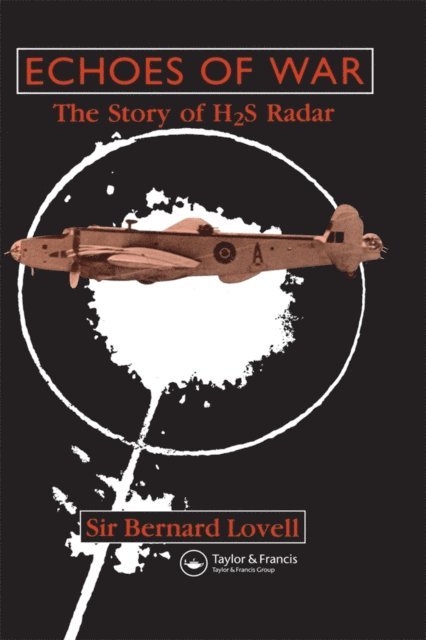
August 1939 was a time of great flux. The fear of impending war fueled by the aggression of Nazi Germany forced many changes. Young people pursuing academic research were plunged into an entirely different kind of research and development. For Bernard Lovell, the war meant involvement in one of the most vital research projects of the war-radar.Echoes of War: The Story of H2S Radar presents a passionate first-hand account of the development of the Home Sweet Home (H2S) radar systems during World War II. The book provides numerous personal insights into the scientific culture of wartime Britain and details the many personal sacrifices, setbacks, and eventual triumphs made by those actively involved.Bernard Lovell began his work on airborne interception radar in Taffy Bowen's airborne radar group. He was involved in the initial development of the application of the 10 centimeter cavity magnetron to airborne radar that revolutionized radar systems. In the autumn of 1941, the failure of Bomber Command to locate its target over the cloudy skies of Europe prompted the formation of a new group to develop a blind bombing system. Led by Lovell, this group developed the H2S radar system to identify towns and other targets at night or during heavy cloud cover. H2S first saw operational use with the Pathfinder Squadrons in the attack on Hamburg during the night of January 30-31, 1943. Two months later, modified H2S units installed in Coastal Command aircraft operating over the Bay of Biscay had a dramatic tactical effect on the air war against U-boats. The tide had begun to turn. In this fascinating chronicle of the H2S radar project, Sir Bernard Lovell recreates the feel and mood of the wartime years.
2 726 kr
Skickas inom 10-15 vardagar
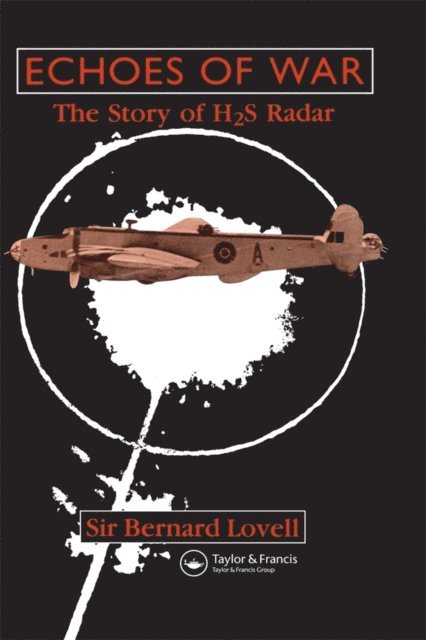
August 1939 was a time of great flux. The fear of impending war fueled by the aggression of Nazi Germany forced many changes. Young people pursuing academic research were plunged into an entirely different kind of research and development. For Bernard Lovell, the war meant involvement in one of the most vital research projects of the war-radar.Echoes of War: The Story of H2S Radar presents a passionate first-hand account of the development of the Home Sweet Home (H2S) radar systems during World War II. The book provides numerous personal insights into the scientific culture of wartime Britain and details the many personal sacrifices, setbacks, and eventual triumphs made by those actively involved.Bernard Lovell began his work on airborne interception radar in Taffy Bowen's airborne radar group. He was involved in the initial development of the application of the 10 centimeter cavity magnetron to airborne radar that revolutionized radar systems. In the autumn of 1941, the failure of Bomber Command to locate its target over the cloudy skies of Europe prompted the formation of a new group to develop a blind bombing system. Led by Lovell, this group developed the H2S radar system to identify towns and other targets at night or during heavy cloud cover. H2S first saw operational use with the Pathfinder Squadrons in the attack on Hamburg during the night of January 30-31, 1943. Two months later, modified H2S units installed in Coastal Command aircraft operating over the Bay of Biscay had a dramatic tactical effect on the air war against U-boats. The tide had begun to turn. In this fascinating chronicle of the H2S radar project, Sir Bernard Lovell recreates the feel and mood of the wartime years.
201 kr
Skickas inom 3-6 vardagar