Bernd Hoefflinger - Böcker
Visar alla böcker från författaren Bernd Hoefflinger. Handla med fri frakt och snabb leverans.
10 produkter
10 produkter
1 392 kr
Skickas inom 10-15 vardagar
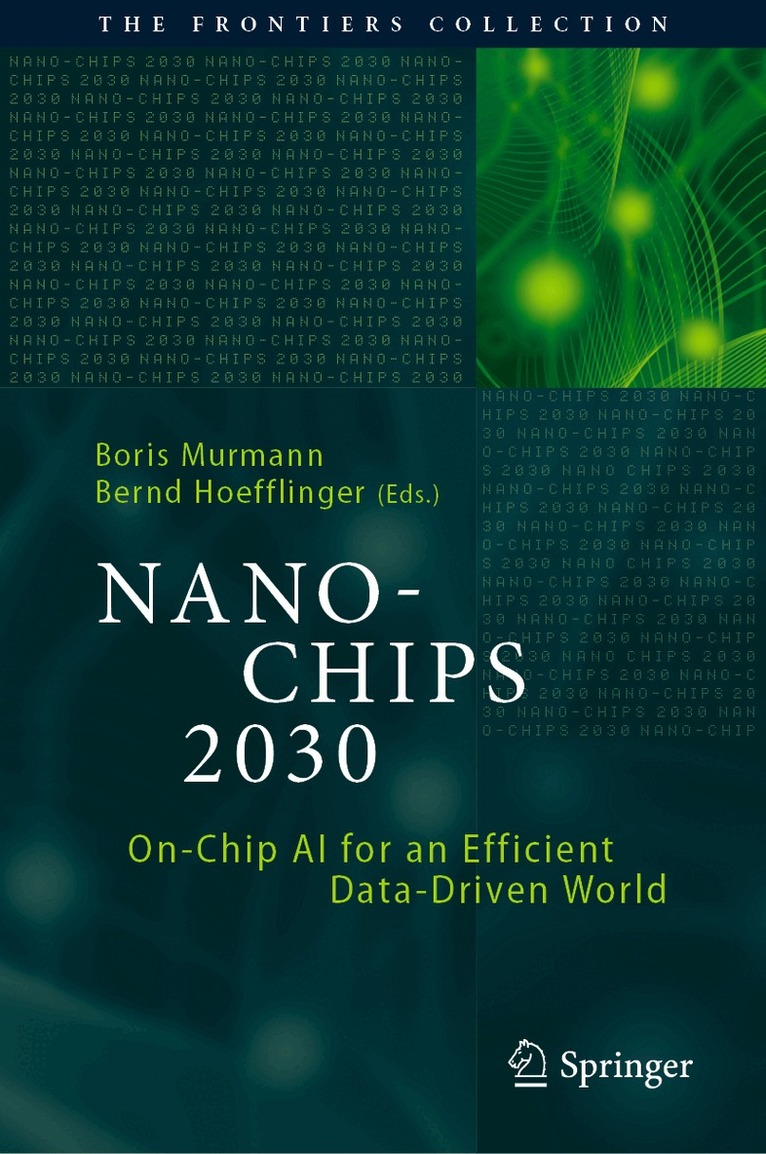
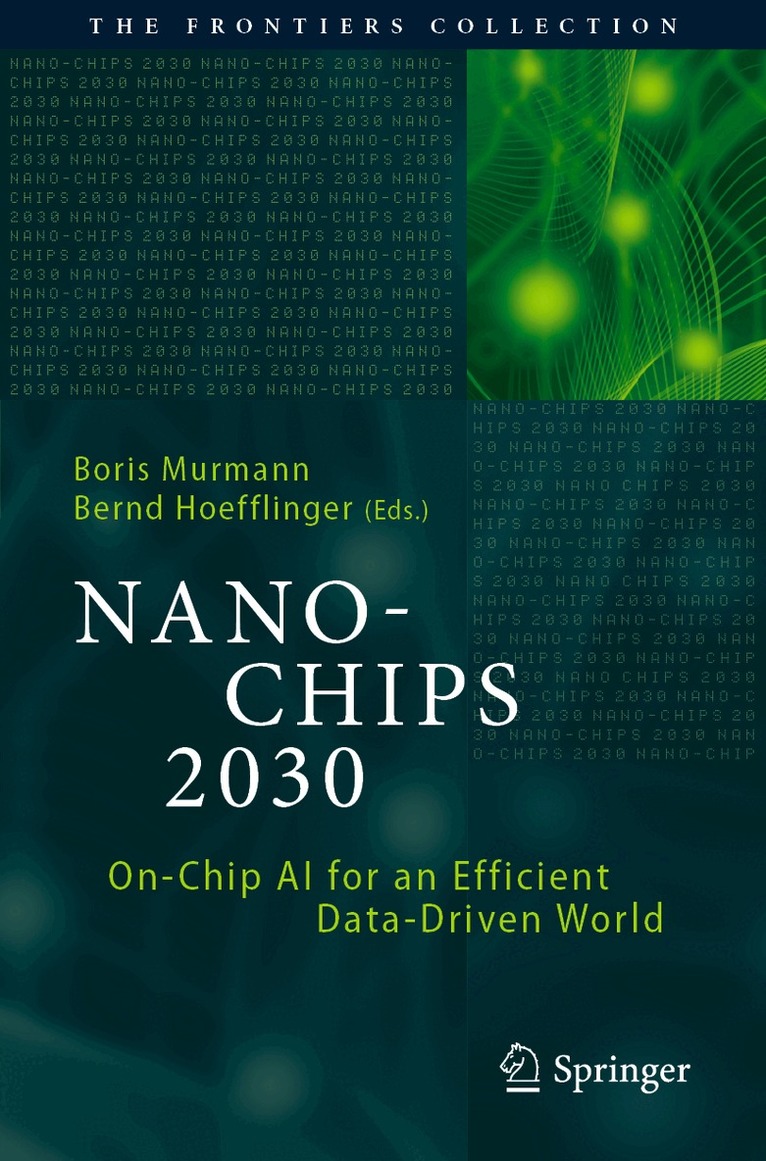
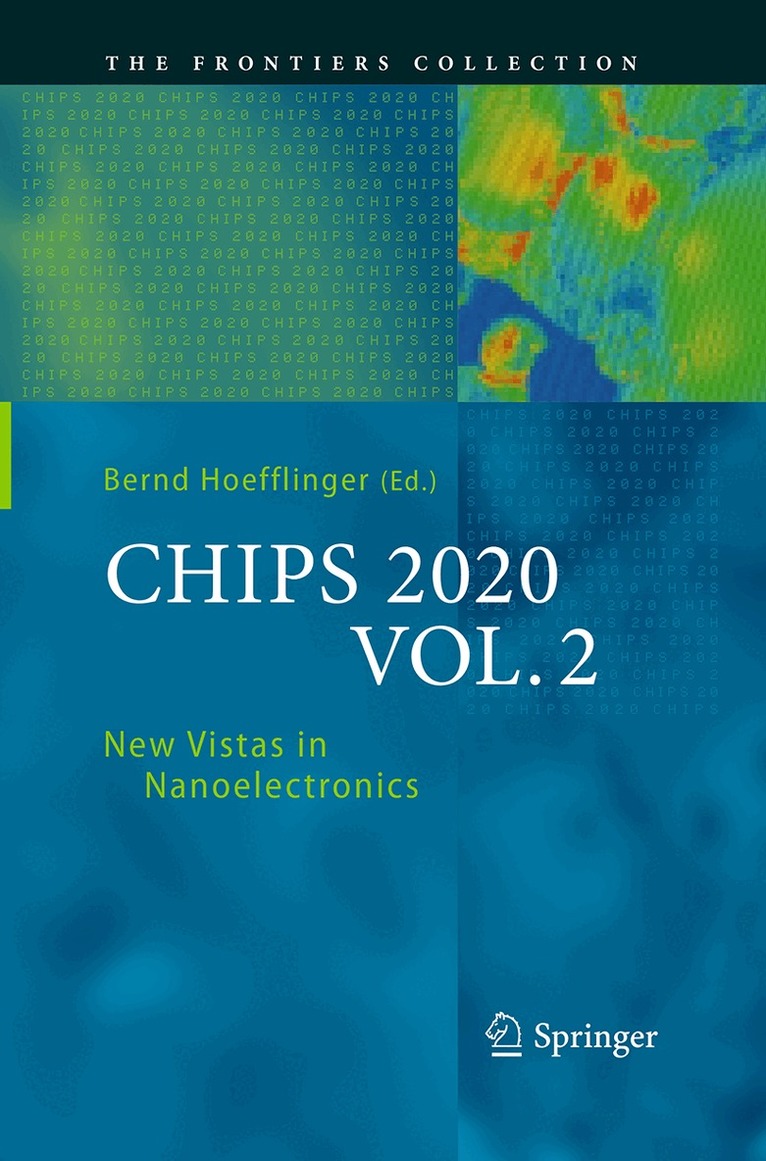
In this book, a global team of experts from academia, research institutes and industry presents their vision on how new nano-chip architectures will enable the performance and energy efficiency needed for AI-driven advancements in autonomous mobility, healthcare, and man-machine cooperation. Recent reviews of the status quo, as presented in CHIPS 2020 (Springer), have prompted the need for an urgent reassessment of opportunities in nanoelectronic information technology. As such, this book explores the foundations of a new era in nanoelectronics that will drive progress in intelligent chip systems for energy-efficient information technology, on-chip deep learning for data analytics, and quantum computing. Given its scope, this book provides a timely compendium that hopes to inspire and shape the future of nanoelectronics in the decades to come.
1 392 kr
Skickas inom 10-15 vardagar
In this book, a global team of experts from academia, research institutes and industry presents their vision on how new nano-chip architectures will enable the performance and energy efficiency needed for AI-driven advancements in autonomous mobility, healthcare, and man-machine cooperation.
537 kr
Skickas inom 10-15 vardagar
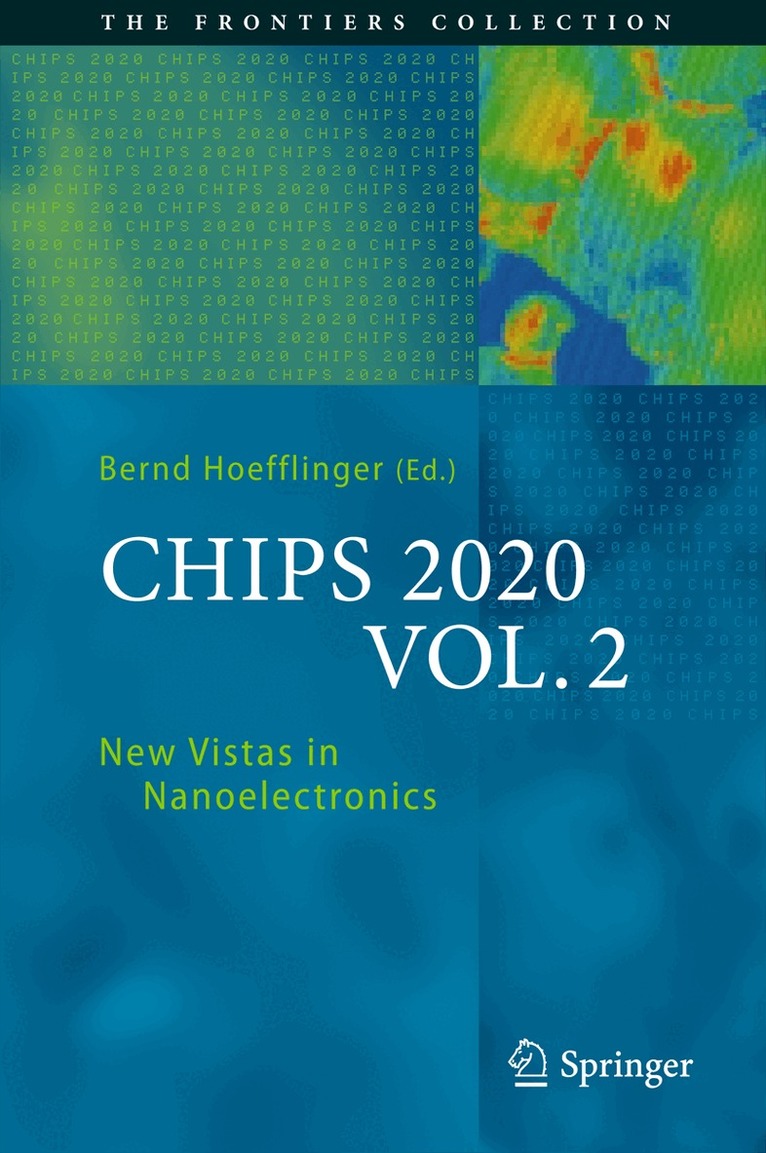
The release of this second volume of CHIPS 2020 coincides with the 50th anniversary of Moore’s Law, a critical year marked by the end of the nanometer roadmap and by a significantly reduced annual rise in chip performance.
540 kr
Skickas inom 10-15 vardagar
The release of this second volume of CHIPS 2020 coincides with the 50th anniversary of Moore’s Law, a critical year marked by the end of the nanometer roadmap and by a significantly reduced annual rise in chip performance.
Einfluß von Getterprozessen auf die Eigenschaften von ionenimplantierten integrierten Fotodioden
Häftad, Tyska, 1982
555 kr
Skickas inom 10-15 vardagar
Rheinisch-Westfälische Akademie der Wissenschaften
Natur-, Ingenieur- und Wirtschaftswissenschaften Vorträge · N 386
Häftad, Tyska, 1991
555 kr
Skickas inom 10-15 vardagar
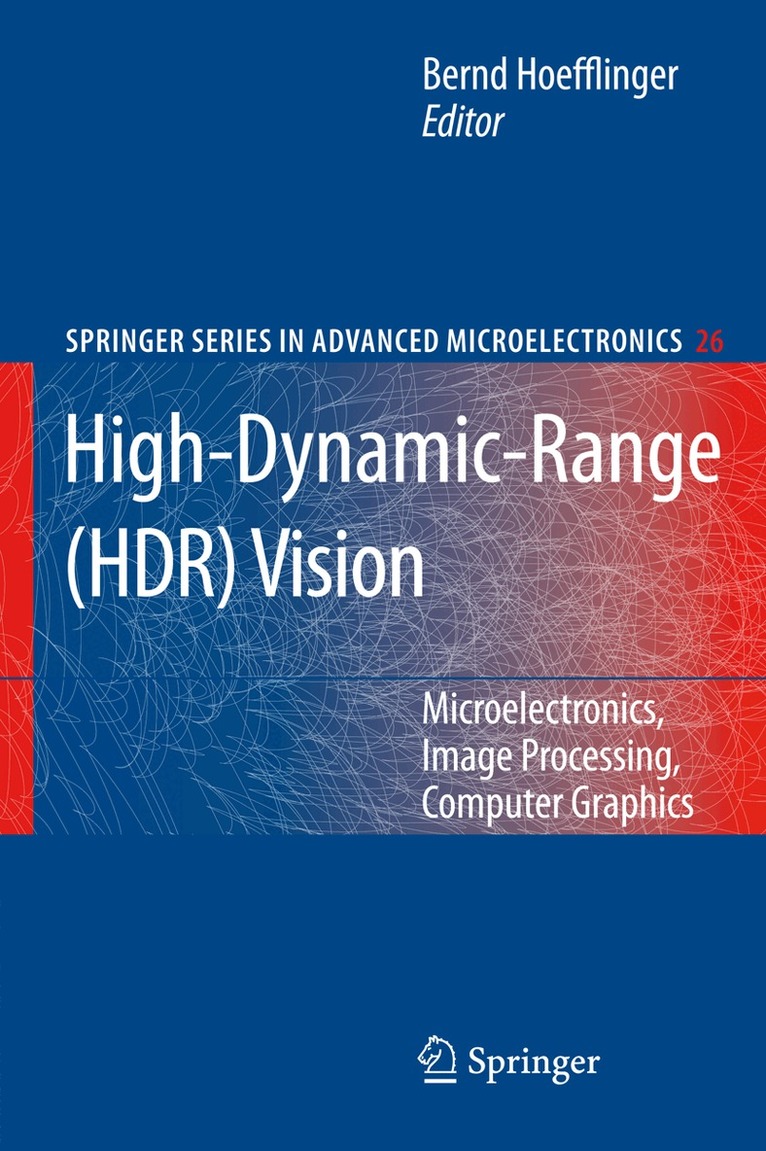
High-Dynamic-Range (HDR) Vision
Microelectronics, Image Processing, Computer Graphics
Inbunden, Engelska, 2007
1 590 kr
Skickas inom 10-15 vardagar
Creating high-fidelity images of our world has been a continuous challenge, even as our understanding and skills have evolved. The acquisition and mapping of the rich and complex content of visual information rank high among the most demanding technical tasks. Now electronic image sensors can record a dynamic range from bright to dark of more than seven orders of magnitude, thus exceeding the ability of a human eye by more than a hundred times and displaying five orders of magnitude in brightness, resulting in CRT and LCD displays with more than 100-fold improvement. This first comprehensive account of high-dynamic-range (HDR) vision focusses on HDR real-time, high-speed digital video recording and also systematically presents HDR video transmission and display. The power of the eye-like, logarithmic optoelectronic conversion concept is demonstrated in machine-vision, medical, automotive, surveillance and cinematic applications, and it is extended to HDR sub-retinal implants for the vision impaired. While the book conveys the overall picture of HDR vision, specific knowledge of microelectronics and image processing is not required. It provides a quantitative summary of the major issues to allow the assessment of the state of the art and a glimpse at future developments. Selected experts share their know-how and expectations in this rapidly evolving art related to the single most powerful of our senses.
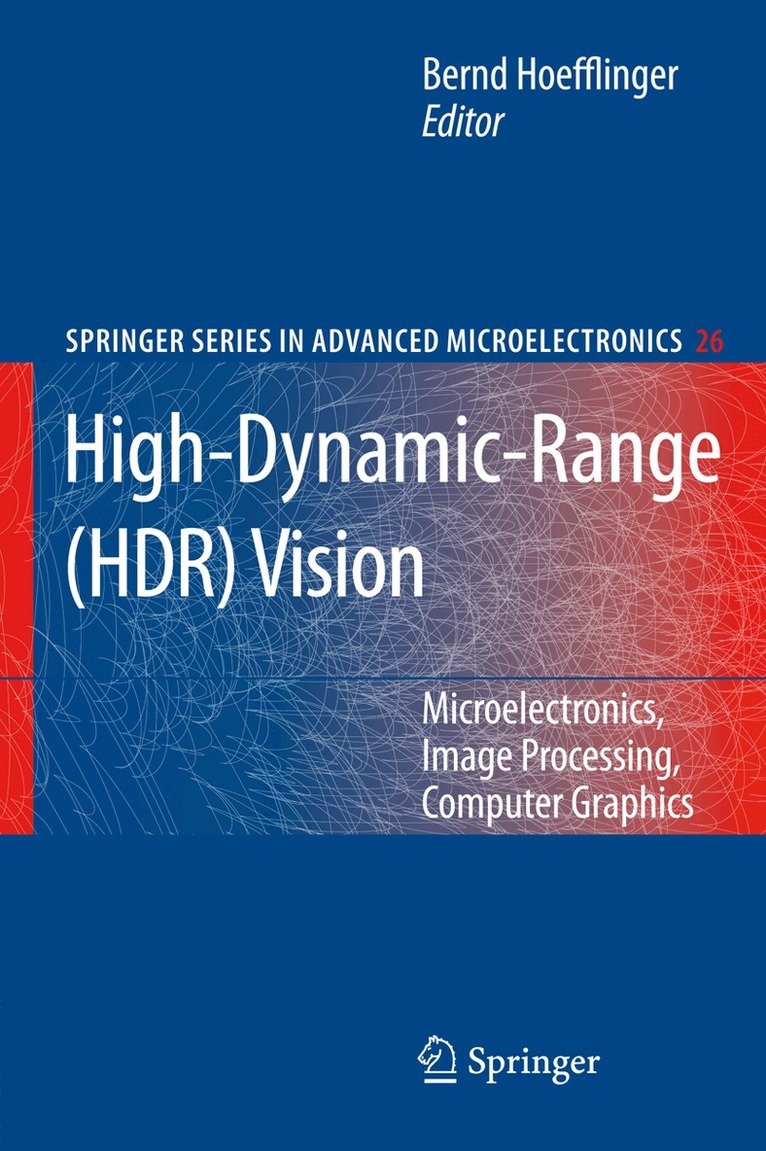
High-Dynamic-Range (HDR) Vision
Microelectronics, Image Processing, Computer Graphics
Häftad, Engelska, 2010
1 590 kr
Skickas inom 10-15 vardagar
Creating high-fidelity images of our world has been a continuous challenge, even as our understanding and skills have evolved. The acquisition and mapping of the rich and complex content of visual information rank high among the most demanding technical tasks. Now electronic image sensors can record a dynamic range from bright to dark of more than seven orders of magnitude, thus exceeding the ability of a human eye by more than a hundred times and displaying five orders of magnitude in brightness, resulting in CRT and LCD displays with more than 100-fold improvement. This first comprehensive account of high-dynamic-range (HDR) vision focusses on HDR real-time, high-speed digital video recording and also systematically presents HDR video transmission and display. The power of the eye-like, logarithmic optoelectronic conversion concept is demonstrated in machine-vision, medical, automotive, surveillance and cinematic applications, and it is extended to HDR sub-retinal implants for the vision impaired. While the book conveys the overall picture of HDR vision, specific knowledge of microelectronics and image processing is not required. It provides a quantitative summary of the major issues to allow the assessment of the state of the art and a glimpse at future developments. Selected experts share their know-how and expectations in this rapidly evolving art related to the single most powerful of our senses.
540 kr
Skickas inom 10-15 vardagar
The chips in present-day cell phones already contain billions of sub-100-nanometer transistors. By 2020, however, we will see systems-on-chips with trillions of 10-nanometer transistors. But this will be the end of the miniaturization, because yet smaller transistors, containing just a few control atoms, are subject to statistical fluctuations and thus no longer useful. We also need to worry about a potential energy crisis, because in less than five years from now, with current chip technology, the internet alone would consume the total global electrical power!This book presents a new, sustainable roadmap towards ultra-low-energy (femto-Joule), high-performance electronics. The focus is on the energy-efficiency of the various chip functions: sensing, processing, and communication, in a top-down spirit involving new architectures such as silicon brains, ultra-low-voltage circuits, energy harvesting, and 3D silicon technologies. Recognized world leaders from industry and from the research community share their views of this nanoelectronics future. They discuss, among other things, ubiquitous communication based on mobile companions, health and care supported by autonomous implants and by personal carebots, safe and efficient mobility assisted by co-pilots equipped with intelligent micro-electromechanical systems, and internet-based education for a billion people from kindergarden to retirement. This book should help and interest all those who will have to make decisions associated with future electronics: students, graduates, educators, and researchers, as well as managers, investors, and policy makers.Introduction: Towards Sustainable 2020 Nanoelectronics.- From Microelectronics to Nanoelectronics.- The Future of Eight Chip Technologies.- Analog–Digital Interfaces.- Interconnects and Transceivers.- Requirements and Markets for Nanoelectronics.- ITRS: The International Technology Roadmap for Semiconductors.- Nanolithography.- Power-EfficientDesign Challenges.- Superprocessors and Supercomputers.- Towards Terabit Memories.- 3D Integration for Wireless Multimedia.- The Next-Generation Mobile User-Experience.- MEMS (Micro-Electro-Mechanical Systems) for Automotive and Consumer.- Vision Sensors and Cameras.- Digital Neural Networks for New Media.- Retinal Implants for Blind Patients.- Silicon Brains.- Energy Harvesting and Chip Autonomy.- The Energy Crisis.- The Extreme-Technology Industry.- Education and Research for the Age of Nanoelectronics.- 2020 World with Chips.
540 kr
Skickas inom 10-15 vardagar
The chips in present-day cell phones already contain billions of sub-100-nanometer transistors. By 2020, however, we will see systems-on-chips with trillions of 10-nanometer transistors. But this will be the end of the miniaturization, because yet smaller transistors, containing just a few control atoms, are subject to statistical fluctuations and thus no longer useful. We also need to worry about a potential energy crisis, because in less than five years from now, with current chip technology, the internet alone would consume the total global electrical power!This book presents a new, sustainable roadmap towards ultra-low-energy (femto-Joule), high-performance electronics. The focus is on the energy-efficiency of the various chip functions: sensing, processing, and communication, in a top-down spirit involving new architectures such as silicon brains, ultra-low-voltage circuits, energy harvesting, and 3D silicon technologies. Recognized world leaders from industry and from the research community share their views of this nanoelectronics future. They discuss, among other things, ubiquitous communication based on mobile companions, health and care supported by autonomous implants and by personal carebots, safe and efficient mobility assisted by co-pilots equipped with intelligent micro-electromechanical systems, and internet-based education for a billion people from kindergarden to retirement. This book should help and interest all those who will have to make decisions associated with future electronics: students, graduates, educators, and researchers, as well as managers, investors, and policy makers.Introduction: Towards Sustainable 2020 Nanoelectronics.- From Microelectronics to Nanoelectronics.- The Future of Eight Chip Technologies.- Analog–Digital Interfaces.- Interconnects and Transceivers.- Requirements and Markets for Nanoelectronics.- ITRS: The International Technology Roadmap for Semiconductors.- Nanolithography.- Power-EfficientDesign Challenges.- Superprocessors and Supercomputers.- Towards Terabit Memories.- 3D Integration for Wireless Multimedia.- The Next-Generation Mobile User-Experience.- MEMS (Micro-Electro-Mechanical Systems) for Automotive and Consumer.- Vision Sensors and Cameras.- Digital Neural Networks for New Media.- Retinal Implants for Blind Patients.- Silicon Brains.- Energy Harvesting and Chip Autonomy.- The Energy Crisis.- The Extreme-Technology Industry.- Education and Research for the Age of Nanoelectronics.- 2020 World with Chips.