Bernhard H. Walke - Böcker
Visar alla böcker från författaren Bernhard H. Walke. Handla med fri frakt och snabb leverans.
4 produkter
4 produkter
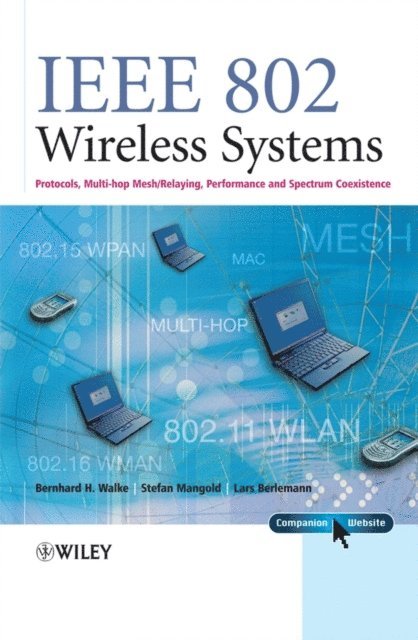
IEEE 802 Wireless Systems
Protocols, Multi-Hop Mesh / Relaying, Performance and Spectrum Coexistence
Inbunden, Engelska, 2006
1 454 kr
Skickas inom 7-10 vardagar
Throughout the next decade, 802 wireless systems will become an integral part of fourth generation (4G) cellular communication systems, where the convergence of wireless and cellular networks will materialize through support of interworking and seamless roaming across dissimilar wireless and cellular radio access technologies. IEEE 802 Wireless Systems clearly describes the leading systems, covering IEEE 802.11 WLAN, IEEE 802.15 WPAN, IEEE 802.16 WMAN systems’ architecture, standards and protocols (including mesh) with an instructive approach allowing individuals unfamiliar with wireless systems to follow and understand these technologies. Ranging from digital radio transmission fundamentals, duplex, multiplexing and switching to medium access control, radio spectrum regulation, coexistence and spectrum sharing, this book also offers new solutions to broadband multi-hop networking for cellular and ad hoc operation. The book Gives a comprehensive overview and performance evaluation of IEEE 802.11, 802.15 and 802.16Includes a tutorial like introduction to the basics of wireless communicationDiscusses challenges in mesh/multi-hop relaying networks and provides profound solutions for their realization with 802 Wireless SystemsCovers spectrum sharing on different levels and provides solutions for coexistence, cooperation and interworking of 802 Wireless Systems that are following the same or different standards, but share the same spectrumIncludes a detailed overview and introduction on cognitive radio and dynamic spectrum accessAccompanying website contains simulation software and provides slides of the figures and tables from the book ready for course presentationThis book is an essential text for advanced undergraduate students with a basic working knowledge of wireless communication, graduate students and engineers working in the field of wireless communications.
1 598 kr
Skickas inom 7-10 vardagar
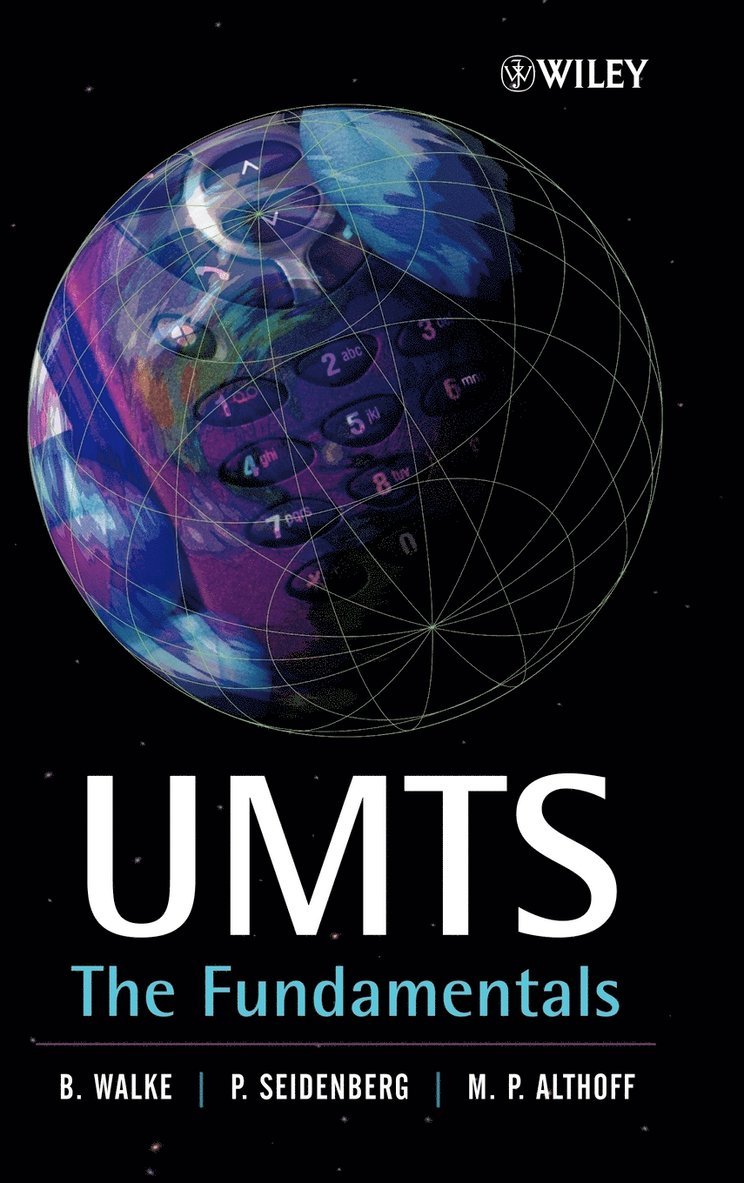
UMTS (Universal Mobile Telecommunication System) is the third generation telecommunications system based on WCDMA. WCDMA (Wideband Code Division Multiple Access) is the radio interface for UMTS. WCDMA is characterised by use of a wider band than CDMA. It has additional advantages of high transfer rate, and increased system capacity and communication quality by statistical multiplexing, etc. WCDMA efficiently utilises the radio spectrum to provide a maximum data rate of 2 Mbit/s. UMTS (Universal Mobile Telecommunication System) will offer a consistent set of services to mobile computer and phone users no matter where they are located in the world. Based on the GSM (Global System for Mobile communication) communication standard, UMTS, endorsed by major standards bodies and manufacturers, is the planned standard for mobile users around the world by 2002.Today's cellular telephone systems are mainly circuit-switched, with connections always dependent on circuit availability. Packet-switched connection, using the Internet Protocol (IP), means that a virtual connection is always available to any other end point in the network. It will also make it possible to provide new services, such as alternative billing methods (pay-per-bit, pay-per-session, flat rate, asymmetric bandwidth, and others). The higher bandwidth of UMTS also promises new services, such as video conferencing and promises to realise the Virtual Home Environment (VHE) in which a roaming user can have the same services to which the user is accustomed when at home or in the office, through a combination of transparent terrestrial and satellite connections.* Provides an introduction to cellular networks and digital communications* Covers the air interface, radio access network and core network* Explains the Release '99 specifications clearly and effectively* Discusses UMTS services and future services beyond 3G* Features numerous problems and solutions in order to aid understandingIdeal for Academics and students on telecommunications, electronics and computer science courses, research and development engineers working in mobile/wireless communications and Cellular operators and technical consultants.
Del 10 - Wireless Communications and Mobile Computing
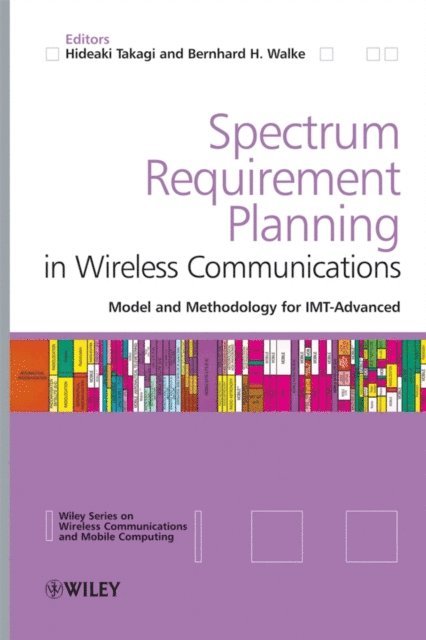
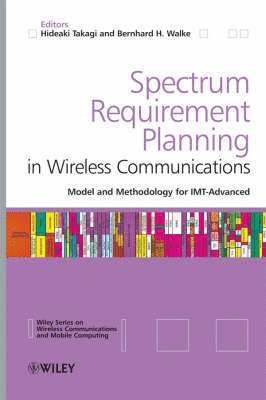
Spectrum Requirement Planning in Wireless Communications
Model and Methodology for IMT - Advanced
Inbunden, Engelska, 2008
1 524 kr
Skickas inom 11-20 vardagar
Presents the model and methodology, applied by ITU-R WRC’07, to calculate the spectrum requirement Spectrum Requirement Planning in Wireless Communications: Model and Methodology for IMT-Advanced is a self-contained “handbook” of the models and methodologies used for the spectrum requirement calculation for IMT-Advanced systems, as well as for the predecessor IMT-2000 systems. The reader will learn how the spectrum requirement is calculated for real systems that prevail worldwide. The book also provides the basis on which to develop advanced methodologies for yet future systems, as the spectrum regulation will continue in the future. Spectrum Requirement Planning in Wireless Communications: Model and Methodology for IMT-Advanced Provides the reader with information on how the spectrum requirement is calculated for real systems that prevail worldwideContains useful tables and examples such as flowchart of the methodologyIntroduces definitions of service category and radio environment, the process of distributing traffic to radio environments, and the method to calculate the required spectrumApplies queueing and loss models for the calculation of required system capacityCovers utilization of radio frequencies, market data, spectrum requirement calculation methods for IMT-2000 and for IMT-Advanced systemsInstructs how to use the calculation tool package Comes with an accompanying website with the downloadable tool applied by ITU-R WRC’07 for making decisions on spectrum regulation for mobile systemsThis book serves as an invaluable guide to engineers in mobile phone companies, system design engineers, operator system engineers and other specialists dealing with mobile system planning and development. It is also of great interest to researchers and graduate students in the fields of applied probability theory, operations research, telecommunications, and mobile networks engineering.
3 096 kr
Skickas inom 11-20 vardagar
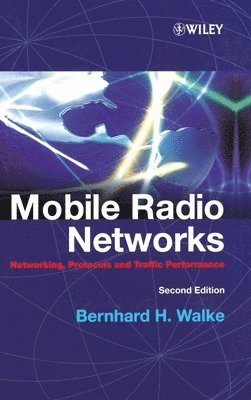
Offers a comprehensive and detailed description of services and protocols of the systems. Particular attention is paid to the radio-related specifics required for establishment of a mobile communication system. All systems described have been implemented during research for analysis of their performance by event driven stochastic simulation under typical traffic loads. Consequently the similarities and differences between systems are described clearly and coherently.* Expanded and updated chapter on GPRS/EDGE and performance evaluation results* Performance evaluation results of EDGE and UMTS* Completely new material in chapter 5; 3rd Generation Networks* Revised and expanded chapter on Wireless Local Area Networks including a performance comparison of HIPERLAN/2 and IEEE 802.11a* New sections on Bluetooth, WAP and WML, Terrestrial Trunked Radio (ETSI/TETRA) and related systems* Detailed analysis of GSM driven services; Universal Personal Telecommunications