Beth Simone Noveck - Böcker
Visar alla böcker från författaren Beth Simone Noveck. Handla med fri frakt och snabb leverans.
7 produkter
7 produkter
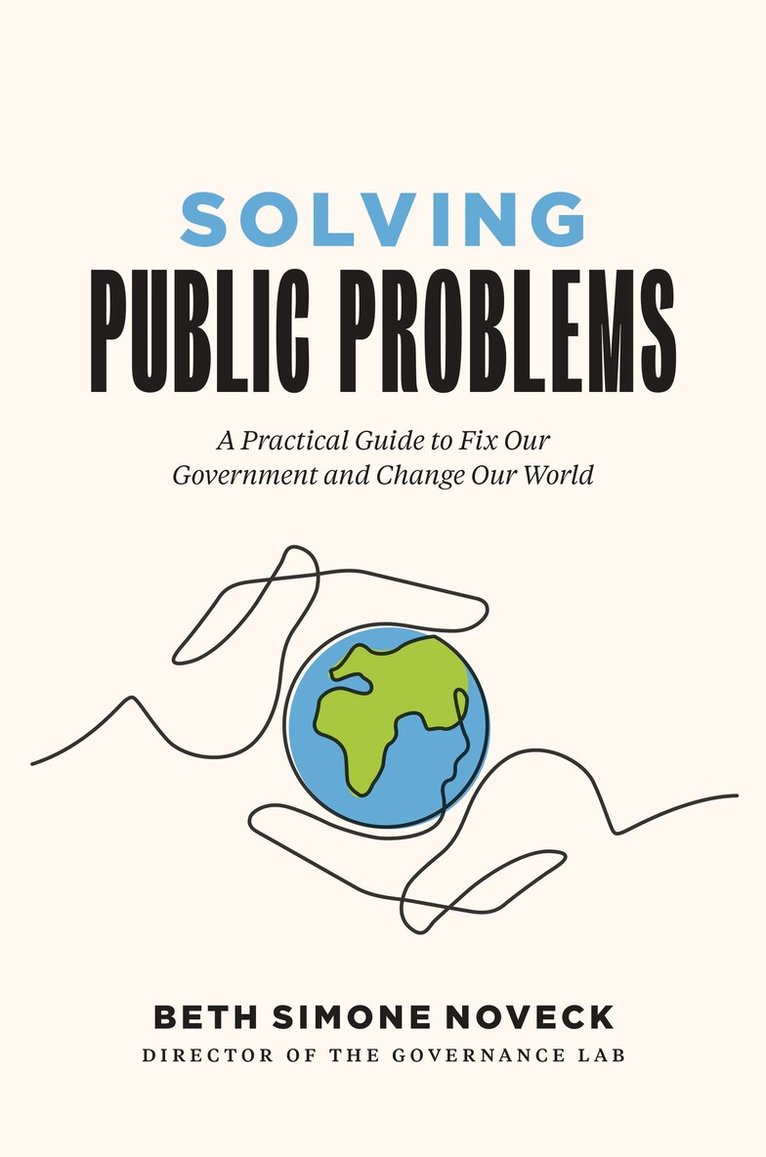
Solving Public Problems
A Practical Guide to Fix Our Government and Change Our World
Inbunden, Engelska, 2021
277 kr
Skickas inom 7-10 vardagar
How to take advantage of technology, data, and the collective wisdom in our communities to design powerful solutions to contemporary problems “Bursting with sage, practical advice for public sector officials and civil society actors who want to engage citizens and give them more power.”—Glen Weyl and Henry Farrell, Boston Review The challenges societies face today, from inequality to climate change to systemic racism, cannot be solved with yesterday’s toolkit. Solving Public Problems shows how readers can take advantage of digital technology, data, and the collective wisdom of our communities to design and deliver powerful solutions to contemporary problems. Offering a radical rethinking of the role of the public servant and the skills of the public workforce, this book is about the vast gap between failing public institutions and the huge number of public entrepreneurs doing extraordinary things—and how to close that gap. Drawing on lessons learned from decades of advising global leaders and from original interviews and surveys of thousands of public problem solvers, Beth Simone Noveck provides a practical guide for public servants, community leaders, students, and activists to become more effective, equitable, and inclusive leaders and repair our troubled, twenty-first-century world.
367 kr
Kommande
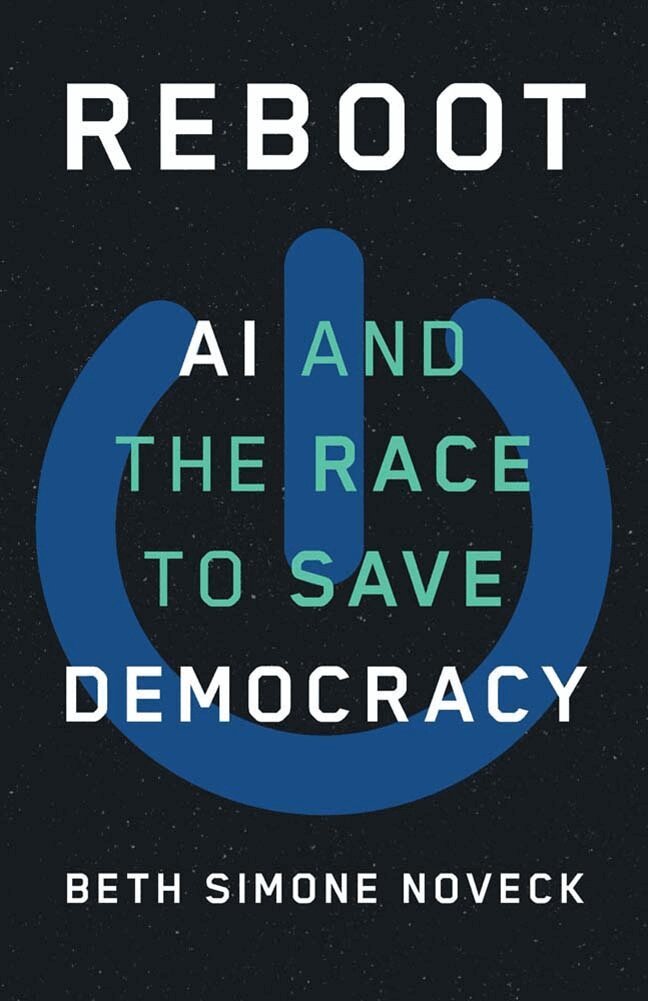
A blueprint for rescuing our fragile democracy by harnessing AIDemocracy is in retreat at home and abroad. Our institutions and our politics are more broken than ever. At this delicate moment, artificial intelligence has burst onto the scene, a powerful technology that holds as much potential to bolster democracy as to harm it. But we have stopped treating democracy as a solvable problem. We have built extraordinary tools but are not yet using them where they are needed most: to forge institutions that work better for people.Many warn that AI will accelerate authoritarianism. In Reboot, Beth Simone Noveck makes a different case. Drawing on decades of work building technology and working inside government, from the White House to 10 Downing Street, she shows how democratic institutions can deliberately design, govern, and invest in AI to strengthen democracy rather than undermine it.Noveck takes readers inside real-world efforts already under way, from European cities engaging residents in policymaking to Latin American legislatures drafting stronger laws and U.S. states transforming how they deliver public services, revealing what democratic AI looks like in practice and what it takes to make it work at scale.We stand at an inflection point. Will governments and companies use AI to tighten their grip on power, or to help institutions listen more closely, decide more wisely, and act more effectively? Noveck offers a bold and practical playbook for tipping the balance in favor of democracy.
Smart Citizens, Smarter State
The Technologies of Expertise and the Future of Governing
Inbunden, Engelska, 2015
365 kr
Skickas inom 10-15 vardagar
Government “of the people, by the people, for the people” expresses an ideal that resonates in all democracies. Yet poll after poll reveals deep distrust of institutions that seem to have left “the people” out of the governing equation. Government bureaucracies that are supposed to solve critical problems on their own are a troublesome outgrowth of the professionalization of public life in the industrial age. They are especially ill-suited to confronting today’s complex challenges.Offering a far-reaching program for innovation, Smart Citizens, Smarter State suggests that public decisionmaking could be more effective and legitimate if government were smarter—if our institutions knew how to use technology to leverage citizens’ expertise. Just as individuals use only part of their brainpower to solve most problems, governing institutions make far too little use of the skills and experience of those inside and outside of government with scientific credentials, practical skills, and ground-level street smarts. New tools—what Beth Simone Noveck calls technologies of expertise—are making it possible to match the supply of citizen expertise to the demand for it in government.Drawing on a wide range of academic disciplines and practical examples from her work as an adviser to governments on institutional innovation, Noveck explores how to create more open and collaborative institutions. In so doing, she puts forward a profound new vision for participatory democracy rooted not in the paltry act of occasional voting or the serendipity of crowdsourcing but in people’s knowledge and know-how.
841 kr
Skickas inom 10-15 vardagar
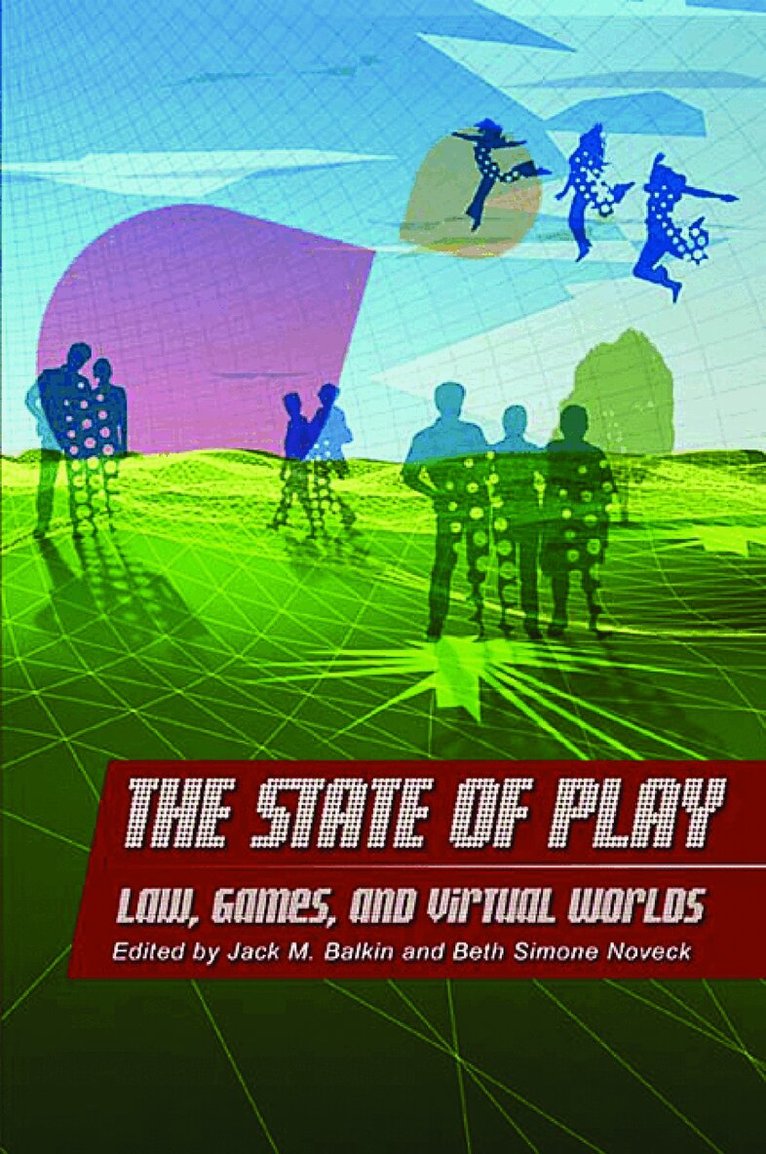
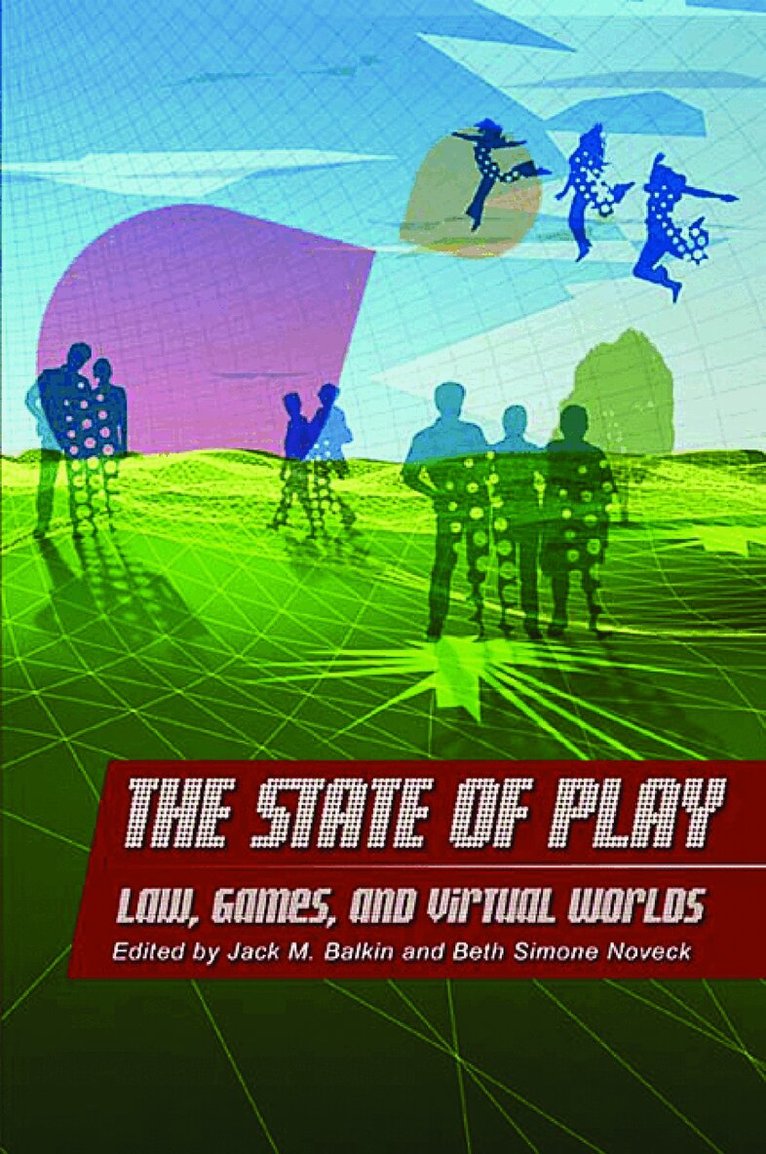
The State of Play presents an essential first step in understanding how new digital worlds will change the future of our universe. Millions of people around the world inhabit virtual words: multiplayer online games where characters live, love, buy, trade, cheat, steal, and have every possible kind of adventure. Far more complicated and sophisticated than early video games, people now spend countless hours in virtual universes like Second Life and Star Wars Galaxies not to shoot space invaders but to create new identities, fall in love, build cities, make rules, and break them.As digital worlds become increasingly powerful and lifelike, people will employ them for countless real-world purposes, including commerce, education, medicine, law enforcement, and military training. Inevitably, real-world law will regulate them. But should virtual worlds be fully integrated into our real-world legal system or should they be treated as separate jurisdictions with their own forms of dispute resolution? What rules should govern virtual communities? Should the law step in to protect property rights when virtual items are destroyed or stolen?These questions, and many more, are considered in The State of Play, where legal experts, game designers, and policymakers explore the boundaries of free speech, intellectual property, and creativity in virtual worlds. The essays explore both the emergence of law in multiplayer online games and how we can use virtual worlds to study real-world social interactions and test real-world laws.Contributors include: Jack M. Balkin, Richard A. Bartle, Yochai Benkler, Caroline Bradley, Edward Castronova, Susan P. Crawford, Julian Dibbell, A. Michael Froomkin, James Grimmelmann, David R. Johnson, Dan Hunter, Raph Koster, F. Gregory Lastowka, Beth Simone Noveck, Cory Ondrejka, Tracy Spaight, and Tal Zarsky.
369 kr
Skickas inom 7-10 vardagar
The State of Play presents an essential first step in understanding how new digital worlds will change the future of our universe. Millions of people around the world inhabit virtual words: multiplayer online games where characters live, love, buy, trade, cheat, steal, and have every possible kind of adventure. Far more complicated and sophisticated than early video games, people now spend countless hours in virtual universes like Second Life and Star Wars Galaxies not to shoot space invaders but to create new identities, fall in love, build cities, make rules, and break them.As digital worlds become increasingly powerful and lifelike, people will employ them for countless real-world purposes, including commerce, education, medicine, law enforcement, and military training. Inevitably, real-world law will regulate them. But should virtual worlds be fully integrated into our real-world legal system or should they be treated as separate jurisdictions with their own forms of dispute resolution? What rules should govern virtual communities? Should the law step in to protect property rights when virtual items are destroyed or stolen?These questions, and many more, are considered in The State of Play, where legal experts, game designers, and policymakers explore the boundaries of free speech, intellectual property, and creativity in virtual worlds. The essays explore both the emergence of law in multiplayer online games and how we can use virtual worlds to study real-world social interactions and test real-world laws.Contributors include: Jack M. Balkin, Richard A. Bartle, Yochai Benkler, Caroline Bradley, Edward Castronova, Susan P. Crawford, Julian Dibbell, A. Michael Froomkin, James Grimmelmann, David R. Johnson, Dan Hunter, Raph Koster, F. Gregory Lastowka, Beth Simone Noveck, Cory Ondrejka, Tracy Spaight, and Tal Zarsky.
Wiki Government
How Technology Can Make Government Better, Democracy Stronger, and Citizens More Powerful
Häftad, Engelska, 2010
287 kr
Skickas inom 10-15 vardagar
Collaborative democracygovernment with the peopleis a new vision of governance in the digital age. Wiki Government explains how to translate the vision into reality. Beth Simone Noveck draws on her experience in creating Peer-to-Patent, the federal government's first social networking initiative, to show how technology can connect the expertise of the many to the power of the few. In the process, she reveals what it takes to innovate in government.Launched in 2007, Peer-to-Patent connects patent examiners to volunteer scientists and technologists via the web. These dedicated but overtaxed officials decide which of the million-plus patent applications currently in the pipeline to approve. Their decisions help determine which start-up pioneers a new industry and which disappears without a trace. Patent examiners have traditionally worked in secret, cut off from essential information and racing against the clock to rule on lengthy, technical claims. Peer-to-Patent broke this mold by creating online networks of self-selecting citizen experts and channeling their knowledge and enthusiasm into forms that patent examiners can easily use.Peer-to-Patent shows how policymakers can improve decisionmaking by harnessing networks to public institutions. By encouraging, coordinating, and structuring citizen participation, technology can make government both more open and more effective at solving today's complex social and economic problems. Wiki Government describes how this model can be applied in a wide variety of settings and offers a fundamental rethinking of effective governance and democratic legitimacy for the twenty-first century.
428 kr
Kommande