Bette Woody - Böcker
Visar alla böcker från författaren Bette Woody. Handla med fri frakt och snabb leverans.
2 produkter
2 produkter
Managing Crisis Cities
The New Black Leadership and the Politics of Resource Allocation
Inbunden, Engelska, 1982
1 039 kr
Skickas inom 10-15 vardagar
During the past two decades, one of the most significant political and social changes has been the transfer of urban political leadership from aging ethnic-dominated political machines to coalitions led by blacks in cities such as Detroit, Los Angeles, Atlanta, Newark, and New Orleans. Bette Woody's analysis of modern urban government examines the political transformation of the 1970s and 1980s in the context of the failures of machine politics, traditional reforms, and racial policies of the prior two decades. Also discussed is the rise of neighborhood-based political coalitions to support black candidates, business elite support that these new leaders acquired, and the aggressive reform platforms they developed. In analyzing possibilities and strategies for current reform Woody focuses on five black mayors of big cities. A detailed case study of the success and failure of reform during Kenneth Gibson's administration in Newark reveals the importance of reorganizing city agencies and tax and budget structures in successful innovation.
1 009 kr
Skickas inom 10-15 vardagar
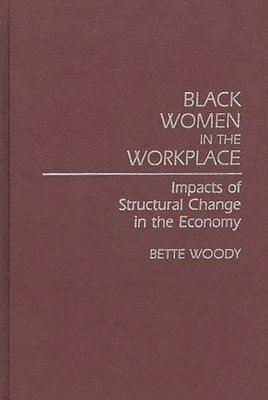
In the recent debate over the growing poverty among blacks, attention has increasingly focused on the role of women heading households as a contributor to poverty. Throughout the debate, however, surprisingly little attention has been paid to the workplace. This study examines how structural change in the U.S. economy and particularly the rise of new service sectors have reshaped the work content, opportunity, and wages of one labor group--black women. Evidence for the study comes from two sources--statistical data from U.S. Census data on employment, particularly the Current Population Survey file, and interviews with black women in several representative industries surveyed in the book.The initial chapters in the book explore the contradiction between evolving trends in the economy, including the decline in manufacturing, and a government policy that continues to rely on the marketplace to provide jobs. Chapters 4-6 explore, in more detail, the outcomes of the shift from manufacturing to services. These chapters examine how sectors individually shape job markets and may in the process provide mobility and wage gains or intensify the ghettoization of women and the stratification of women by race. The final chapters examine case histories of several black women and look at the future of black women in the emerging workplace of the twenty-first century.